
Blog
Mobile Video Surveillance: The Complete B2B Guide
Mobile video surveillance from €8,900 replaces guards costing €4,000-6,000/month. Compare towers, robots and guarding on cost, coverage and ROI.

Dr. Raphael Nagel
August 5, 2026
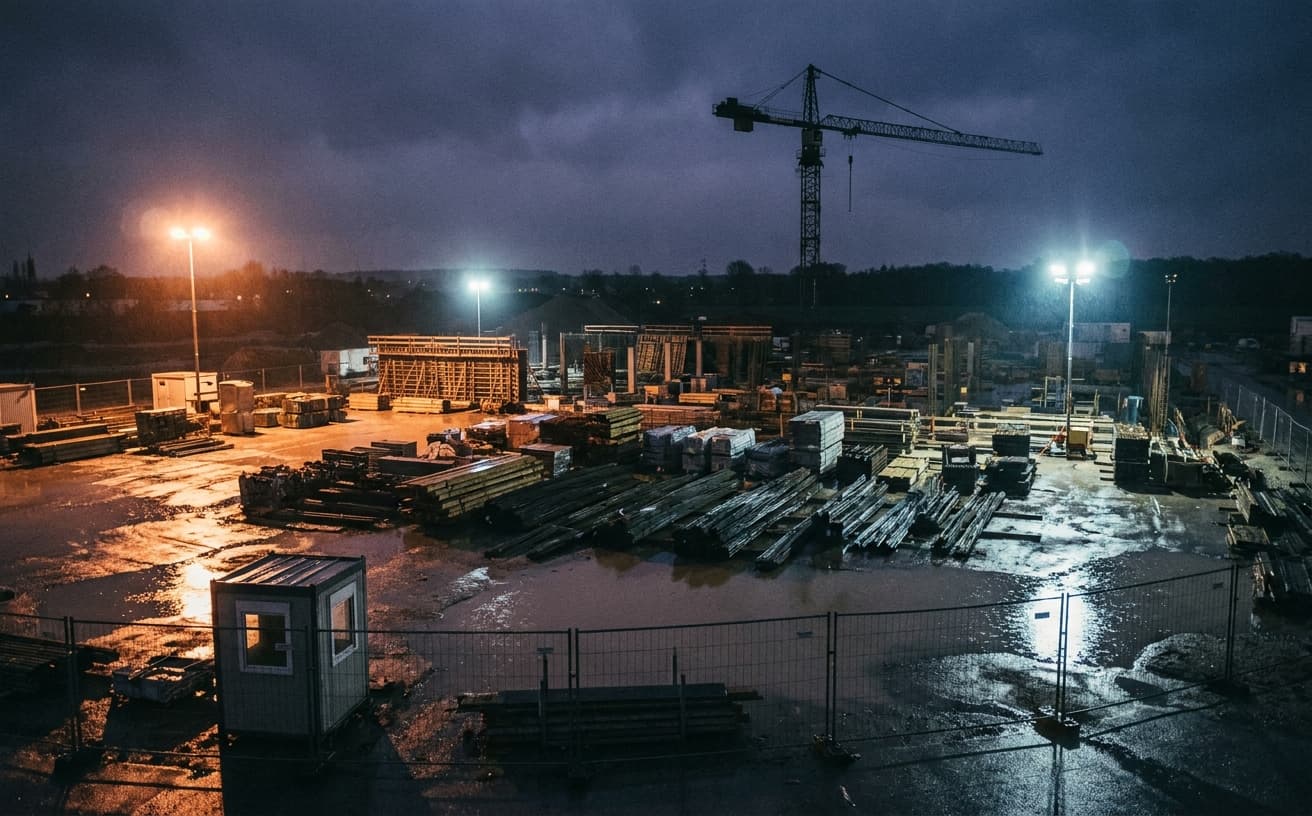
Mobile video surveillance is a self-contained, relocatable camera system that protects sites without fixed cabling or a permanent guard presence. In practice it means a solar- or battery-powered tower with thermal and optical cameras, AI-based intruder detection and a live link to a control room — deployable in hours and moved between sites as your risk profile changes. For most operators, mobile video surveillance now delivers wider coverage at a fraction of the cost of round-the-clock manned guarding.
What is mobile video surveillance and how does it work?
A mobile video surveillance unit combines high-resolution day cameras, thermal imaging for zero-light conditions, motion analytics and two-way audio on a mast that can be craned into position or towed on a trailer. Detection is handled on-device by AI that distinguishes people and vehicles from wildlife, weather and moving foliage — cutting false alarms that plague legacy motion sensors.
When the system flags a genuine event, it escalates automatically: floodlights and a live voice warning deter the intruder, while an alert with video reaches an Alarm Receiving Centre (ARC) or your own operations team for verification and, if needed, police dispatch. Footage is stored locally and in the cloud as court-admissible evidence.
Where is mobile video surveillance used?
Typical deployments include construction sites, plant and machinery yards, solar and wind farms, logistics and distribution hubs, quarries, car dealerships, vacant commercial property and temporary events. It is equally suited to KRITIS (critical infrastructure) perimeters — substations, water treatment works, telecoms sites — where continuous monitoring is a regulatory expectation rather than a nice-to-have.
Why choose mobile surveillance over a security guard?
The economics are decisive. A single guard cannot watch a large perimeter, needs breaks, and is only present during shifts you pay for. Continuous 24/7 manned cover typically requires a rota of four to five people. Mobile video surveillance, by contrast, watches every camera line simultaneously, never tires, and logs everything.
Industry loss-prevention studies consistently report that visible, verified CCTV deters the majority of opportunistic intrusions before any theft occurs, and insurers increasingly discount premiums where monitored detection is in place. Independent construction bodies estimate site theft and vandalism cost the sector hundreds of millions of euros annually — losses that stall programmes far beyond the value of the stolen goods.
How much does mobile video surveillance cost?
Pricing depends on whether you deploy a tower, an autonomous robot, or retain classic guarding. The table below compares the three approaches on a like-for-like basis.
| Solution | Typical cost | Coverage | Availability | Best for | |---|---|---|---|---| | Manned guarding | ~€4,000-6,000 / month per guarded shift pattern | One patrol route at a time | Shift-dependent, breaks | Reception, access control | | Mobile video surveillance tower | from €8,900 (purchase) | Wide perimeter, multi-camera | 24/7, autonomous | Sites, yards, KRITIS perimeters | | Autonomous security robot | from €78,000 (purchase) | Roving patrol + fixed cameras | 24/7, autonomous | Large campuses, high-value assets |
A tower's purchase price is often recovered within the first year against the running cost of a single guarded shift. The robot adds mobile patrol — closing the gap between static cameras — for facilities where a physical, moving deterrent materially changes the risk picture.
Buy or rent — which model fits?
Short-term projects (a build phase, a seasonal event, a temporary vacancy) usually favour rental, converting security into a predictable monthly line item. Operators with recurring or permanent requirements — utilities, logistics networks, multi-site contractors — typically find outright purchase or lease-to-own cheaper over a two-to-three-year horizon, because there is no per-shift labour to fund.
What makes BOSWAU + KNAUER's approach different?
BOSWAU + KNAUER has manufactured protective technology in Filderstadt since 1892. Our current range pairs the mobile video surveillance tower (from €8,900) with the autonomous security robot (from €78,000) — engineered in Germany, KRITIS-capable and built for continuous 24/7 operation.
The tower delivers rapid-deploy perimeter coverage with thermal and optical detection; the robot adds an autonomous roving patrol that navigates the site, investigates alerts and presents a visible, moving deterrent no static camera can match. Both integrate with existing ARC and control-room workflows, so you keep your escalation chain while replacing the labour cost beneath it.
Together they represent the modern alternative to classic guarding: not a person on a chair watching one gate, but a networked, always-on layer that sees the whole site, verifies every event and preserves the evidence.
Frequently Asked Questions
How quickly can a mobile video surveillance tower be deployed?
A tower is typically operational within a few hours of arriving on site. It requires no trenching or mains connection — solar and battery power keep it running autonomously, and the cameras stream over 4G/5G from the moment it is positioned.
Does mobile video surveillance work at night and in bad weather?
Yes. Thermal imaging detects body heat in complete darkness, fog and heavy rain, where conventional optical cameras fail. AI analytics filter environmental movement, so alerts reflect genuine human or vehicle activity rather than weather or wildlife.
Is the footage admissible as evidence?
Recordings are stored locally and in the cloud with timestamped integrity, meeting the standards courts and insurers expect. Verified alerts also give police a documented basis for dispatch, improving response times to live incidents.
Can one system cover multiple sites?
A mobile unit is designed to be relocated. As a project phase ends or a risk moves, the same tower or robot can be redeployed elsewhere — spreading the capital cost across several sites over its service life rather than tying it to one location.
Ready to replace guarding costs with 24/7 autonomous cover?
Configure a mobile video surveillance solution matched to your site size, risk profile and budget — tower, robot, or both. Use our online configurator for an instant specification, or contact the BOSWAU + KNAUER team to arrange a site assessment and a tailored quotation.
Related topics
- Buy a Video Surveillance Tower: The 2026 Buyer's Guide
- Surveillance Tower: Mobile Video Towers Secure Sites 24/7
- Camera Tower Surveillance: 24/7 Site Protection
- Construction Video Surveillance & GDPR: Legal in 2026?
- BauWatch Alternative: Robot & Tower from €8,900
Take the next step: See prices & ROI · Explore the products · Send a no-obligation request. BOSWAU + KNAUER – direct from the factory in Filderstadt, reply within 5 working days.
About the author
Dr. Raphael Nagel (LL.M.) is founding partner of Tactical Management. He acquires and restructures industrial businesses in demanding market environments and writes on capital, geopolitics, and technological transformation. raphaelnagel.com
More reading
Since 1892.
The firm is reached at boswau-knauer.de or +49 177 2266267.