BOSWAU + KNAUER

History · since 1892

The firm that built the KaDeWe builds security technology today.

BOSWAU + KNAUER, founded in Berlin in 1892, was one of the dominant general contractors of the Wilhelmine era. Roughly 200 documented major projects. Today a brand of Quarero Robotics Deutschland GmbH.

Berlin · 1892

Paul Boswau and Hermann Knauer.

The firm was founded in 1892 in Berlin by the architect Paul Boswau and the merchant Hermann Knauer (born 1872 in Berlin). It initially specialised in stucco and Rabitz work as well as ephemeral exhibition architecture. A beginning that gave little indication of what was to come.

Hermann Knauer took sole control of the firm and transformed it within a few years into one of the leading general contractors in Germany, with branches in Berlin, Düsseldorf, Hamburg, Hanover, Cologne and Brandenburg, its own sawmills in Hüfingen and a timber impregnation plant in Unterlüß.

The scholarly study by Silke Haps at TU Dortmund (2008) documents around 200 projects in the 1892 to 1909 phase alone: grand hotels, theatres, department stores, banks, industrial plants and dams across the entire German Empire.

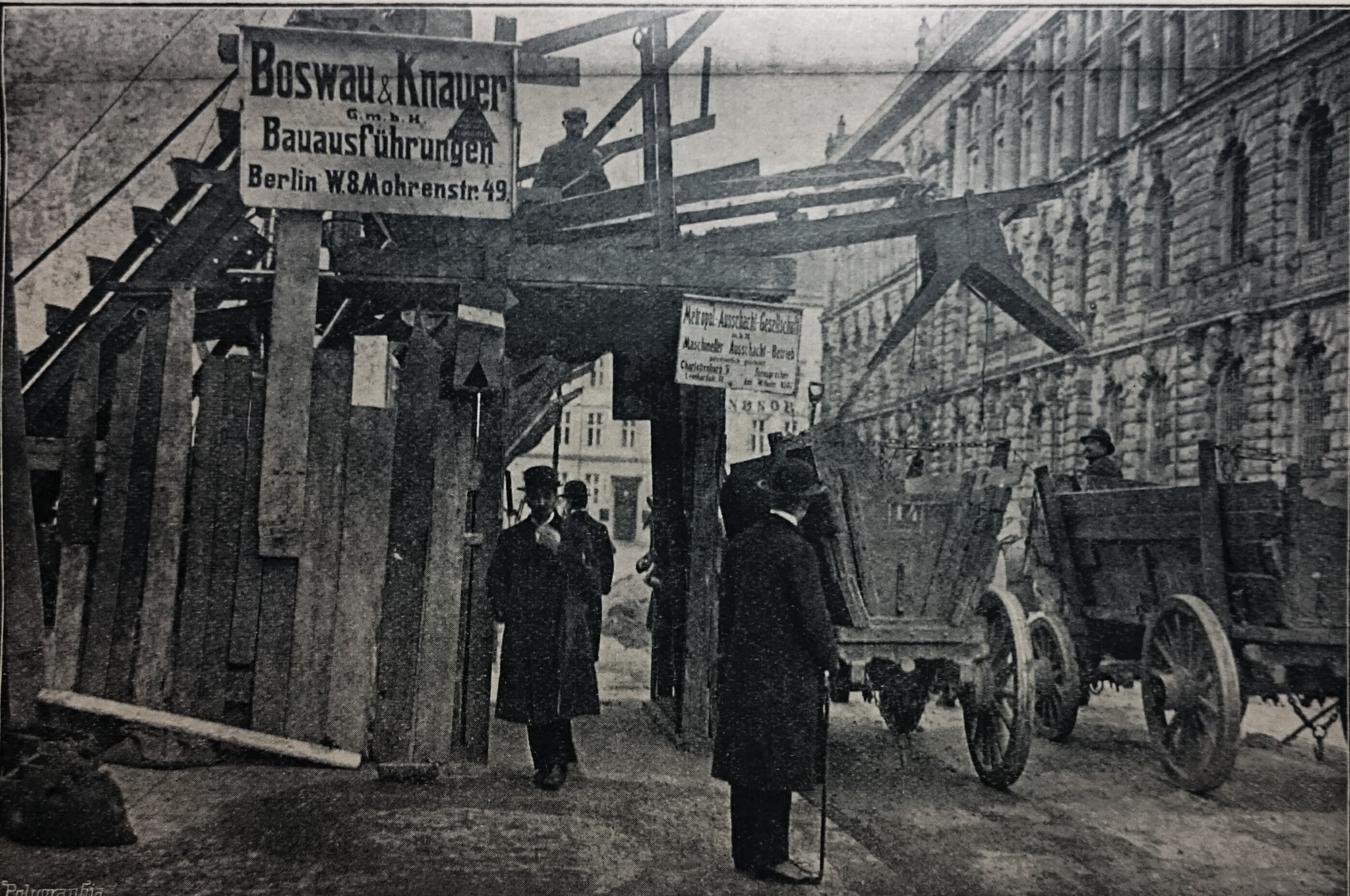
BOSWAU + KNAUER excavation pit in Berlin with bucket chain excavator, 1913
BOSWAU + KNAUER excavation pit in Berlin · 1913 · public domain

Catalogue of works · selection

The buildings that shaped Germany.

Between 1905 and 1908, BOSWAU + KNAUER executed the KaDeWe, the Grand Hôtel Esplanade, the Hotel Excelsior, the Schauspielhaus Düsseldorf, the Haus Puricelli, the Oestertalsperre and the first construction phase of the DWM works in Reinickendorf in parallel. A concentration of key buildings unmatched by any other German construction firm of the period.

Kaufhaus des Westens (KaDeWe), Berlin · Tauentzienstraße
1905,1907·Berlin · Tauentzienstraße

Kaufhaus des Westens (KaDeWe)

Architect: Johann Emil Schaudt

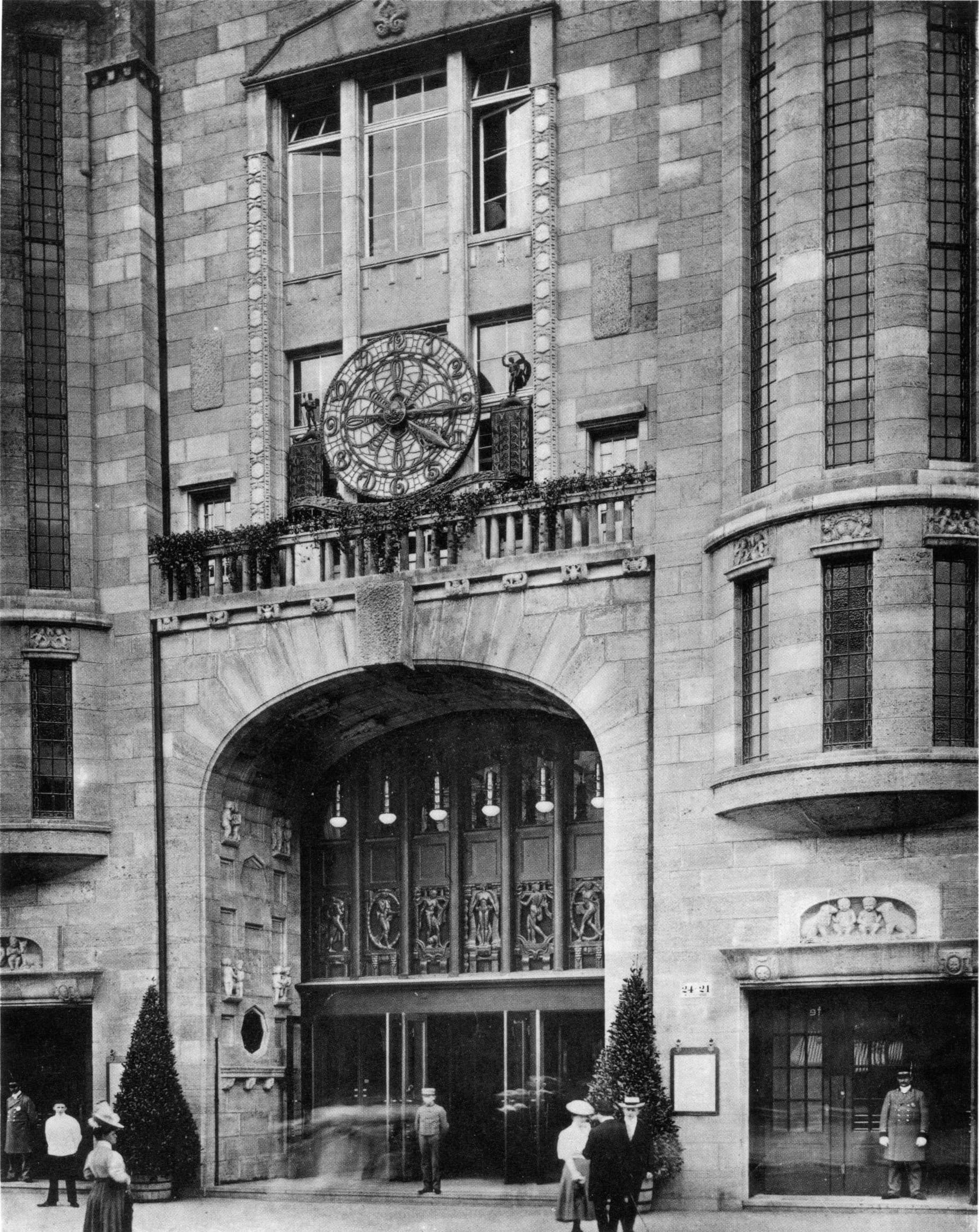
The building that defined the Berlin West City. BOSWAU + KNAUER, as general contractor, executed what Schaudt’s design demanded: a temple of consumption on the scale of European metropolitan ambition. Opened on 27 March 1907 by Adolf Jandorf.

Status: Standing. Flagship department store of Europe.

KaDeWe main entrance, 1907 · KaDeWe archive · public domain

View source →
Grand Hôtel Esplanade, Berlin · Bellevuestraße 16,18a
1907,1908·Berlin · Bellevuestraße 16,18a

Grand Hôtel Esplanade

Architect: Otto Rehnig

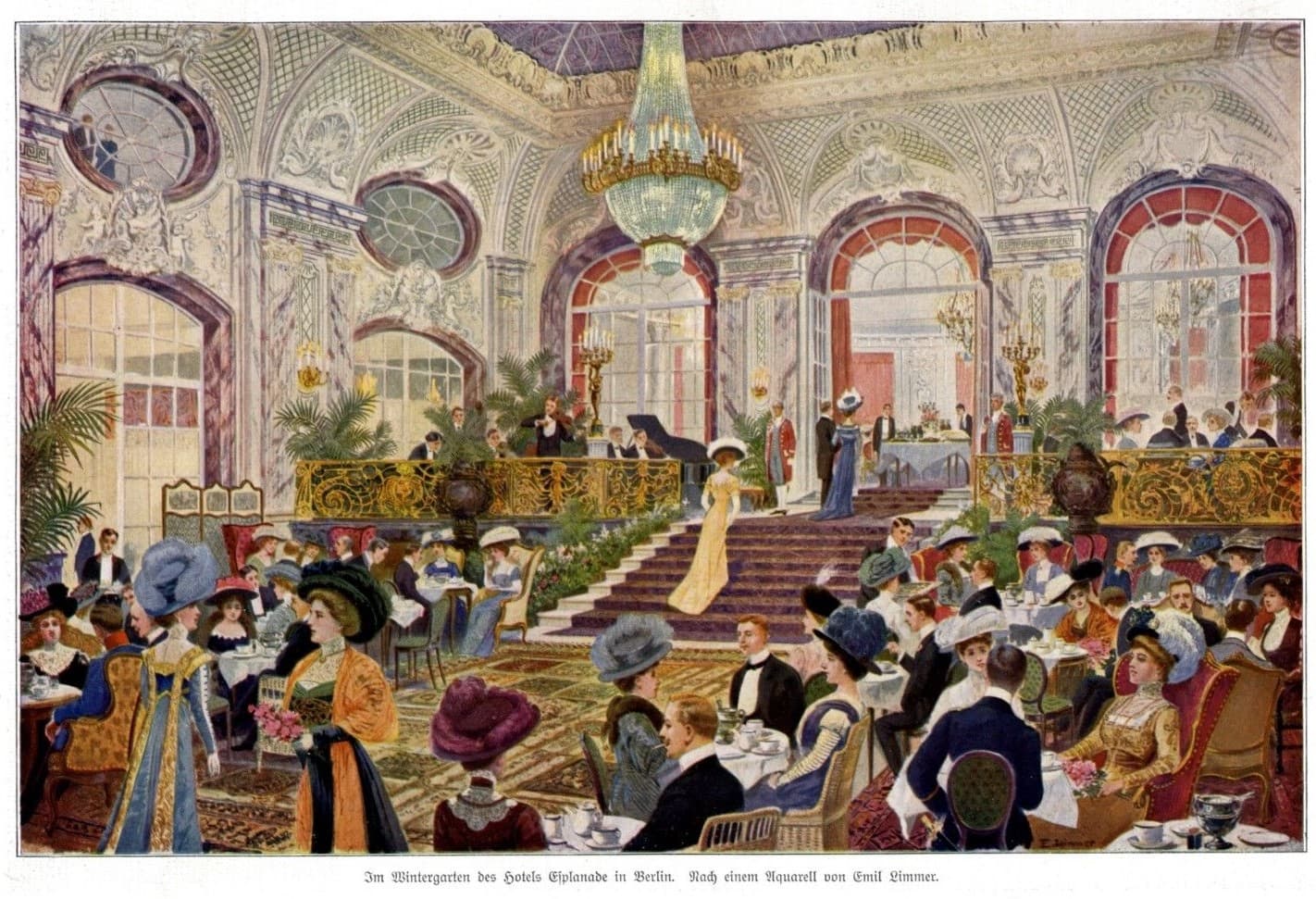
High society Berlin of the imperial era met here. Kaiser Wilhelm II resided here repeatedly; Greta Garbo stayed in 1925. BOSWAU + KNAUER built the neighbouring Hotel Excelsior at the same time. Both for the Berlin hotel family Otto Rehnig.

Status: The Kaisersaal and breakfast room were relocated into the Sony Center at Potsdamer Platz in 1996. Publicly accessible to this day.

Emil Limmer · In the winter garden of the Hotel Esplanade, 1909 · public domain

View source →
Oestertalsperre, Plettenberg · Märkischer Kreis
1905,1907·Plettenberg · Märkischer Kreis

Oestertalsperre

Architect: Otto Intze (design) · Rudolf Schäfer (site management)

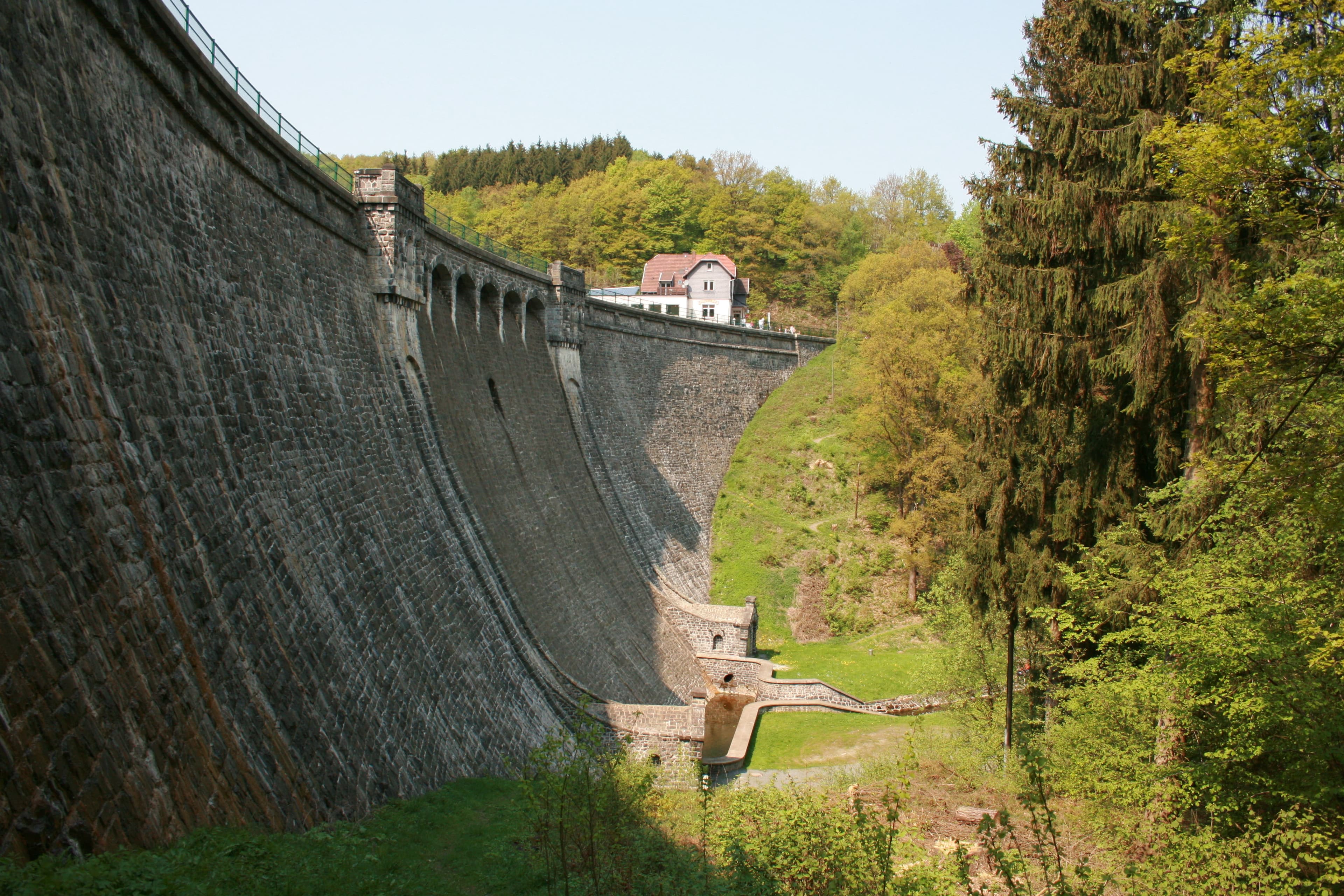
A major hydraulic engineering project in the Sauerland. BOSWAU + KNAUER built the dam to Otto Intze’s design, proving that the firm commanded not only representative architecture but also heavy engineering works. The reservoir remains in operation today.

Status: Standing. Inaugurated 31 July 1907. In operation.

Oestertalsperre, 2009 · photo: Frank Vincentz · CC BY-SA 3.0

View source →
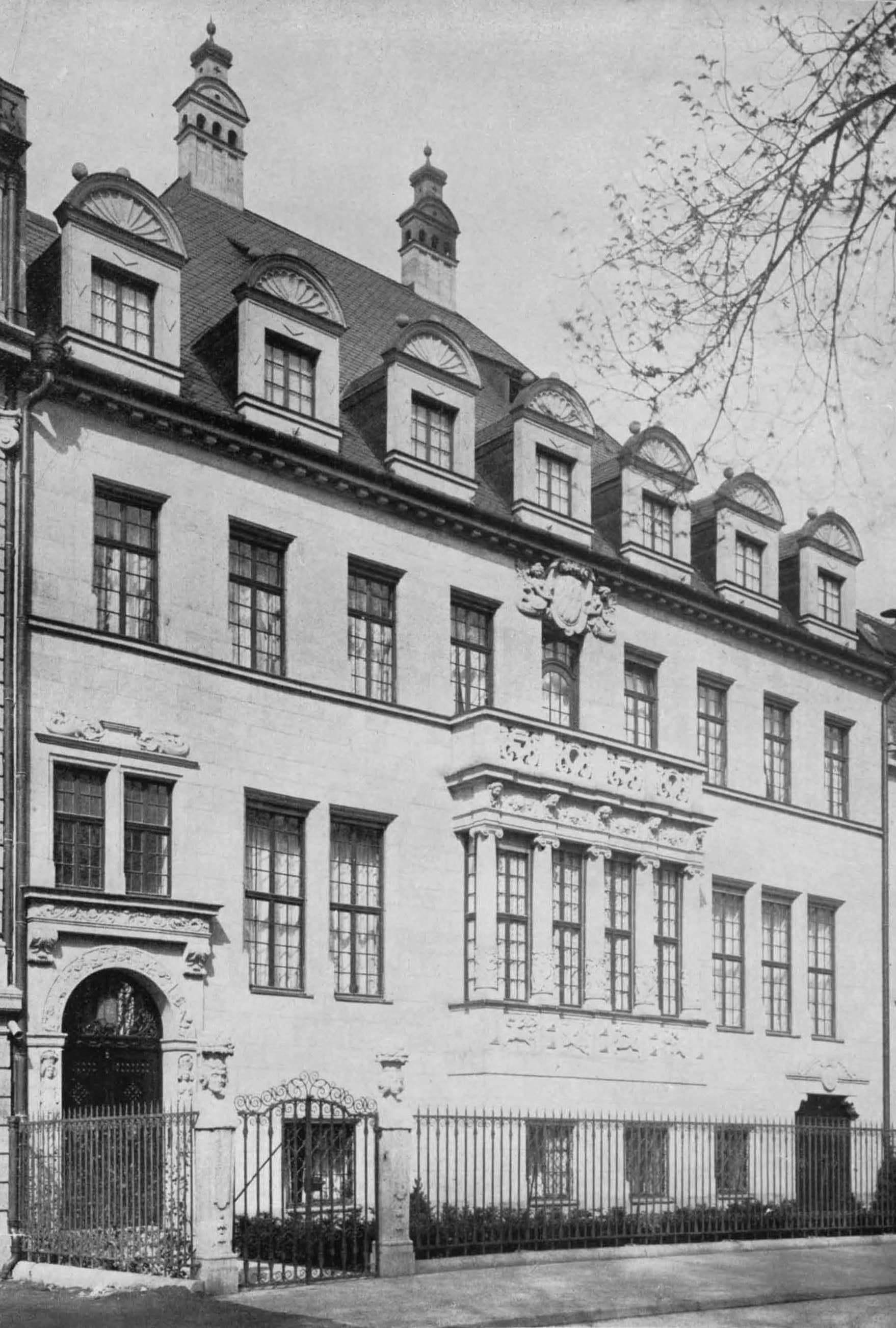
Haus Puricelli, Düsseldorf · Königsallee 49
1905,1907·Düsseldorf · Königsallee 49

Haus Puricelli

Architect: Gabriel von Seidl

Bourgeois representative architecture on Düsseldorf’s Königsallee, executed to plans by the Munich architect Gabriel von Seidl. Evidence of the Berlin firm’s reach beyond the capital.

Status: Standing (rebuilt 1980). Heritage listed. Deutsche Bank since 1975.

Street front Königsallee 49, 1908 · Deutsche Bauzeitung XLII · public domain

View source →
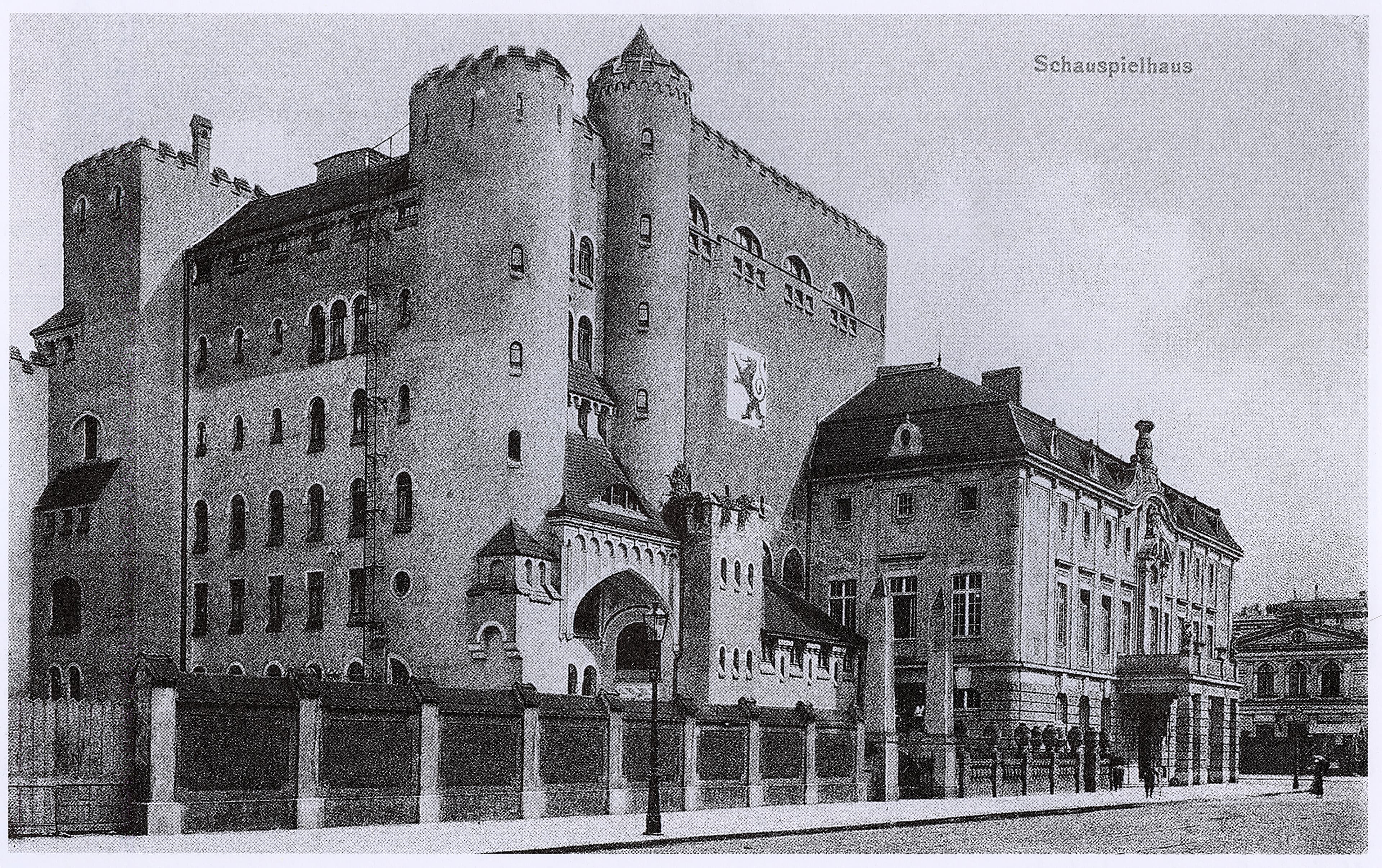
Schauspielhaus Düsseldorf, Düsseldorf · Karl-Theodor-/Kasernenstraße
1904,1905·Düsseldorf · Karl-Theodor-/Kasernenstraße

Schauspielhaus Düsseldorf

Architect: Bernhard Sehring

One of the most significant pre-war theatre buildings in Düsseldorf. Sehring, also the architect of the Berlin Theater des Westens, designed it; BOSWAU + KNAUER built it. A reminder of a cultural infrastructure erased by the bombing campaigns.

Status: Documented in the collections of the Düsseldorf city archive.

Schauspielhaus Düsseldorf, 1908 · Paul Wietzorek collection · public domain

View source →
DWM works Reinickendorf, Berlin-Reinickendorf · Eichborndamm 105,177
1906,1918·Berlin-Reinickendorf · Eichborndamm 105,177

DWM works Reinickendorf

Architect: Paul von Gontard (general director) · Alfred Kühn

A 35-hectare industrial complex of the Deutsche Waffen- und Munitionsfabriken, with a 900-metre street frontage. BOSWAU + KNAUER were commissioned explicitly because they had just completed the KaDeWe. Today the building houses the Landesarchiv Berlin.

Status: Standing. Home of the Landesarchiv Berlin since July 2001. Heritage listed.

BOSWAU + KNAUER excavation pit · Rude Květy, 1913 · public domain

View source →
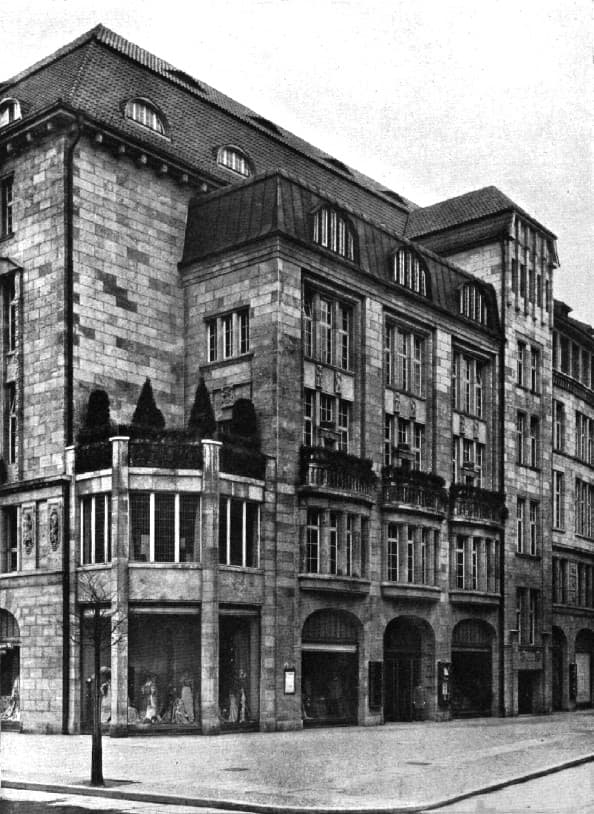
Industriepalast, Berlin-Friedrichshain · Warschauer Straße 34,44
1906,1907·Berlin-Friedrichshain · Warschauer Straße 34,44

Industriepalast

Architect: Johann Emil Schaudt

A large-scale complex of Berlin industrial architecture, today a prominent presence in Friedrichshain. Schaudt, the same architect as on the KaDeWe, supplied the design; BOSWAU + KNAUER the execution. The Wilhelmine volume remains legible even after the conversions of the 1990s.

Status: Parts preserved in original form (buildings 39/40, 43/44). Heritage no. 09095169.

Comparable Schaudt building: KaDeWe Passauer Straße, 1908 · public domain

View source →
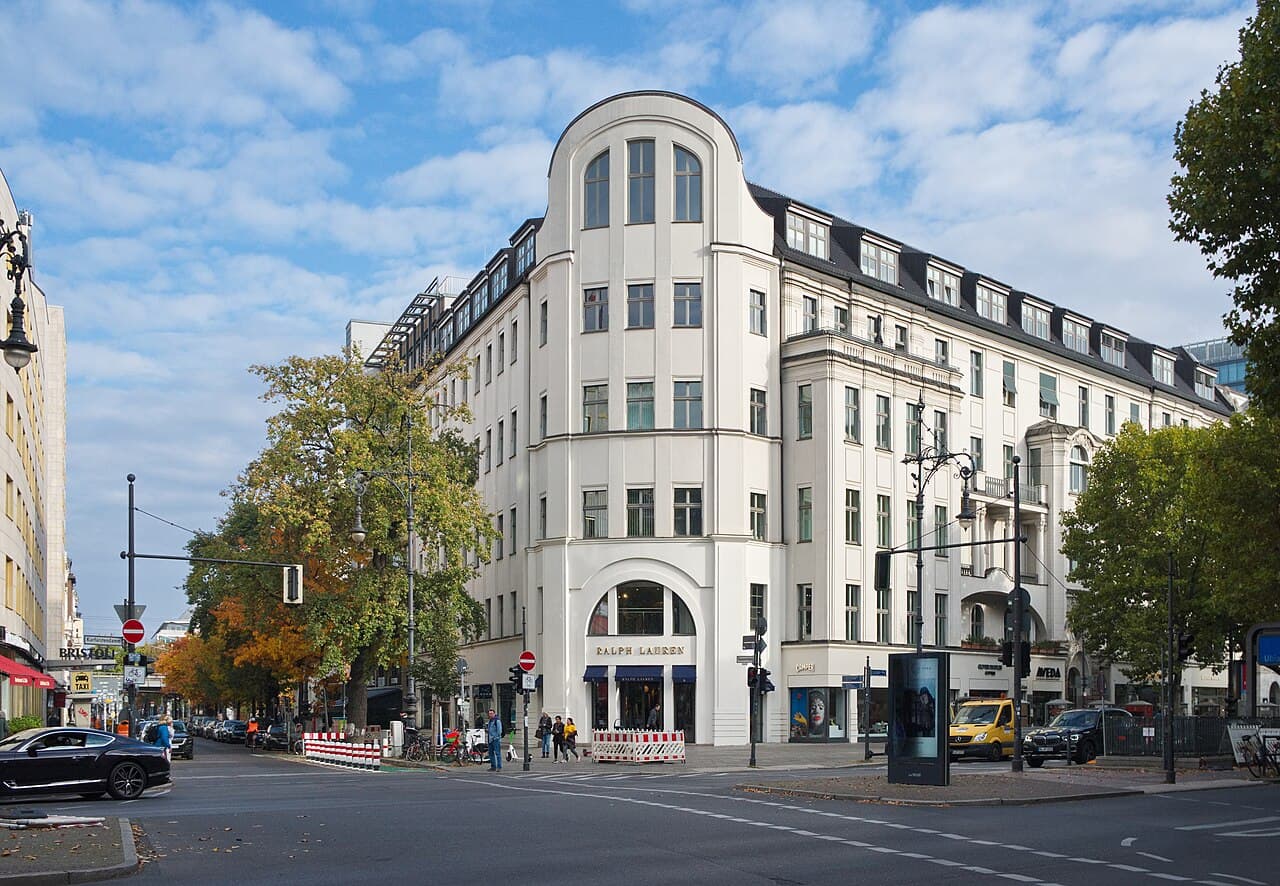
Apartment building Kurfürstendamm 26A, Berlin-Charlottenburg · Kurfürstendamm 26A / Fasanenstr. 75
1905,1907·Berlin-Charlottenburg · Kurfürstendamm 26A / Fasanenstr. 75

Apartment building Kurfürstendamm 26A

One of the more affluent residential addresses in Charlottenburg, built by the firm at the same time it was executing the KaDeWe a few hundred metres away. Evidence of the geographic density of its workload between 1905 and 1907.

Status: Standing. Heritage no. 09020715.

Kurfürstendamm 26A, Berlin · photo: Armin Kleiner · CC BY-SA 4.0

View source →

Legacy & return

From construction to security technology.

The Wilhelmine peak

Between 1905 and 1908, BOSWAU + KNAUER stood at the summit of the German construction industry. The firm executed the KaDeWe, the Hotel Esplanade, the Schauspielhaus Düsseldorf, the Haus Puricelli, the Oestertalsperre and the DWM works in Reinickendorf in parallel. A concentration of representative and technical major projects unmatched by any construction firm of the era. With branches in Berlin, Düsseldorf, Hamburg, Hanover, Cologne and Brandenburg, the firm ranked among the dominant general contractors of the Empire.

A name that outlasted its buildings

More than a century after the major commissions, many of these structures are still standing: the KaDeWe as the flagship department store of Europe, the Oestertalsperre as a hydraulic engineering monument, the former DWM works in Reinickendorf as the Landesarchiv Berlin. The Haus Puricelli in Düsseldorf is heritage listed, as is the Industriepalast in Friedrichshain. The name BOSWAU + KNAUER is recorded in the building files of these cities.

Return as a robotics brand

More than 130 years after its founding, the Quarero Robotics Deutschland GmbH in Filderstadt has taken on the historical name for a new generation of German engineering: autonomous security robots and mobile video towers. What Hermann Knauer meant to the representative architecture of his era between 1905 and 1908, BOSWAU + KNAUER is meant to be today for the physical security infrastructure of German industry. Made in Germany, in direct continuity with the original values: precision, durability, directness.

Ihr Gelände. Ihre Konfiguration. Ihr Preis.

Teilen Sie uns Ihren Einsatzbereich mit.

Antwort innerhalb von fünf Werktagen — persönlich, ohne Callcenter, auf Wunsch unter NDA.