
Blog
ASIS Standards for Physical Perimeters: A Working Guide
The ASIS standards are dense. Most operators use one document, never read the others, and miss the connections. A short reference for those who actually build.

Dr. Raphael Nagel
January 14, 2026
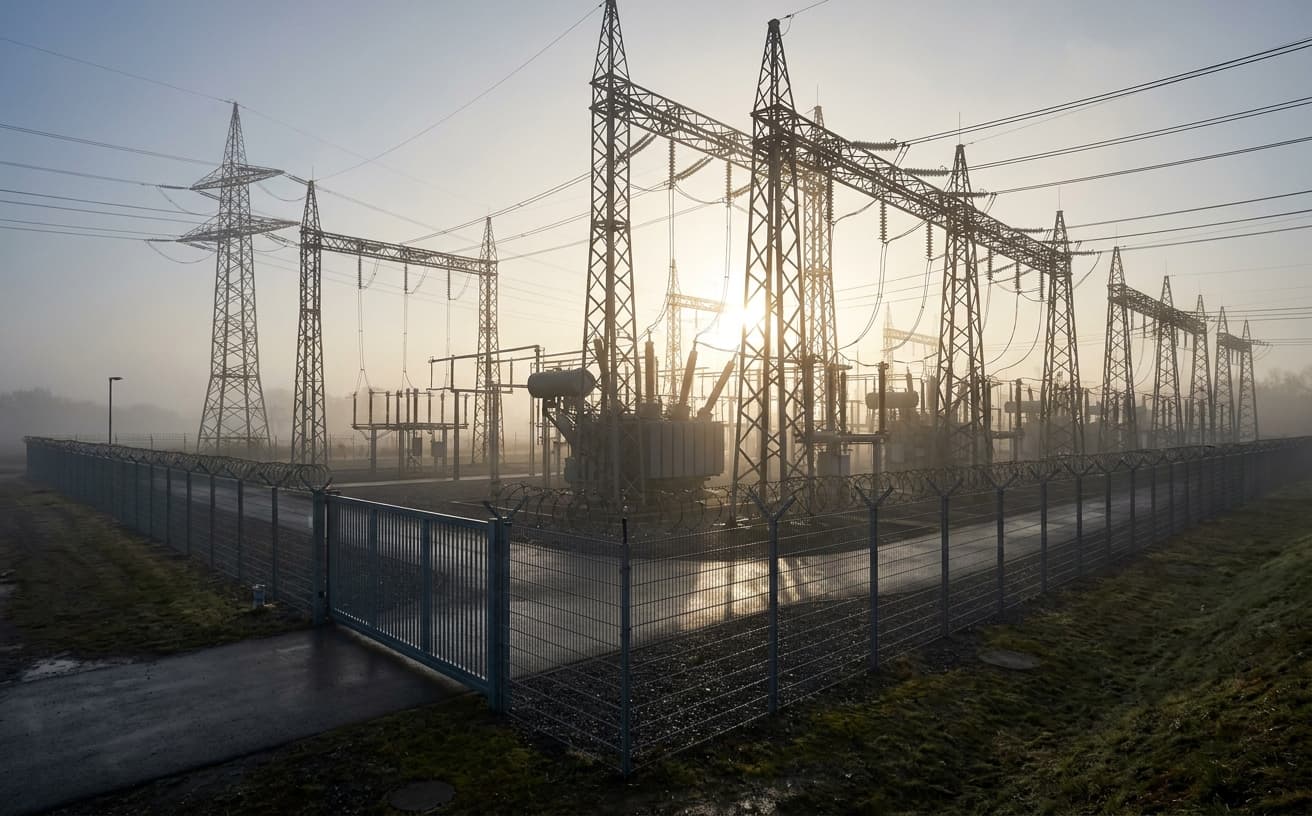
A standard is not a manual. It is a contract between operators about what the word "secure" means, and the ASIS catalog is one of the few places in the physical security world where that contract has been written down with enough discipline to be useful in court, in procurement, and in the field.
Most operators who reach for an ASIS document reach for one. They download the Facilities Physical Security Measures guideline, skim the chapter that touches their immediate problem, and move on. The rest of the catalog stays unread. What is missed in that habit is the architecture: ASIS standards are designed to interlock, and the value sits in the connections, not in the individual document. A perimeter is not a fence. It is a layered control problem that touches risk assessment, workplace violence prevention, investigations, security officer operations, and supply chain integrity. Each of those domains has its own ASIS document. Read alone, each is partial. Read together, they describe a working perimeter.
What ASIS actually publishes
ASIS International is the professional body that, for most of the English-speaking security profession, sets the de facto vocabulary. It is headquartered in the United States, accredited by ANSI as a standards developer, and its publications fall into three categories that operators should learn to distinguish before they cite anything.
The first category is American National Standards. These are ANSI-accredited, developed through a balanced committee process, and carry the same procedural weight as any other ANSI standard. The Risk Assessment standard (ASIS/RIMS RA.1) belongs here, as does the Security Management Standard on Physical Asset Protection (PAP), the Workplace Violence Prevention and Intervention standard, and the Investigations standard. These are the documents an auditor or expert witness will treat as authoritative.
The second category is guidelines. These are not ANSI-accredited but are developed by professional councils within ASIS. The Facilities Physical Security Measures guideline is the most cited document in this group. It enumerates barriers, lighting, locks, intrusion detection, video surveillance, and access control in a structure that maps onto how a perimeter is actually built. The Protection of Assets reference set, a multi-volume work, sits adjacent and functions as the field's longest-running encyclopedia.
The third category is what ASIS calls Standards and Guidelines published jointly with other bodies. The most significant of these in recent years has been the work with ANSI on Enterprise Security Risk Management (ESRM), which reframes physical security as a risk discipline rather than a checklist discipline. ESRM is not a perimeter document on its face, but every perimeter decision worth defending now has to be justified against it.
The distinction matters because operators routinely cite "ASIS standards" when they mean a guideline, and cite a guideline when they need a standard. The procurement consequences are not symmetric. A guideline tells you what good practice looks like. A standard tells you what conformance looks like. Auditors care about the difference.
The perimeter documents in working order
For a physical perimeter, the documents that matter, in the order an operator actually uses them, are these. The Risk Assessment standard sets the analytical frame: threat, vulnerability, consequence, likelihood, and the documented chain of reasoning that connects them to a control decision. Without a risk assessment that survives external review, no perimeter design can be defended when something goes wrong.
The Physical Asset Protection standard sits on top of the risk assessment and translates its findings into a management system. It is structured in the plan-do-check-act pattern familiar from ISO management standards, and it specifies what the organization must document, who is accountable, how reviews are conducted, and how corrective action is closed. Operators who have lived inside ISO 27001 will recognize the structure immediately. PAP is, in effect, the physical-domain equivalent.
The Facilities Physical Security Measures guideline is then the catalog of actual controls. It is where one looks up barrier classifications, lighting levels expressed in lux at defined distances, lock grades referenced against ANSI/BHMA, intrusion detection sensor categories, video surveillance design parameters, and access control architectures. It is descriptive, not prescriptive, and that is its strength. It gives the operator a vocabulary precise enough to specify a perimeter without dictating the brand or model.
The Security Officer standards, covering selection, training, and operations, govern the human layer. A perimeter without trained officers is a fence with cameras. The standards specify what training a guard must hold, how shifts are documented, how patrols are recorded, and how incidents are escalated. In the US market, these documents are commonly referenced in commercial guard contracts, and a procurement officer who does not know them is negotiating from a weaker position than the vendor.
Workplace Violence Prevention and Intervention enters the picture wherever the perimeter is also an HR boundary, which is to say almost everywhere. The standard addresses threat assessment teams, intervention protocols, and the integration of security with human resources, legal, and medical. Perimeter design that ignores this domain produces sites that are hardened against strangers and undefended against insiders.
Investigations standards, finally, govern what happens after a perimeter is breached. They specify evidence handling, interview protocols, documentation, and the boundary between corporate investigation and law enforcement referral. An incident on a perimeter that is investigated without reference to this standard is an incident whose findings will not survive litigation.
Read in sequence, these documents do not describe six separate problems. They describe one problem at six layers of resolution.
Where the standards connect to ISO 27001 and NIST
A common mistake in mixed environments, which is to say in any modern critical infrastructure site, is to treat the ASIS catalog and the information security frameworks as parallel and non-intersecting. They are neither. Physical security is a control family inside ISO 27001, specifically Annex A.7 in the 2022 revision, and Annex A.11 in the 2013 version that many organizations still operate under. NIST SP 800-53 carries an entire family of physical and environmental protection controls, PE-1 through PE-23, that read like a condensed version of the ASIS Facilities guideline written for federal use. The NIST Cybersecurity Framework 2.0, in its Protect function, expects physical access controls to be in place and managed.
The integration point that operators consistently miss is that ISO 27001 and NIST do not tell you how to specify a perimeter. They tell you that one must exist, that it must be commensurate with risk, and that it must be auditable. The ASIS standards are where the "how" lives. An auditor checking ISO 27001 Annex A.7 conformance who finds an ASIS-aligned risk assessment, a PAP-conformant management system, and a Facilities-guideline-specified set of controls will close the finding without further discussion. An auditor who finds a procurement specification copied from a vendor brochure will not.
The same logic applies in industrial environments governed by IEC 62443. That standard addresses industrial automation and control systems, but it explicitly assumes that the physical layer is protected by mechanisms outside its scope. The ASIS perimeter standards fill that scope. In KRITIS environments in Germany, where BSI guidance and the NIS2 transposition both require physical and cyber controls to be coordinated, the cleanest way to demonstrate coordination is to map the ASIS controls against the BSI Grundschutz catalog and the IEC 62443 zone and conduit model. The mapping is straightforward once one accepts that the documents are addressing the same problem from different starting points.
Use in US audits and procurement
ASIS standards appear in US audits in three modes. The first is direct citation. A federal facility audit under the Interagency Security Committee standards will reference ASIS documents alongside ISC's own Risk Management Process. Private-sector audits driven by insurance carriers, particularly those underwritten through NICB-affiliated programs or carrier-specific loss control units, routinely cite the Facilities Physical Security Measures guideline as the benchmark against which on-site findings are written. The auditor does not need the operator to have certified to anything. The auditor needs the operator to be able to defend the perimeter design against an external reference, and ASIS is the reference most carriers know.
The second mode is contractual. Federal and state contracts for guarded sites, particularly in the energy, water, and transportation sectors, increasingly require that guard force operations conform to the ASIS Security Officer standards. This is not always called out as "ASIS" in the contract language. It is more often embedded in references to "industry-standard training" or "recognized professional standards," which in dispute will resolve to ASIS because no competing American standard exists at the same level of specificity.
The third mode is litigation. When a perimeter fails and the failure produces injury, theft, or business interruption that ends up in court, the question put to expert witnesses is almost always whether the perimeter conformed to recognized standards of care. ASIS documents are what experts cite. An operator who can show that the perimeter was designed against ASIS Risk Assessment, managed under PAP, specified against the Facilities guideline, and staffed under the Security Officer standards is in a defensible position. An operator who cannot is in a position where the plaintiff's expert will choose the framework for them, and will choose ASIS, and will then ask why the defendant did not.
CISA, in its guidance for critical infrastructure sectors, does not mandate ASIS standards, but its sector-specific plans and its Hometown Security materials reference them frequently. The Cybersecurity and Infrastructure Security Agency has been deliberate about not creating duplicate physical security standards where ASIS already publishes them. That deliberate non-duplication is itself a form of endorsement.
How the standards are kept current
The maintenance cycle for an ANSI-accredited ASIS standard is five years. The standard must be reviewed and either reaffirmed, revised, or withdrawn within that window, or it loses its ANSI accreditation. In practice, the major perimeter-relevant standards have been revised on cycles of seven to ten years, with reaffirmations in between. The Facilities Physical Security Measures guideline, as a guideline rather than a standard, follows a less formal cycle driven by the responsible council.
This matters operationally because a perimeter design citing a withdrawn or superseded standard is a design citing nothing. Procurement specifications written in 2018 against the then-current Facilities guideline need to be checked against the current edition before they are reissued. The same applies to references in service contracts and in internal policy documents. The mechanical fix is small. The consequence of not doing it is that an auditor or an expert witness will identify the lapse and use it to question the rigor of the entire program.
Revision work is conducted through ASIS technical committees with industry, government, and academic representation. The committees publish drafts for public review, and operators with the capacity to read drafts and submit comments have a direct route into the next edition. Most do not. The committees would benefit from broader participation, particularly from operators outside the United States, where the standards are used heavily but the development process is sparsely populated.
ASIS also coordinates internationally through liaison arrangements with ISO, particularly with ISO/TC 292 on security and resilience. The convergence point is the ISO 22300 series, which addresses business continuity, emergency management, and organizational resilience. Operators working in environments that already use ISO 22301 for continuity will find that the ASIS catalog and the ISO 22300 series are increasingly aligned in vocabulary, which simplifies the integration but does not eliminate the need to consult both.
What this means for the perimeter you actually operate
A perimeter that has been built without reference to the ASIS catalog can still be effective. The catalog does not contain magic. What it contains is a defensible vocabulary, a structured method, and a documented basis for the decisions an operator has already made or will have to make. The cost of using it is the time to read it. The cost of not using it is borne at the moment when someone outside the organization, an auditor, a carrier, a regulator, or an opposing counsel, asks how the decisions were reached.
In the manuscript BOSWAU + KNAUER. From Building to Security Technology, the chapter on integration argues that hardware, software, and human procedure must be specified against the same reference, or the system will fail at the seams. The ASIS catalog is one of the references that can hold that load on the physical side. NIST CSF 2.0 and ISO 27001 hold it on the information side. IEC 62443 holds it on the control system side. An integrated specification cites all four. A fragmented specification cites whichever was most convenient at the time of writing, which is usually none.
The operators who get the most from the ASIS standards are the ones who treat them as working documents, not as references for occasional consultation. They keep the current editions on the desk of the person responsible for physical security policy. They map every internal procedure against the relevant standard clause. They use the standards as the basis for contractor specifications, for procurement language, and for the briefing documents that go to the board when a capital request is made. The standards become a shared language between security, facilities, procurement, legal, and the board, and that shared language is what allows decisions to be made without being relitigated at every step.
What holds
The ASIS catalog is not a substitute for thinking. It is the structure within which thinking about physical perimeters becomes communicable. Operators who use it are not absolved of judgment. They are equipped with a language in which their judgment can be defended.
The connections matter more than the documents. A perimeter described against the Facilities guideline alone is a perimeter described against half a frame. A perimeter described against the risk assessment, the management standard, the controls catalog, the officer standards, the violence prevention standard, and the investigations standard is a perimeter described against the whole frame. The whole frame is what survives external scrutiny.
For operators in the three audiences this work addresses, construction firms, industrial and logistics operators, and security service providers, the working path forward is not to read every ASIS document end to end. It is to use Path I, a sixty-minute confidential conversation, to identify which two or three documents apply most directly to the perimeter in question, and which gaps in the current program are most exposed. From there, Path II, a three to five day audit, produces a structured assessment that maps the existing perimeter against the relevant ASIS, ISO, NIST, and IEC references and identifies the discrepancies. Path III, a ninety-day pilot, then validates the corrective measures in operation before they are committed to capital.
Frequently asked questions
Which ASIS standards apply to physical perimeters?
The core set is the Risk Assessment standard (ASIS/RIMS RA.1), the Security Management Standard on Physical Asset Protection, the Facilities Physical Security Measures guideline, the Security Officer standards covering selection, training, and operations, the Workplace Violence Prevention and Intervention standard, and the Investigations standard. The Enterprise Security Risk Management guidance frames all of these. Operators should also be aware of the Protection of Assets reference set, which functions as the field's working encyclopedia. The documents interlock, and citing one without the others produces a partial specification.
How do they relate to ISO 27001?
ISO 27001 Annex A.7 in the 2022 revision requires physical security controls but does not specify them in operational detail. The ASIS Facilities guideline, the Physical Asset Protection standard, and the related documents fill that detail. An ISO 27001 auditor reviewing physical controls will accept ASIS-aligned documentation as evidence of conformance. The same alignment works with NIST SP 800-53 controls in the PE family and with NIST CSF 2.0's Protect function. In KRITIS environments, BSI Grundschutz and IEC 62443 also map cleanly against the ASIS catalog when the mapping is done deliberately.
Are they used in US audits?
Yes, in three modes. Federal audits under Interagency Security Committee guidance cite ASIS documents directly. Insurance-driven private sector audits use the Facilities guideline as the benchmark for on-site findings. Litigation involving perimeter failures relies on ASIS standards as the recognized standard of care, with expert witnesses citing them by default. CISA references the standards in sector guidance without mandating them. An operator who cannot defend a perimeter design against the ASIS catalog will find the plaintiff's expert choosing the framework instead, and ASIS will be that framework.
How are they kept up to date?
ANSI-accredited ASIS standards must be reviewed within five years, with revision, reaffirmation, or withdrawal as the outcomes. In practice the major perimeter standards revise on seven to ten year cycles with interim reaffirmations. Guidelines follow less formal cycles driven by the responsible ASIS councils. Drafts are published for public review, and operators can submit comments directly. International coordination runs through liaison with ISO/TC 292, particularly the ISO 22300 resilience series. Procurement specifications and internal policies citing ASIS documents should be checked against the current edition on a defined review cycle.
Related topics
- ENISA Good Practices on Physical Security: What It Says
- Critical Infrastructure Perimeter Security: Best Practices
- Property Protection: Robots & Towers vs Guards 2026
- NPSA and UK Physical Security: The New National Standard
- UK Energy CNI: ESO, National Grid & Substation Attacks
Take the next step: See prices & ROI · Explore the products · Send a no-obligation request. BOSWAU + KNAUER – direct from the factory in Filderstadt, reply within 5 working days.
About the author
Dr. Raphael Nagel (LL.M.) is founding partner of Tactical Management. He acquires and restructures industrial businesses in demanding market environments and writes on capital, geopolitics, and technological transformation. raphaelnagel.com
More reading

Since 1892.
The firm is reached at boswau-knauer.de or +49 177 2266267.