
Blog
Critical Infrastructure in Austria: BVT, DSN, Coordination
Direktion Staatsschutz und Nachrichtendienst, the federal-state split, and Voestalpine and OMV as priority operators: how Austria coordinates CI protection.
Dr. Raphael Nagel
May 13, 2025
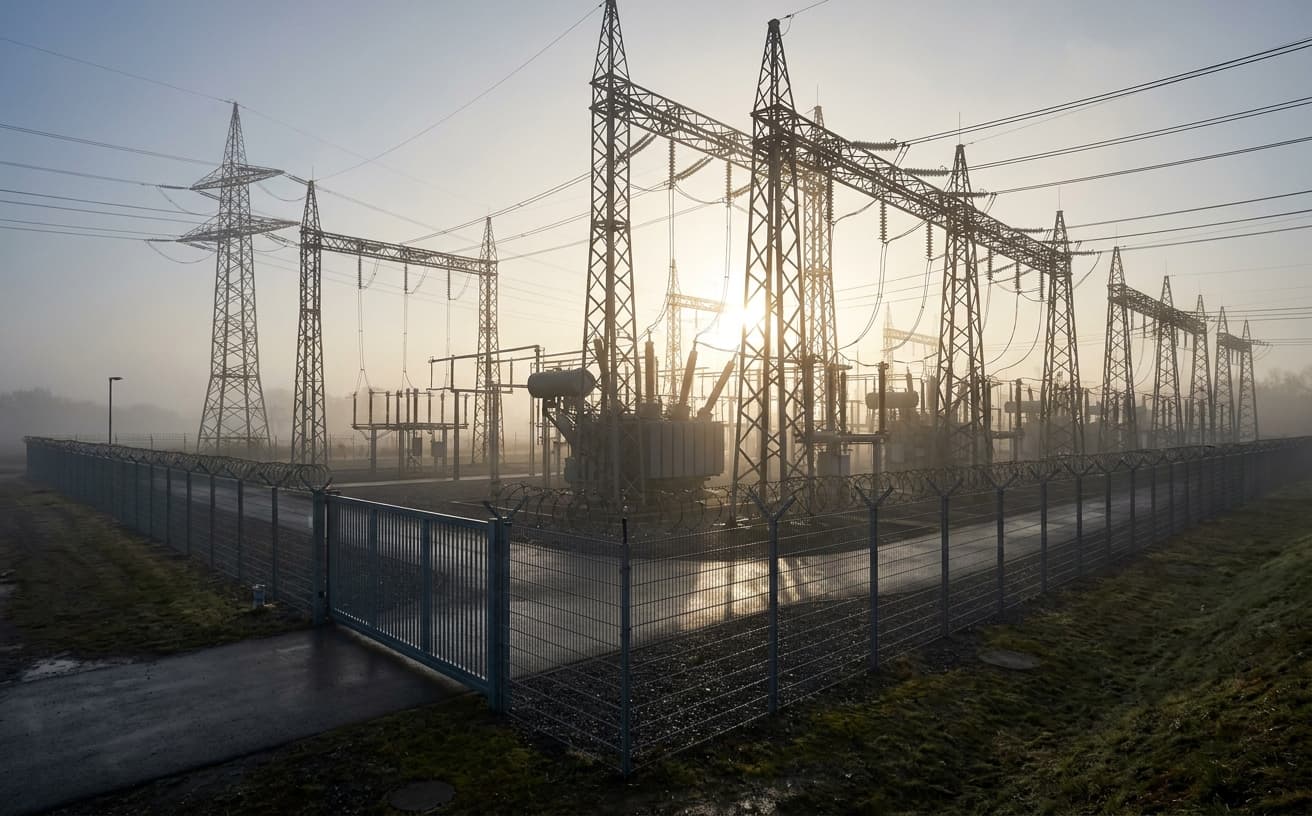
Austria did not reform its state protection in 2021 to refine doctrine. It did so because the previous structure had lost the trust of partner services, and because critical infrastructure protection in a federal republic with nine sovereign Länder cannot be improvised when an incident is already in progress.
The Direktion Staatsschutz und Nachrichtendienst, DSN for short, replaced the Bundesamt für Verfassungsschutz und Terrorismusbekämpfung, BVT, in December 2021. The change was not cosmetic. It was a separation of intelligence from operational policing, a redefinition of how a federal republic processes the information that protects its electricity, its gas, its rail, its steel and its drinking water. For operators of priority infrastructure in Austria, that change has direct consequences. It determines who calls them when a coordinated reconnaissance pattern is detected across substations, who clears the personnel on their security perimeter, and who decides whether an incident is communicated to the public or held in confidence while a counter-operation runs. Those are not abstract questions. They shape contracts, response times and the legal exposure of management boards.
From BVT to DSN, what actually changed
The BVT had two problems that were widely discussed inside the partner services of the Five Eyes and inside the German BfV. The first was that intelligence work and police investigation were carried out by the same officers, which created a constant tension between the long horizon of intelligence and the short horizon of evidence gathering for court proceedings. The second was that the BVT had suffered a house search in 2018 that, regardless of its legal merits, signalled to foreign partners that sensitive material held in Vienna might not be safe from domestic political processes. Information sharing degraded. The cost of that degradation was not visible in headlines. It was visible in the quality of warnings that reached Austrian operators of critical infrastructure when reconnaissance against European energy networks intensified after February 2022.
The DSN reform addressed both problems with structural answers rather than personnel rotations. The intelligence function was separated from criminal investigation. A dedicated nachrichtendienstlicher arm now handles long-running cases, source management and the exchange with foreign services. A separate operational arm handles measures that lead to indictment. The Lagezentrum was strengthened. Vetting procedures for officers handling classified material were tightened. The relationship with the Heeresnachrichtenamt and the Abwehramt, the two military intelligence services, was put on a clearer footing, with defined channels rather than personal arrangements. None of this is sufficient to guarantee that warnings reach operators in time. It is, however, the necessary condition.
For an operator, the practical effect is that the contact point for state protection matters has shifted. The desk that used to take a call about suspicious drone activity over a refinery now sits inside the DSN, and the officer answering it has a different role definition than three years ago. Operators that have not updated their incident communication playbook accordingly are working with an obsolete map. Reviewing that map is one of the cheapest improvements available, and it does not require any capital expenditure. It requires a meeting and a current contact list, validated against the actual organisational chart of the Innenministerium as it stands now, not as it stood in 2020.
The federal-state split, why it complicates everything
Austria is a federal republic with nine Länder. Each Land has its own Landespolizeidirektion. Each has its own Landesamt für Verfassungsschutz und Terrorismusbekämpfung, now restructured as a Landesamt that reports into the federal DSN architecture while remaining administratively part of the Land. The Länder also hold competencies in disaster response, in fire services, in many aspects of environmental regulation and in the licensing of certain installations. Critical infrastructure protection therefore sits across at least three governance lines: federal intelligence and police, Land-level police and protection, and sectoral regulators that may report to a federal ministry, a Land authority or both depending on the sector.
This is not a flaw. It is the constitutional design of the Second Republic, and it has served Austria well in many domains. For critical infrastructure, however, it imposes a coordination burden that operators must take seriously. A pipeline crossing four Länder touches four Landespolizeidirektionen, four sets of Land-level emergency services, and at least one federal authority depending on whether the relevant element is classified as transboundary energy infrastructure. A railway line operated by ÖBB crosses every Land and interacts with both federal transport regulation and Land-level law enforcement. The protection of a single substation may involve the local Bezirkshauptmannschaft, the Land government, the federal grid regulator E-Control, the DSN where state-protection concerns apply, and the operator's own security organisation.
The coordination architecture that holds these layers together is partly formal and partly informal. The formal side is built around the Bundesgesetz über die Sicherheit kritischer Infrastrukturen, the NIS-G transposing the European NIS2 Directive, and the various sectoral laws that define which operators are designated as critical. The informal side is built around standing relationships, regular exercises and the working groups that meet at the Innenministerium and the Bundeskanzleramt. Operators that participate actively in those working groups receive a higher quality of warning than operators that wait for written notifications. This is not favouritism. It is the natural consequence of the fact that classified information is shared in rooms, not in emails. The book BOSWAU + KNAUER. From Building to Security Technology develops this point in some detail for the German context, and the Austrian application follows the same logic with the added complexity of the federal-state split.
Priority operators, the names that matter
Austria has a number of operators whose disruption would propagate beyond the national economy and into European supply chains. Two stand out by virtue of their cross-border integration. Voestalpine, headquartered in Linz, produces specialised steel for European automotive, rail and aerospace industries, and its electricity consumption alone places it in a category that the grid operator APG must treat as a structural variable rather than a customer. OMV, the integrated energy company, operates refineries, the Schwechat complex near Vienna, and a pipeline and storage network that connects Austria to the Bavarian and Czech markets and to the southern gas corridor. Disruption to either company is not a corporate event. It is a regional one.
Beyond these two, the priority list in Austria includes the grid operator Austrian Power Grid, the gas transmission operator Gas Connect Austria and its parent structures, the rail operator ÖBB with its electrification dependencies, the water and wastewater operators that serve Vienna and the larger Land capitals, the Vienna Airport as a hub for Eastern European traffic, the financial market infrastructure operated by Erste Group, Raiffeisen and OeKB, and a set of hospital networks and pharmaceutical production sites whose disruption would propagate into health systems beyond Austria. The exact classification of which operators are designated as essential or important under the NIS2 transposition is a matter for the responsible ministries and is subject to ongoing review. The categorisation matters because it determines reporting obligations, audit cycles and the level of state engagement available to the operator.
What the categorisation does not determine is the standard of care that prudent management should apply. Boards of priority operators in Austria operate under the same fiduciary expectations as their German and Italian counterparts. They are expected to commission audits, to maintain incident response plans that have been exercised, to vet personnel with access to sensitive systems, and to maintain a working relationship with the DSN and with Land-level law enforcement. None of these expectations are softened by the federal-state split. They are made more demanding by it, because the operator carries the burden of integrating across the governance lines rather than relying on a single authority to do so.
Sector regulators and the operator's burden
Each sector has its own regulator and its own technical reference framework. E-Control supervises electricity and gas, with technical standards anchored in the European network codes and in the IEC 62443 family for operational technology security. The transport sector is supervised partly by the federal ministry and partly by Land authorities. The financial sector is supervised by the FMA and the OeNB. Water and wastewater are largely supervised at Land level. The health sector is divided between federal frameworks and Land-level operational responsibility. The NIS authority sits in the Innenministerium and coordinates with sectoral regulators through formal mechanisms.
For an operator, this means that compliance is not a single document. It is a set of overlapping obligations whose intersections sometimes leave gaps and sometimes generate contradictions. A pipeline operator may be subject to environmental requirements that prescribe transparent reporting of certain incidents, and to security requirements that prescribe confidentiality of the same incidents until investigation is complete. Reconciling these is not a legal exercise that can be left to outside counsel. It is a management exercise that requires the operator to maintain an internal capability for regulatory navigation, and to invest in the people who can hold conversations across the relevant authorities without escalating every disagreement to ministerial level.
References that orient this work include the NIST Cybersecurity Framework 2.0 for the structural articulation of identify, protect, detect, respond and recover, IEC 62443 for the industrial control systems that sit at the core of energy and water operators, ISO 27001 for the management system around information security, and the European ENISA guidance that translates between the European directives and national transpositions. None of these frameworks resolve the federal-state question in Austria. They provide the language in which the question can be discussed across borders and across sectors. Operators that adopt this language consistently find that their conversations with regulators, insurers and partner operators become measurably more efficient.
The intelligence dimension and what operators may expect
State protection in Austria is the responsibility of the DSN at federal level and of the Landesämter at Land level. The intelligence dimension of critical infrastructure protection is concentrated at federal level for reasons that have to do both with the constitutional allocation of competencies and with the practical necessity of maintaining classified channels with foreign services. An operator that detects a pattern of reconnaissance, of social engineering against employees, or of unusual physical presence near sensitive sites should expect that the relevant intelligence response will come from the DSN, not from the local police, even though the first contact will often be made through the Landespolizeidirektion.
What operators may expect from the intelligence community is honest assessment of threat patterns affecting their sector, warning about specific threats where this is operationally possible, and engagement on personnel vetting where access to sensitive material is involved. What operators may not expect is real-time tactical support for incidents that fall short of the threshold for state-protection involvement, or any guarantee that warnings will arrive in time. The intelligence community works under constraints of source protection and of legal authority that limit what it can communicate and when. Operators that internalise these constraints have a more productive relationship with the DSN than operators that expect the service to function as a corporate threat intelligence subscription.
The same logic applies to the relationship with the military intelligence services. The Heeresnachrichtenamt has responsibility for foreign intelligence, the Abwehramt for counter-intelligence within the Bundesheer. For most civilian operators, contact with these services is occasional rather than routine. Where it occurs, it tends to involve specific concerns about foreign-state activity against installations that have a defence or dual-use dimension. The general principle that confidentiality of the relationship is itself part of its value applies here even more strictly than in the civilian context.
What holds
Critical infrastructure protection in Austria rests on a federal intelligence reform that is still being absorbed, on a federal-state split that adds complexity rather than reducing it, and on a small number of priority operators whose continued reliable function is a matter of European concern, not only Austrian concern. The DSN reform of 2021 was necessary. It is not yet complete in the sense that all working relationships have stabilised, and operators that engage actively with the new structure will obtain better outcomes than operators that wait for the dust to settle.
The federal-state split will not be abolished, and it should not be. Operators that integrate across the governance lines, that maintain current contact maps at federal and Land level, and that exercise their incident response with both layers of authority will find that the system works for them when they need it. Operators that treat the split as an obstacle to be worked around will find that the system works against them at the worst possible moment.
For boards of priority operators in Austria that have not yet conducted a structured review of their security posture under the NIS2 transposition and the post-BVT intelligence architecture, the appropriate first step is a confidential conversation of about sixty minutes to map the gap between current practice and current expectation. From there, a three to five day audit produces a written assessment that is usable inside the organisation and with regulators. The ninety-day pilot follows where a specific operational change has been identified. The sequence is deliberate, and it is the same sequence we recommend in BOSWAU + KNAUER. From Building to Security Technology, adapted here to the Austrian context.
Frequently asked questions
What is DSN?
The Direktion Staatsschutz und Nachrichtendienst is the Austrian federal state protection and intelligence directorate. It was established in December 2021 to replace the previous Bundesamt für Verfassungsschutz und Terrorismusbekämpfung. The reform separated intelligence work from criminal investigation, tightened vetting procedures and rebuilt the channels through which Austria exchanges classified information with partner services. For operators of critical infrastructure, the DSN is the federal counterpart on matters of state-protection concern, including threats from foreign states, organised reconnaissance against priority installations, and the vetting of personnel with access to sensitive systems.
Who governs Austrian CI?
Governance of Austrian critical infrastructure is distributed across federal and Land authorities and across sectoral regulators. At federal level, the Innenministerium hosts the DSN and the NIS authority, the Bundeskanzleramt coordinates strategic questions, and sectoral ministries supervise their respective domains. E-Control supervises electricity and gas, the FMA the financial sector, and the federal transport authorities the relevant aspects of rail and air. Each of the nine Länder holds competencies in policing, disaster response and certain licensing matters. Operators interact with all three layers, and the coordination burden of doing so falls on management.
How is the federal-state split managed?
The split is managed through formal mechanisms anchored in legislation, principally the NIS-G transposing NIS2 and the sectoral laws, and through standing working groups that bring federal authorities, Land authorities and operators together on a regular basis. The DSN sits at federal level and coordinates with the Landesämter through defined channels. Operators that participate actively in the relevant working groups maintain better contact maps and receive higher-quality warnings than operators that rely solely on written notifications. The split does not disappear under pressure, so incident response plans must be designed around it.
Which sectors are priority?
Priority sectors in Austria include electricity, with Austrian Power Grid as the transmission operator and several large generators, gas with the OMV group and Gas Connect Austria, integrated industrial sites such as Voestalpine in Linz whose disruption would propagate beyond the national economy, the rail network operated by ÖBB, the Vienna Airport as a regional hub, the financial market infrastructure built around Erste Group, Raiffeisen and OeKB, the water and wastewater systems of Vienna and the Land capitals, and the hospital and pharmaceutical production networks that serve both domestic and European demand. Precise categorisation under NIS2 is determined by the responsible ministries and reviewed periodically.
Related topics
- Critical Infrastructure Poland: NASK & Eastern Flank
- Critical Infrastructure Perimeter Security: Best Practices
- Critical Infrastructure in Belgium: Electrabel & FANC
- UK Energy CNI: ESO, National Grid & Substation Attacks
- UAE Incident Reporting: The 72-Hour Reality for Operators
Take the next step: See prices & ROI · Explore the products · Send a no-obligation request. BOSWAU + KNAUER – direct from the factory in Filderstadt, reply within 5 working days.
About the author
Dr. Raphael Nagel (LL.M.) is founding partner of Tactical Management. He acquires and restructures industrial businesses in demanding market environments and writes on capital, geopolitics, and technological transformation. raphaelnagel.com
More reading
Since 1892.
The firm is reached at boswau-knauer.de or +49 177 2266267.