
Blog
CISA Physical Security for Chemical Sites: A Practical Read
The chemical sector has the tightest physical guidance under CISA. We translate the guidance into the buildouts, the staffing models.

Dr. Raphael Nagel
February 10, 2026
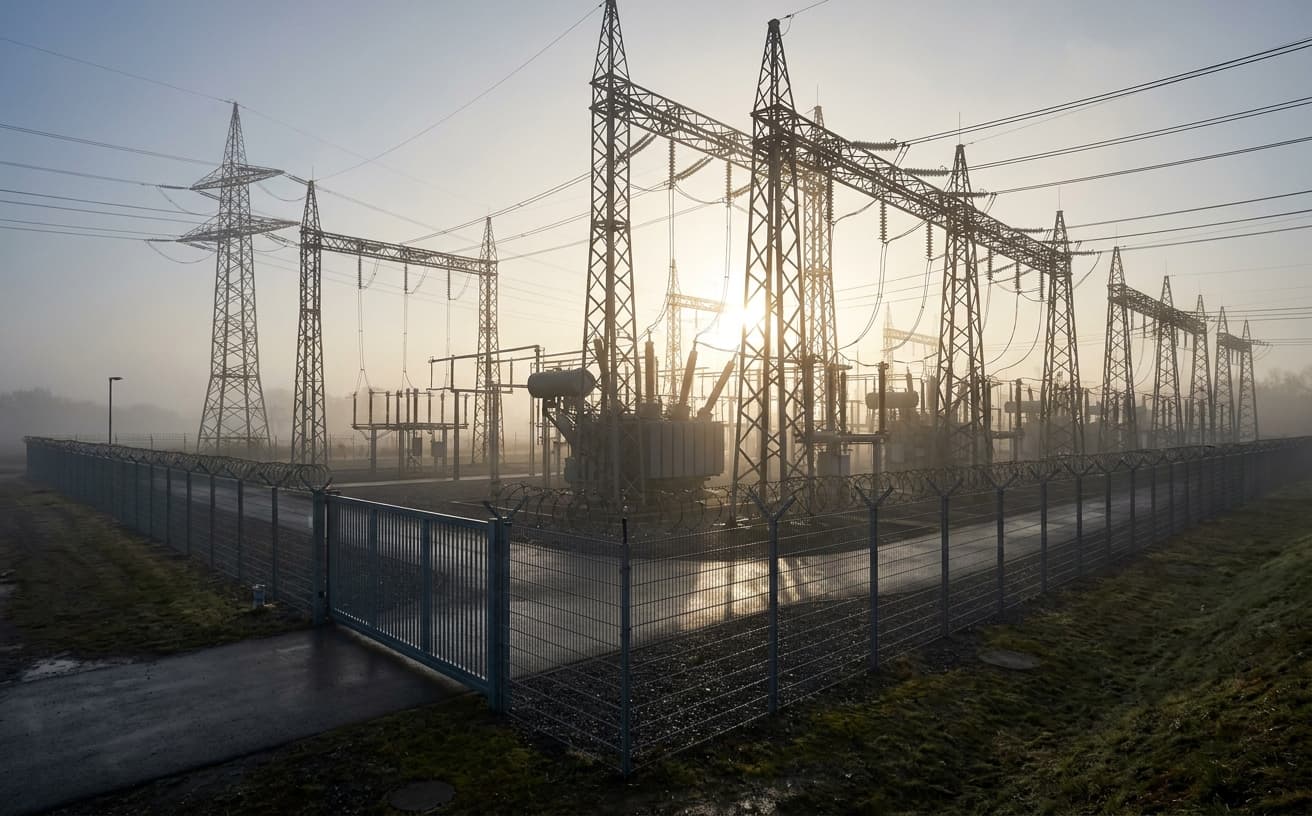
The chemical sector is the only critical infrastructure sector in the United States where physical security guidance has been written with the assumption that a successful intrusion is, in itself, a public safety event. That assumption changes everything downstream of it: the fences, the camera placements, the badging logic, the staffing rotations, the documentation discipline. Operators who read CISA's chemical sector guidance as a checklist miss the architecture inside it.
The guidance descends from the Chemical Facility Anti-Terrorism Standards regime, which Congress allowed to lapse in 2023 and which CISA has continued to maintain in voluntary form while legislative reauthorisation remains pending. The voluntary status has not softened the substance. Insurers, downstream customers, state regulators and the Coast Guard for MTSA-adjacent sites all continue to use the CFATS framework as the operating reference. What follows is a reading of that guidance as it lands on a real chemical site, written from the perspective of a manufacturer that builds the perimeter robotics, mobile video towers and AI-based analytics that operators rely on to make the guidance hold.
The risk-based performance standards as a design language
The eighteen Risk-Based Performance Standards that anchor the CFATS framework are not a procurement list. They are a design language. Each standard describes an outcome, not a product, and the burden of demonstrating that the outcome is met sits with the facility. RBPS 1 through 4 cover the perimeter and access control layer: restrict area perimeter, secure site assets, screen and control access, deter, detect and delay. RBPS 5 through 8 address shipping, theft and diversion, sabotage, and cyber. RBPS 9 through 18 extend into response, monitoring, training, personnel surety, elevated threats, security challenges, reporting, audits, records and the official site security plan.
Reading these standards as outcomes rather than items forces a particular logic onto the buildout. A perimeter that is technically continuous but functionally porous, because a known gap is covered only by a sign and a camera that no one watches in real time, does not satisfy RBPS 1. A badging system that issues credentials to contractors without verifying identity against the Terrorist Screening Database under the personnel surety provisions of RBPS 12 does not satisfy that standard, regardless of how sophisticated the reader hardware is. The guidance penalises form without function.
Operators who have run a Top-Screen submission and received a tiering determination know that the four tiers, with Tier 1 being the highest risk, translate into substantially different expectations for delay times, response times and surveillance density. Tier 1 and Tier 2 facilities are expected to defend against an adversary with capability and intent, not against a casual trespasser. The physical buildout follows from that threat picture. A Tier 1 facility with a Theft and Diversion Chemicals of Interest above the screening threshold is expected to demonstrate, in its site security plan, layered detection, delay measured in minutes rather than seconds, and response coordination with local law enforcement that has been exercised, not merely documented. The guidance does not specify the camera model. It specifies the consequence of failure, and the operator chooses the architecture.
This is also where the alignment with NIST CSF 2.0 and IEC 62443 becomes operationally relevant. RBPS 8 on cyber security has, since the 2014 update, expected facilities to address the convergence of physical and process control security. A chemical site where the badging system shares a flat network segment with the distributed control system is, under current readings of the guidance, not in compliance, even if the badging system itself works. The cyber-physical boundary is part of the physical guidance, not separate from it.
What detection and delay actually mean on a chemical site
Detection on a chemical site is not surveillance. Detection is the verified observation of an unauthorised presence with sufficient confidence to initiate response, within a time window that allows response to interdict before the adversary reaches the asset. The arithmetic is unforgiving. If response time from the nearest armed law enforcement unit is twelve minutes, and the delay built into the physical layer is six minutes from fence to Chemical of Interest, the facility has a six-minute gap. The gap is the deficiency, regardless of how many cameras are installed.
CISA's expectation, expressed through the site security plan review process, is that detection occurs at the outer layer of the protection envelope, not at the asset itself. A vehicle that has reached the storage area before being detected has already defeated the delay budget. This pushes detection out to the perimeter, and it pushes the quality of detection up. False positives are not benign on a chemical site, because they consume the same response resources that real incidents would consume, and a facility whose response capacity is repeatedly exhausted by nuisance alarms has a real operational vulnerability that an adversary can study.
The buildouts that satisfy this expectation share certain features. The fence line carries primary detection through buried cable, fence-mounted sensors or radar, with secondary verification through thermal imaging and AI-based video analytics that classifies the intrusion before the alarm reaches the central station. Mobile video towers fill the gaps that fixed infrastructure cannot economically cover, particularly during construction phases, tank turnarounds, or when temporary storage is established outside the permanent perimeter. Autonomous ground robots have begun to appear on Tier 1 sites as a way to extend patrol coverage into the early morning hours where human attention is statistically weakest. None of these systems is required by name in the guidance. All of them are means by which the guidance is satisfied. The book BOSWAU + KNAUER. From Building to Security Technology traces in detail how these components evolved out of construction site practice, which is the closest civilian analogue to the operational chaos that a chemical facility manages during turnarounds and capital projects.
Delay is the second discipline, and it is the one most often misread. Delay is not a fence. Delay is the cumulative time, measured against a defined adversary, that the physical layer imposes between detection and asset access. Anti-vehicle barriers, hardened doors on control rooms, bollarded approaches to tank farms, and segmented access within the site each contribute discrete seconds to the delay budget. A site that has invested heavily in perimeter and lightly in interior segmentation often discovers, during a CISA inspection, that the delay budget collapses once the outer layer is breached. The inspector will model the breach.
Personnel surety, contractor flows, and the badge as a control point
The personnel surety provisions under RBPS 12 are, in the experience of operators, the standard most often underestimated during the initial buildout and most often cited during inspection. The provisions require facilities to identify individuals with access to restricted areas or critical assets and to vet those individuals against the Terrorist Screening Database. Vetting is not a one-time event. It is a continuing obligation that applies to employees, contractors, vendors, drivers and any other category of person who can physically reach a Chemical of Interest above its threshold quantity.
On a working chemical site, contractor flows dominate. A mid-sized facility may issue between three hundred and eight hundred temporary credentials in a single turnaround week. The control point is the badge, but the badge is only as strong as the process behind it. CISA's guidance, reinforced by ASIS International's frameworks on workforce security and by ISO 27001 Annex A.7 on human resource security, expects facilities to demonstrate that the person standing at the gate is the person whose name appears on the credential, and that the name has been screened. Two-factor enrolment, with biometric capture at the time of badge issue, has become the operational answer at most Tier 1 and Tier 2 sites. The badge itself is increasingly a smart credential with revocation that propagates within minutes across all readers, including the readers on contractor laydown yards that operators historically treated as outside the protection envelope.
The discipline that holds this together is not technology. It is the integration between the badging system, the contractor management workflow and the operator's training records. A welder who has completed site-specific safety training but whose background check returned an anomaly the previous evening should not be able to badge in at five in the morning. Operators who can demonstrate this kind of integration during a CISA inspection are treated as mature. Operators who cannot, regardless of how impressive the access control hardware looks, are treated as exposed. The guidance language on personnel surety has been consistent on this point since 2014 and was reinforced in the most recent CISA chemical sector advisories.
Surveillance, monitoring and the documentation burden
A chemical facility under CFATS or its voluntary successor is expected to monitor the protection envelope on a continuous basis and to retain records of that monitoring for a defined period, typically not less than three years for incident-related footage and longer for personnel surety records. The retention is not symbolic. It is the basis on which CISA reconstructs an incident during the post-event review, and it is the basis on which insurers, plaintiffs' counsel and downstream regulators evaluate the facility's posture after a loss.
Continuous monitoring does not require a human eye on every camera at every moment. It requires that the monitoring architecture, taken as a whole, would detect and escalate an anomalous condition within a defined response window. AI-based video analytics has matured to the point where a single operator can supervise twenty to forty camera streams effectively, provided the analytics layer pre-filters routine activity and surfaces only the events that require human classification. The operator becomes a decision-maker rather than a watcher. CISA's posture on this shift, expressed through its sector-specific guidance and through joint advisories with NIST, has been broadly favourable, with the caveat that the analytics models must be validated for the specific site environment and that false negative rates must be measured rather than assumed.
The documentation burden that accompanies surveillance is substantial and is often the dimension on which voluntary compliance with CFATS-style expectations breaks down. The site security plan is a living document. Changes to the protection envelope, additions of Chemicals of Interest above threshold, modifications to response procedures, turnover in security leadership and contractor population shifts all generate documentation obligations. Facilities that maintain the plan as an annual exercise rather than a continuous record consistently underperform during inspections. The operators that perform well treat the plan as the authoritative description of the security state at any given moment and update it within days, not quarters, of material changes.
Where the guidance meets the budget
The honest reading of CISA's chemical sector guidance, after the layered detection, the personnel surety, the monitoring and the documentation, is that it is expensive. A full buildout for a Tier 1 facility, including perimeter sensing, video analytics, mobile coverage for turnarounds, access control integration, badging with biometric enrolment, response coordination drills, training and the documentation infrastructure to sustain all of it, runs into the seven-figure capital range for a single site, with operating costs of similar magnitude annually. Operators with multi-site portfolios face the question of whether to standardise the buildout across sites, with the savings that brings in spare parts, training and analytics model maintenance, or to optimise each site individually, with the gains that brings in capital efficiency.
The standardisation answer has, in most multi-site portfolios, prevailed. The reason is operational rather than financial. A security operations centre that supervises ten sites with ten different camera platforms, ten different analytics packages and ten different badging systems is, in practice, supervising poorly. Standardisation reduces the cognitive load on the operator and the training load on the workforce, and it makes the post-incident review tractable. CISA does not mandate standardisation. The market has converged on it because the alternative does not scale.
The financing question that accompanies the buildout has shifted over the past five years. Where chemical facilities historically capitalised security infrastructure on the balance sheet, the rise of managed security services and equipment-as-a-service models has given operators the option to convert capital expenditure into operating expenditure, with the equipment owned by the service provider and refreshed on a defined cycle. The arrangement is attractive for sites with shorter expected operating lives, for joint ventures where capital deployment is constrained, and for portfolios where the operator wants the technology refresh discipline that comes with a service contract. The arrangement is less attractive for sites with long expected lives and stable workforces, where ownership and direct control of the security stack remain the better value over twenty years.
What holds
The CISA chemical sector guidance, in voluntary form or in any future legislative reauthorisation, rests on a principle that is older than the standards themselves. The principle is that a chemical facility is a node in a public safety system, and the security of that node is not a private matter. The buildout, the staffing, the documentation and the verification are the means by which the operator demonstrates that the node is sound. Operators who treat the guidance as a checklist eventually find themselves on the wrong side of an inspection, an incident, or both. Operators who treat it as a design language find that the same buildout that satisfies CISA also satisfies their insurers, their downstream customers, their corporate governance and, in the cases that matter most, their own workforce.
The detachment between writing a site security plan and operating to it is the gap that closes slowly. It closes through repetition, through documented exercises, through the discipline of updating the plan when the site changes, and through the willingness to invite outside eyes into the protection envelope before an inspector or an adversary arrives. The manufacturers of the technology that fills the buildout, including the perimeter robotics and mobile video infrastructure that has matured over the past decade, can supply the components. They cannot supply the discipline. The discipline is the operator's.
For operators who suspect that their current posture would not survive a serious CISA review, three paths are open. A sixty-minute confidential conversation with a manufacturer that has built for this sector can clarify where the gaps are and whether they are structural or tactical. A three to five day audit, conducted on site, produces a written report with a defined scope and a defined deliverable, usable internally or externally without further obligation. A ninety-day pilot at a single representative location measures, in operating conditions, what the proposed architecture would deliver against the site's own incident history and response model. Each path produces information the operator did not have. The choice among them is a function of where the operator already stands, and how much time remains before the question is answered by an event rather than by an inspection.
Frequently asked questions
What does CISA require for chemical sector facilities?
CISA's chemical sector guidance, descending from the CFATS Risk-Based Performance Standards, requires facilities holding Chemicals of Interest above defined threshold quantities to implement layered physical security, access control, personnel surety, cyber security, response planning, training, documentation and audit. The eighteen standards describe outcomes rather than products. Facilities are tiered from one to four based on risk, with Tier 1 facing the highest expectations. Although CFATS lapsed legislatively in 2023, CISA continues to maintain the framework on a voluntary basis, and insurers, state regulators and downstream customers continue to treat it as the operating reference.
How are CFATS and CISA guidance related?
CFATS, the Chemical Facility Anti-Terrorism Standards, was the regulatory programme administered by CISA from 2007 until its statutory authority lapsed in July 2023. The Risk-Based Performance Standards and the site security plan architecture that CFATS introduced remain in active use as CISA's voluntary chemical sector guidance, and pending legislation contemplates reauthorisation in substantially similar form. Operationally, the distinction matters less than the substance. Facilities that maintained CFATS compliance before 2023 continue to operate to the same expectations, and CISA's chemical sector advisories continue to reference the RBPS framework as the working standard.
What documentation does a CSAT submission need?
A Chemical Security Assessment Tool submission begins with the Top-Screen, which identifies Chemicals of Interest held above threshold quantities and produces a preliminary tiering. Facilities tiered as high-risk then complete the Security Vulnerability Assessment, which characterises the threat picture, the asset criticality and the existing protective measures. The Site Security Plan follows, documenting how the facility addresses each applicable Risk-Based Performance Standard. Supporting documentation typically includes facility drawings, process flow diagrams, personnel surety records, training logs, incident history, response agreements with local law enforcement and evidence of exercises. The plan is a living document and is updated as conditions change.
How frequently are facilities inspected?
Under the historic CFATS programme, CISA conducted authorisation inspections following site security plan approval and compliance inspections on a tiered cycle, with higher-tier facilities inspected more frequently. Tier 1 sites typically saw inspection activity on an annual or biennial basis, while lower-tier sites were inspected less often. Under the current voluntary posture, inspection frequency has decreased, but operators should expect that any future reauthorisation will restore a structured inspection cycle, and that insurers and downstream customers may conduct their own assessments in the interim. Facilities that maintain the documentation discipline continuously, rather than in advance of expected inspections, perform consistently better when inspections occur.
Related topics
- CISA's Voluntary Framework Is a National-Security Failure
- UK Energy CNI: ESO, National Grid & Substation Attacks
- NIST 800-53 Physical Controls: What Every CISO Mistranslates
- Critical Infrastructure Perimeter Security: Best Practices
- NPSA and UK Physical Security: The New National Standard
Take the next step: See prices & ROI · Explore the products · Send a no-obligation request. BOSWAU + KNAUER – direct from the factory in Filderstadt, reply within 5 working days.
About the author
Dr. Raphael Nagel (LL.M.) is founding partner of Tactical Management. He acquires and restructures industrial businesses in demanding market environments and writes on capital, geopolitics, and technological transformation. raphaelnagel.com
More reading

Since 1892.
The firm is reached at boswau-knauer.de or +49 177 2266267.