
Blog
Construction Security Companies: Where the Markups Hide
A frank comparison of construction security firms in 2026. Per-hour rates, per-night rates, technology bundles, and the markup line items nobody itemizes.

Dr. Raphael Nagel
March 10, 2025
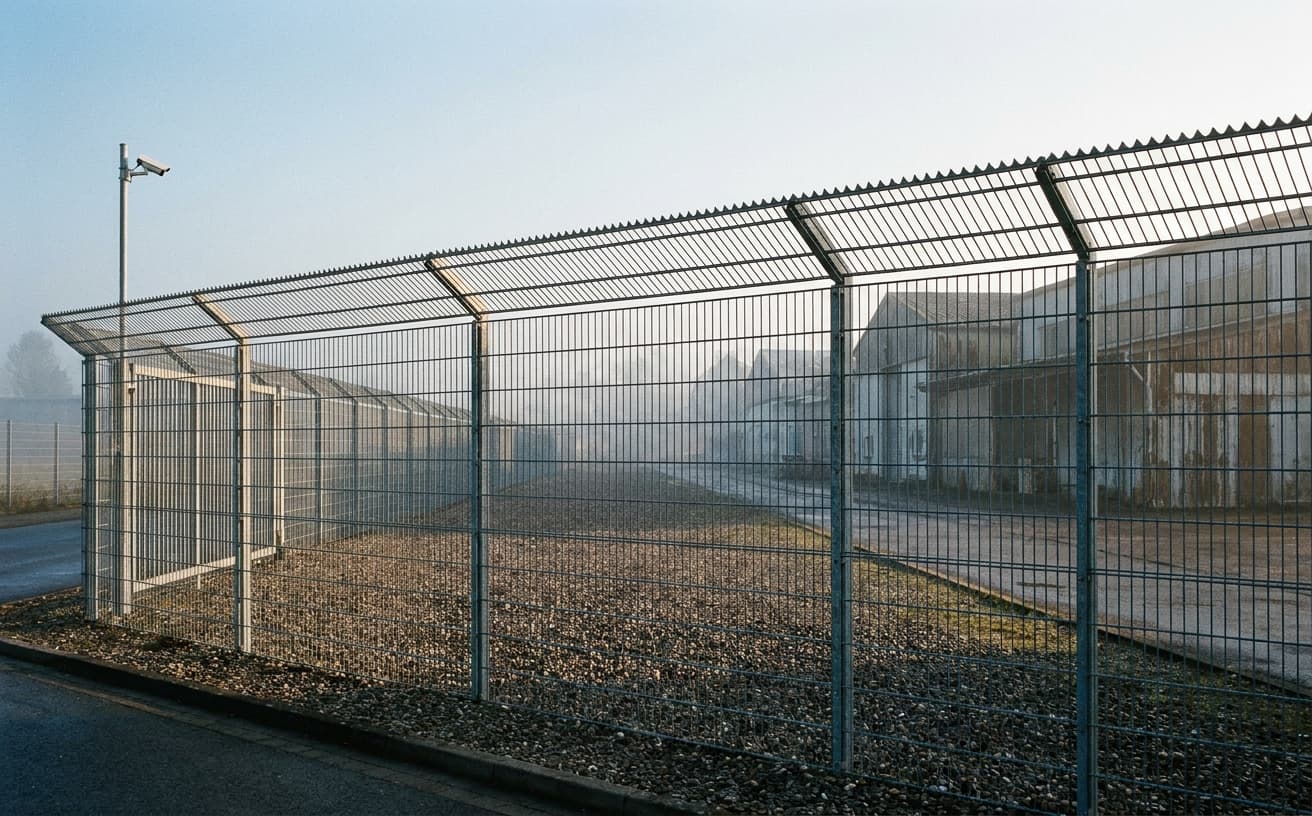
Most construction security invoices are written to be paid, not to be read. The line items that hold the actual margin are the ones that look like overhead, and the operators who learn to read them stop overpaying within a quarter.
What follows is a comparison written from the manufacturer's bench, not from the procurement seat. BOSWAU + KNAUER has sat on both sides of this table for long enough to know where the markups live, why they live there, and how they survive scrutiny that should kill them. The English-speaking construction security market in 2026 is fragmented across roughly four tiers, and the pricing logic of each tier obeys different rules. Operators who treat all four tiers as a single category will pay a single category's price, which is the highest one available.
The Four Tiers Of Construction Security Providers
The first tier consists of national guard service firms with legacy contracts in real estate, retail and federal buildings. They enter construction work as an extension, not as a specialty. Their per-hour rate sits between twenty-eight and forty-two US dollars in most North American metros, and between twenty-two and thirty-five euros in Western Europe. The rate carries a load factor that bundles supervision, insurance, payroll burden and a corporate overhead allocation. The allocation is not itemized. It is also where roughly twenty to thirty percent of the line lives.
The second tier consists of regional construction specialists. They know the rhythm of a site, they staff it correctly, and their margins are narrower because they win on familiarity rather than scale. Per-hour rates run lower, somewhere between twenty-four and thirty-six dollars, but the technology bundle is thin. They subcontract cameras, they rent towers from a third party, and the rental flows through their invoice with a coordination fee attached.
The third tier consists of technology-led operators. They sell guarding hours, but the hours are subordinated to a platform of mobile video towers, AI-based detection and a remote operations center. Per-hour pricing becomes opaque here, because the contract shifts toward a per-site monthly fee that covers a mixed bundle of human and technical components. The headline number looks higher. The total cost of ownership across a twelve-month project is usually lower, sometimes meaningfully so.
The fourth tier is the manufacturer-direct model. Fewer firms operate in this tier, because it requires capability across hardware, software and field service. The pricing logic is closer to industrial leasing than to guard service. A perimeter is sized, a system is deployed, and the operator pays for capability rather than for headcount. This is the tier in which BOSWAU + KNAUER positions itself, and the rest of this article will not pretend otherwise. The comparison, however, is honest. Each tier has its place. The error is choosing the wrong tier for the wrong reason.
Per-Hour Rates And What They Actually Cover
A construction security per-hour rate is a composite. The wage paid to the guard sits at the bottom of it. In most US markets, that wage in 2026 runs between sixteen and twenty-two dollars for an unarmed site officer, and between twenty-three and thirty for armed work where local law permits it. In Western Europe, the equivalent gross hourly wage runs between fourteen and twenty-one euros, depending on jurisdiction and collective agreements. Everything above that wage is structure.
The first structural layer is payroll burden. Social security, unemployment insurance, workers' compensation, paid leave, training time. In the United States this layer adds roughly twenty-five to thirty-five percent to the wage. In Germany or France it adds more, often forty to fifty percent, because the social system is broader. A vendor who quotes a low rate in a high-burden jurisdiction has either understaffed the contract or misclassified the workers. Both errors land on the operator eventually, through insurance disputes or labor enforcement.
The second structural layer is supervision and dispatch. A site of any size requires a supervisor who is not on the post. The supervisor's hours are spread across multiple sites, and the allocation appears in the per-hour rate as a fraction of a full-time equivalent. Honest vendors disclose this allocation when asked. Less honest ones bury it in a category called "operations support" or refuse to break it out at all.
The third structural layer is insurance and bonding. General liability for armed construction security has risen sharply since 2022, and per-occurrence limits below two million dollars are no longer marketable to most general contractors. The premium for those limits flows into the rate. NICB data on construction equipment theft, combined with rising loss frequencies reported by GDV in Germany, has pushed underwriters to demand higher loss control standards, which translates directly into the cost of guard service.
The fourth structural layer is the one operators rarely ask about. It is the corporate margin, and in tier-one national firms it sits between eight and fifteen percent of revenue, sometimes higher on construction work where the customer is presumed unsophisticated. The margin is not the markup. The markup is the gap between what the service costs to deliver and what the invoice claims it costs to deliver. That gap is where comparison shopping has its real return.
Per-Night Rates For Mobile Towers And Camera Bundles
Mobile video towers are sold in three ways. They are rented per-night, leased per-month, or bundled into a service agreement with monitoring. The per-night rate looks transparent. It is not.
A standard four-camera solar tower with cellular backhaul rents in the North American market between forty-five and ninety dollars per night in 2026. In Europe the equivalent rate runs between forty and eighty euros. The range is wide because the units inside the range are not comparable. Some include monitoring. Some do not. Some include local recording only. Some push every frame to a remote operations center. Some include AI-based detection that distinguishes a person from a deer. Some send every motion event to a human reviewer, which sounds rigorous and is in fact the most expensive failure mode in the market.
The economics of false alarms govern the per-night rate more than any other factor. A tower that generates eighty alerts per night across a metropolitan operations center burns roughly two analyst-hours of review time, at a fully loaded cost between sixty and ninety dollars. The same tower with proper AI filtering generates three to five alerts per night and burns ten minutes. The difference flows to the operator either as a higher per-night rate or as a lower one, depending on whether the vendor amortizes the analyst cost across many sites or charges it directly. Operators who ask for the false alarm rate, in alerts per camera per night, will receive either a precise answer or an evasive one. The evasive answer is itself the data point.
Camera bundles sold under construction contracts often include a delivery and pickup fee, a setup fee, a relocation fee, a damage waiver and a monitoring surcharge. Each of these line items is negotiable in isolation and rarely negotiated in aggregate. A site that runs four towers for twelve months will pay between thirty and seventy thousand dollars more than necessary if the ancillary fees are accepted at face value. The book BOSWAU + KNAUER. From Building to Security Technology argues that these ancillary fees exist because the construction industry has historically treated security as an afterthought, and afterthoughts are priced by the seller, not the buyer. The argument is uncomfortable but accurate.
Technology Bundles And How They Are Actually Priced
A technology bundle in construction security typically combines mobile video towers, fixed cameras at gates and material storage, an alarm system with cellular backhaul, a remote monitoring service and, in the more advanced offerings, an autonomous patrol robot or a drone-based response capability. The price is presented as a monthly figure per site. The figure ranges in 2026 from roughly twenty-eight hundred dollars per month for a small residential site with two towers, to upwards of eighteen thousand dollars per month for a large commercial site with full perimeter coverage and robotic patrol.
The structure beneath that monthly figure is what determines whether the price is fair. Hardware can be priced as capital recovery over the project life, as a rental at market rates, or as a service fee that includes maintenance and replacement. Each of these structures has a legitimate use case. The problem appears when the structures are mixed without disclosure. A vendor who recovers the capital cost of a tower in the first six months of the project, and then continues to charge the rental rate for the remaining eighteen months, has not violated the contract. The contract permitted that pricing. The operator simply did not read the depreciation embedded in it.
Monitoring services are the second component, and their pricing is the most variable in the bundle. A pure event-driven monitoring service, where a human analyst reviews alerts only when AI flags them, costs roughly four hundred to nine hundred dollars per camera per month. A continuous monitoring service, where a human watches a wall of feeds, costs three to five times that. Continuous monitoring is sold as the gold standard. It is in fact the bronze standard, because human attention degrades after roughly twenty minutes on a static feed, and CISA guidance on physical security monitoring acknowledges this directly. The IEC 62443 framework for industrial systems and the NIST CSF 2.0 detect function both push toward event-driven, AI-assisted monitoring for similar reasons.
The third component is the maintenance and service-level agreement. A bundle without an SLA is not a bundle. It is a list of equipment. Operators who sign service agreements without specifying response times for tower failure, camera blindness or alarm system outage will find that the response time is whatever the vendor can manage that week. ASIS International guidance on physical security service contracts recommends explicit response times by failure category. Few construction contracts follow that recommendation, which is why few construction sites get the response they assumed they were paying for.
Where The Markups Actually Hide
The markup that nobody itemizes lives in five places, and operators who learn to find it can usually reduce their construction security spend by fifteen to thirty percent without reducing the coverage by anything measurable.
The first place is the supervisor allocation. A site that bills for one supervisor at twenty percent of a full-time equivalent is paying for that supervisor's full week, with the allocation distributed across the supervisor's five sites. If the supervisor in fact covers eight sites, the operator is paying for hours that go to other contracts. The remedy is to ask for the supervisor's site list and the allocation percentage. Honest vendors will provide it. Less honest ones will explain that the information is confidential. The explanation is itself the answer.
The second place is the technology coordination fee. When a tier-two regional vendor subcontracts towers from a tier-three technology operator, the coordination fee added to the invoice typically runs between fifteen and twenty-five percent of the tower rental. The fee is invisible because it appears as a higher per-night rate, not as a separate line. The remedy is to obtain quotes directly from the technology operator and compare them to the bundled price. The gap is the coordination fee.
The third place is the alarm response fee. Many contracts include a flat monthly monitoring fee that excludes physical response. A response to an alarm event, by a roving patrol or a guard dispatched to site, is billed separately, often at a premium hourly rate with a minimum of two or four hours. A site with six alarm events in a month, three of which are false, can incur response fees that exceed the base monitoring cost. The remedy is to negotiate the response inclusion explicitly, and to push the false alarm rate down through better AI filtering before signing the contract.
The fourth place is the equipment damage waiver. Mobile towers and cameras on construction sites are exposed to weather, vandalism and occasional vehicle impact. Damage waivers are sold at rates between five and twelve percent of the equipment value per month. The waivers often exclude the most common causes of damage, such as wind events above a stated threshold or theft without forced entry. Operators who read the exclusions discover that they are paying for insurance against events that rarely happen, while bearing the risk of events that frequently happen. ISO 27001 risk management principles, transposed loosely to physical assets, would treat this allocation as inefficient.
The fifth place is the contract renewal escalator. Most construction security contracts include an annual escalation clause, often tied to a regional labor index or a flat percentage between three and seven percent. On a multi-year industrial project, the escalator compounds. A contract that begins at six thousand dollars per month and escalates at five percent per year reaches over seventy-six hundred dollars per month by year five, without any change in scope. The remedy is to negotiate the escalator at signing, not at renewal, because the renewal moment is when leverage is at its lowest.
What A Useful Comparison Process Looks Like
Operators who run a disciplined comparison process usually follow a sequence that takes between four and six weeks. The process begins with a scope document that specifies the site dimensions, the equipment to be protected, the operating hours of the construction work and the duration of the project. Vendors who bid without seeing the scope document are guessing. Their bids should be discarded.
The second step is a request for proposal that requires line-item disclosure. Wage rate, payroll burden percentage, supervision allocation, insurance cost, equipment rental, monitoring cost, response cost, escalation clause. Vendors who refuse to disclose at this level are not refusing arbitrarily. They are refusing because the disclosure would invite comparison they cannot survive.
The third step is a site visit by each shortlisted vendor, followed by a written proposal that responds specifically to the scope. Generic proposals that recycle boilerplate from other sites should be treated as evidence of the vendor's actual engagement level. NIST 800-53 and the BSI IT-Grundschutz catalogs both treat tailored controls as foundational. The same principle applies to physical security.
The fourth step is reference verification with at least three current customers per shortlisted vendor, and at least one former customer who terminated within the past eighteen months. The former customer is the more valuable reference. The reasons for termination, and the conduct of the vendor during the termination, predict the conduct the operator will encounter if the relationship goes wrong.
The fifth step is a contract negotiation that addresses the five markup zones explicitly. A vendor who agrees to itemize the supervisor allocation, who provides direct technology pricing, who includes alarm response in the base fee, who removes the damage waiver in favor of operator insurance, and who caps the escalator is a vendor worth signing. A vendor who refuses all five is a vendor who has read this article and decided that the operator has not.
What Holds
The construction security market in 2026 is large, fragmented and priced for buyers who do not compare. Operators who learn to compare on the right axes will not save money on the wage rate, because the wage rate is set by the labor market. They will save on the structure that sits above the wage, on the technology coordination layer that hides inside bundled invoices, and on the contract clauses that compound silently across the life of a project.
The choice of tier matters more than the choice of vendor within a tier. A small site with a six-month schedule rarely needs a manufacturer-direct relationship. A large industrial project with a multi-year schedule and significant exposure rarely benefits from a tier-one guard service whose construction experience is incidental. Matching the tier to the project is the single decision that drives the largest cost difference, and it is the decision most often made by default rather than by analysis.
Operators who want a structured way to test their current arrangement against the market have three paths available through BOSWAU + KNAUER. A confidential sixty-minute conversation will not produce a quote, but it will produce a sharper view of where the current contract is leaking. A three to five day audit will produce a written report with line-item pricing benchmarks and a renegotiation plan that can be executed with the existing vendor or with a replacement. A ninety-day pilot will install a manufacturer-direct system on a single site, against defined success metrics, and produce the operating data that makes the next procurement decision evidence-based rather than habitual.
Frequently asked questions
Which construction security firms lead?
Leadership in this market is regional, not national. In North America, firms such as Allied Universal and Securitas dominate the tier-one guard service segment, while specialists like LiveView Technologies and Pro-Vigil lead the technology tier. In Europe, Securitas, Prosegur and a number of strong national operators in Germany, France and the UK hold equivalent positions. Manufacturer-direct providers, including BOSWAU + KNAUER, occupy a narrower segment serving complex industrial sites. The right leader for a given project depends on the project's complexity, duration and risk profile, not on the vendor's national footprint.
What is the typical markup?
Aggregate markup on construction security contracts, measured as the gap between cost-to-deliver and contract price, typically runs between eighteen and thirty-five percent in 2026. Tier-one national firms sit at the higher end because of corporate overhead allocation. Tier-three technology operators often sit at the lower end on the service component but recover margin through hardware amortization. The most reliable way to estimate markup on a specific contract is to obtain itemized disclosure across wage, burden, supervision, insurance, equipment and monitoring, then compare each line against independent benchmarks.
How are technology bundles priced?
Bundles are priced as a monthly fee per site, with the structure beneath the fee varying widely. Hardware is recovered either through rental, capital amortization or service inclusion. Monitoring is priced per camera per month, with event-driven AI-assisted service running between four hundred and nine hundred dollars per camera, and continuous human monitoring running three to five times higher. Response, maintenance and damage waivers are typically separate. Operators should request the full structural breakdown, because the headline monthly figure is rarely comparable across vendors without it.
Who underwrites the contracts?
Construction security contracts are underwritten by general liability insurers, with armed work requiring specialized carriers and higher limits. In the United States, the market is dominated by a small number of specialty carriers who follow NICB loss data closely. In Europe, GDV-aligned insurers underwrite the German market, with national equivalents in other jurisdictions. The underwriting drives the per-hour rate more directly than most operators recognize, because rising premiums for armed and high-risk work flow through to the wage burden and the supervision requirement, and ultimately to the invoice the operator receives.
Related topics
- Solar Surveillance Trailers on a Construction Site
- Mobile CCTV Towers: What 70% of Buyers Regret
- Construction Site Theft Prevention: 23 Measures by ROI
- Construction Site Security Cost: Four Honest Tiers
- Computer Vision Against Construction Site Theft
Take the next step: See prices & ROI · Explore the products · Send a no-obligation request. BOSWAU + KNAUER – direct from the factory in Filderstadt, reply within 5 working days.
About the author
Dr. Raphael Nagel (LL.M.) is founding partner of Tactical Management. He acquires and restructures industrial businesses in demanding market environments and writes on capital, geopolitics, and technological transformation. raphaelnagel.com
More reading
Since 1892.
The firm is reached at boswau-knauer.de or +49 177 2266267.