
Blog
Critical Infrastructure Perimeter Security: Best Practices
A practical reading of the controls that actually matter once you stop reading frameworks and start reading sites.

Dr. Raphael Nagel
March 24, 2026
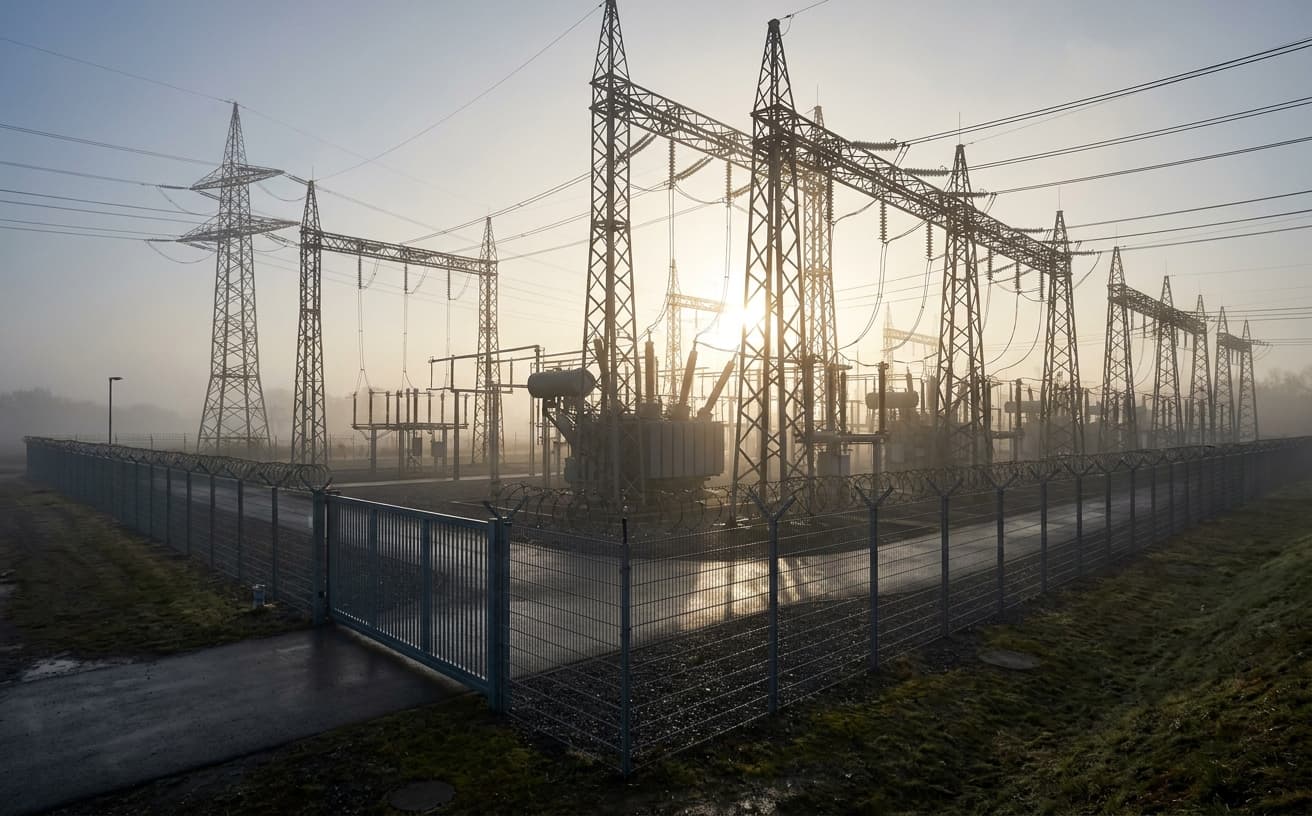
Perimeter, in the language of critical infrastructure, is not a fence. It is the first decision layer in a chain of decisions that ends with someone either being inside a facility who should not be, or not being inside.
That distinction matters because most operators still buy perimeter as if it were a physical product, with line items for fencing, lighting, gates, and a contracted patrol. The frameworks, in turn, are read as procurement checklists. What follows is a reading from the other direction. The controls that hold on real sites are not the ones a framework lists most prominently. They are the ones that survive the operator's third bad night and the auditor's third question. The argument here is built on what has worked in industrial and infrastructure settings BOSWAU + KNAUER has touched, and on the public reference architecture available through CISA, NIST CSF 2.0, NIST 800-53, IEC 62443, ISO 27001, and the operating notes of ASIS International and the BSI.
The reader should expect a flat, declarative reading. No promises. Controls that hold are named. Controls that fail under load are also named, because honesty about failure is the only path to a perimeter that earns its budget.
What perimeter actually means on a critical site
A critical infrastructure perimeter is rarely one line. It is a set of nested lines with different functions. The outermost line is detection in depth. It is not designed to stop anyone. It is designed to provide time, in the form of seconds and minutes that can be converted into a decision. The second line is delay. It is designed to convert detection into a window in which response can arrive. The third line is denial. It is the point where access is refused or interrupted physically, electronically, or by human intervention. The fourth line, often forgotten, is documentation. It is the layer that converts the incident into something that can be reviewed, defended in court, presented to a regulator, and used to improve the next iteration.
Operators who treat perimeter as a single line tend to overinvest in denial and underinvest in detection and documentation. The result is a perimeter that looks impressive in a tour and fails in the audit, because the moment that mattered was not captured, the response time was not measured, and the decision tree was not written down. CISA's own guidance on physical security for critical infrastructure consistently points back to layered controls precisely for this reason. The same logic appears in IEC 62443 for the operational technology side and in ISO 27001 Annex A for the management system side. Different languages, same architecture.
A perimeter on a substation is not a perimeter on a water treatment plant, which is not a perimeter on a chemical site, which is not a perimeter on a data center. The functions are the same. The threat profiles, the response times, and the regulatory exposures differ. A practical reading starts by naming the asset behind the line. A perimeter exists to protect something specific. If the operator cannot name, in two sentences, what the perimeter is protecting and what an adversary would gain by crossing it, the perimeter design is already wrong. It is wrong because it has been built around a generic fear instead of a specific risk.
This is the point at which the conversation usually breaks down. Operators want a list of controls. The honest answer is that the list comes after the threat is named, not before. A perimeter that protects a transformer yard against copper theft is not the same as a perimeter that protects a control room against a coordinated intrusion. The first needs fast detection and visible deterrence. The second needs delay, denial, and a tested response chain. Same vocabulary, different system.
The controls that hold under load
A practical perimeter consists of a small number of controls applied with discipline. Discipline is the operative word. Operators rarely fail because they lack controls. They fail because the controls they have are applied inconsistently, maintained badly, or never tested under realistic conditions.
The first control that holds is a documented threat baseline. It names who would attempt to cross the perimeter, with what capability, and with what objective. A threat baseline that says "intruders" is not a baseline. A threat baseline that distinguishes opportunistic theft, coordinated theft, activist intrusion, insider misuse, and state-aligned reconnaissance is a baseline. NIST CSF 2.0 places threat understanding at the core of the Identify function. The reason is operational, not academic. Without a baseline, every control is sized to the loudest fear instead of the most probable scenario.
The second control that holds is detection at distance. The earlier a presence is detected, the more time exists to respond. Thermal cameras, radar at appropriate ranges, ground sensors, fence-mounted vibration detection, and intelligent video analytics each contribute. None of them contribute alone. The reliable architecture is multi-sensor with cross-confirmation. A single sensor that triggers a response generates false alarms at a rate that eventually disables the response. Two independent sensors that must confirm before a response is dispatched reduce false alarms to a level that the response team can sustain over years. This is not a theoretical preference. It is the difference between a system that runs and a system that is silently switched off in month seven.
The third control that holds is delay engineered into the physical layer. A fence is not a delay layer if it can be cut in twelve seconds and the response time is fifteen minutes. Delay is achieved by combining barriers, geometry, lighting, and visibility. A perimeter that an adversary cannot quickly assess from the outside is a perimeter that takes longer to breach. CISA, ASIS International, and the GDV in its insurance-driven guidance converge on this principle. The numbers differ. The logic does not.
The fourth control that holds is a written response protocol with measured times. The protocol names who is informed at which stage, who decides on intervention, and how the police or operator's response unit is engaged. The times are measured from the first confirmed detection to the first physical response on site. Without these numbers, the perimeter is a promise. With these numbers, the perimeter is a system.
The fifth control that holds is independent review. Operators rarely find their own gaps. An external audit, conducted to a defined scope, catches the gaps that internal teams have learned to ignore. This is the function described in the BOSWAU + KNAUER book as Path II, a three to five day audit with a defined deliverable. It is uncomfortable. It is also the cheapest form of insurance against the kind of incident that ends careers.
Where camera analytics earn their place
Camera analytics have been oversold for a decade. The result is operator fatigue, where claims about artificial intelligence are met with skepticism that the technology itself does not deserve. The honest reading is more useful.
Modern video analytics, trained on the right data and deployed with the right sensor placement, reliably distinguish between humans, vehicles, and animals at distances that matter for early detection. They reliably track movement across defined zones. They reliably flag behavior that deviates from baseline traffic patterns, when the baseline has been established with enough data. They do not reliably perform tasks that require contextual judgment that a human would also struggle with under poor lighting and at long range.
The operational value of camera analytics is not in replacing the operator. It is in reducing the volume of footage that the operator must review. A perimeter that generates two thousand motion events per night cannot be reviewed. A perimeter that generates twelve confirmed human-presence events, classified by zone and time, can be reviewed and acted on. The analytics layer is a filter, not a decision. The decision remains with the operator, supported by procedure.
The risk in camera analytics is the same risk that appears across all detection systems. False negatives are dangerous. False positives are corrosive. A system tuned too tightly misses events. A system tuned too loosely produces noise that exhausts the response team. The tuning is not a one-time setting. It is a continuous calibration that should be reviewed quarterly against the actual incident log. Operators who treat the analytics layer as a fire-and-forget installation are buying a degrading asset. Operators who treat it as a managed service with measurable performance are buying a system that improves over years.
The integration question matters as much as the analytics themselves. A camera analytic that triggers an alert in a system the operator does not monitor is useless. The analytic must feed into the operator's existing situational awareness, whether that is a security operations center, a control room, or a contracted monitoring partner. IEC 62443 specifies the segmentation requirements that keep the analytic layer from becoming an attack surface on the operational technology side. ISO 27001 covers the access control and logging requirements that make the analytic output defensible in an audit. The two frameworks together cover the perimeter from the camera to the report. Neither covers it alone.
In the context of BOSWAU + KNAUER. From Building to Security Technology, the analytics layer is treated as a specialized intelligence, not a general one. It does what it is trained to do, in defined conditions, with documented limits. That framing is the difference between a deployment that holds and a deployment that disappoints.
Integration with response, where most perimeters fail
A perimeter that detects without responding is a documentation system. It records what went wrong. It does not prevent what went wrong. The difference between a documentation system and a security system is the response chain.
Response integration is the area where most perimeter projects underdeliver. The detection layer is procured carefully. The delay layer is engineered carefully. The response is treated as a contract clause with a private security provider and a phone number to the local police. The result is a response time that has never been measured under realistic conditions, against an adversary who has, in fact, measured it from the outside.
The first element of credible response integration is a tested intervention time. Tested means a drill, conducted under conditions that resemble an actual incident, with the actual responders, at the actual hour when an incident is most likely. NICB data on theft patterns at industrial sites consistently shows clustering in the early morning hours. A response drill at two in the afternoon is not a test. A response drill at three in the morning, with the night shift, is a test. The difference in measured response time between the two scenarios is often a factor of two or three.
The second element is a documented escalation tree. Who is informed when the first sensor triggers. Who is informed when the second sensor confirms. Who decides to dispatch on-site personnel. Who decides to call the police. Who decides to initiate shutdown procedures, if the asset profile requires that option. Each decision point has a name, a backup, and a time budget. The tree is rehearsed quarterly. Operators who cannot produce this tree on demand are operators whose perimeter exists only in the procurement document.
The third element is the integration with cyber response. A perimeter intrusion at a critical infrastructure site is increasingly likely to be coordinated with, or used to enable, a cyber intrusion. The physical and cyber response functions cannot remain separate. NIST 800-53 and IEC 62443 both require, in their respective domains, that incidents be assessed for cross-domain implications. In practice, this means that the security operations center and the network operations center share a protocol, share data, and rehearse together. Sites where the two functions are organizationally separate, with no shared protocol, are sites where a coordinated attack will find the gap.
The fourth element is the post-incident review. Every confirmed incident, and every significant false alarm, is reviewed within a defined window. The review identifies what failed, what held, and what should be changed. The review output feeds back into the threat baseline, the sensor tuning, the response protocol, and the training schedule. Without this loop, the perimeter does not improve. With this loop, the perimeter improves continuously, in a way that compounds over years.
This is the area where a ninety-day pilot, the format described as Path III in the BOSWAU + KNAUER framework, delivers its highest value. A pilot is not a procurement exercise. It is a measurement exercise. It establishes baseline response times, baseline false alarm rates, and baseline operator workload under realistic conditions, and it produces the data that allows scaling decisions to be made on evidence rather than promise.
What regulation actually requires, and what it does not
European operators of critical infrastructure increasingly operate under NIS2, sector-specific KRITIS regulation in Germany, and adjacent supervisory frameworks. The temptation is to treat the regulatory text as the design specification. The temptation should be resisted.
Regulation specifies minimums. It specifies the controls that an operator must demonstrate to a supervisor. It does not specify the controls that will actually protect the asset. The two sets overlap. They are not identical. An operator who designs to the regulatory minimum is an operator who has built a perimeter to pass an inspection. An operator who designs to the threat baseline, and then verifies that the design covers the regulatory minimum, is an operator who has built a perimeter that holds.
The practical implication is sequential. The threat baseline comes first. The control architecture follows from the threat baseline. The regulatory mapping comes last, as a verification step. Operators who reverse the sequence end up with a perimeter that satisfies the supervisor and disappoints the insurer, because the insurer prices the residual risk, and the residual risk is not what the regulation measures.
The BSI's guidance on critical infrastructure protection in Germany, the GDV's perspective on insurability, and CISA's published material on physical security at energy and water sites converge on this point. The supervisor measures compliance. The insurer measures loss. The adversary measures the gap between the two. A perimeter that holds is a perimeter designed against the adversary, verified against the supervisor, and priced against the insurer. Three lenses, applied in that order.
What holds
A critical infrastructure perimeter that holds is built on a small number of disciplines, applied consistently over years. A named threat baseline. Detection at distance with cross-confirmation. Delay engineered into the physical layer. A documented and tested response chain. Integration between physical and cyber response. A post-incident review loop that feeds back into the design. Independent audit at intervals that match the rate of change in the threat environment.
None of these disciplines is new. None of them is exotic. The reason perimeters fail is not that the controls are unknown. The reason is that the controls are applied incompletely, maintained inconsistently, and tested rarely. The operators who succeed are the ones who treat perimeter security as a system that requires continuous attention, not a project that requires occasional procurement.
For operators who want to move from this reading to a concrete next step, three paths are available in the framework BOSWAU + KNAUER uses. A sixty-minute confidential conversation with a member of the executive team, with no follow-up obligation. A three to five day audit with a defined deliverable that can be used internally or externally. A ninety-day pilot at a defined site with measured success criteria established before the pilot begins. The conversation costs nothing but time. The audit produces a report that holds independently. The pilot produces data that supports a scaling decision on evidence. Which path fits depends on where the operator is in the cycle. The cycle, in critical infrastructure, does not pause.
Frequently asked questions
What perimeter controls are non-negotiable for critical infrastructure?
Five controls form the non-negotiable core. A documented threat baseline that names adversaries and objectives. Multi-sensor detection at distance, with cross-confirmation between independent sensor types. Physical delay engineered to exceed the measured response time. A tested response protocol with named decision-makers and time budgets. A post-incident review loop that feeds back into the design. Each of these maps to elements in CISA guidance, NIST CSF 2.0, IEC 62443, and ISO 27001. Operators who can demonstrate all five, under realistic test conditions, have a perimeter that holds. Operators who can demonstrate fewer have a perimeter that has not yet been tested by an adversary willing to measure it.
How does CISA define a credible perimeter?
CISA does not publish a single definition, because perimeter requirements vary by sector. The consistent principles across CISA's physical security material are layered defense, detection in depth, delay engineered to exceed response time, integration between physical and cyber response, and continuous review. CISA emphasizes that perimeter design must follow from a sector-specific risk assessment, not from a generic control list. The practical reading is that a credible perimeter, in CISA's framing, is one where the operator can demonstrate, with evidence, that detection precedes delay, delay exceeds response time, and response is tested under realistic conditions. Documentation is the evidence layer that makes the demonstration possible.
What is the role of camera analytics in perimeter defense?
Camera analytics function as a filter, not as a decision. Their value is in reducing the volume of events that human operators must review, by classifying motion as human, vehicle, or animal, by tracking presence across defined zones, and by flagging deviations from established baselines. Analytics do not replace operator judgment. They make operator judgment possible at scale, by filtering signal from noise. The risk is in calibration. A system tuned too loosely produces noise that exhausts the response team. A system tuned too tightly misses events. Quarterly recalibration against the actual incident log is the discipline that keeps the analytic layer useful over years rather than months.
How is perimeter integrated with response?
Integration begins with a tested intervention time, measured from the first confirmed detection to the first physical presence on site, under realistic conditions at the hour when incidents are most likely. It continues with a documented escalation tree that names decision-makers, backups, and time budgets at each stage. It extends to coordination between physical and cyber response, because perimeter incidents at critical infrastructure sites increasingly involve both domains. It closes with a post-incident review that feeds findings back into the design. A perimeter without integrated response is a documentation system. A perimeter with integrated response is a security system. The difference is measurable in response time and in loss outcomes.
Related topics
- Critical Infrastructure Poland: NASK & Eastern Flank
- CISA's Voluntary Framework Is a National-Security Failure
- CISA Physical Security for Chemical Sites: A Practical Read
- Critical Infrastructure in Belgium: Electrabel & FANC
- Critical Infrastructure in Austria: BVT, DSN, Coordination
Take the next step: See prices & ROI · Explore the products · Send a no-obligation request. BOSWAU + KNAUER – direct from the factory in Filderstadt, reply within 5 working days.
About the author
Dr. Raphael Nagel (LL.M.) is founding partner of Tactical Management. He acquires and restructures industrial businesses in demanding market environments and writes on capital, geopolitics, and technological transformation. raphaelnagel.com
More reading
Since 1892.
The firm is reached at boswau-knauer.de or +49 177 2266267.