
Blog
EU Industrial Property Insurance Market 2026: Hardening
GDV, ABI, MAPFRE, Generali. Pan-European property hardening, sector-by-sector. A continental view of insurance markets.
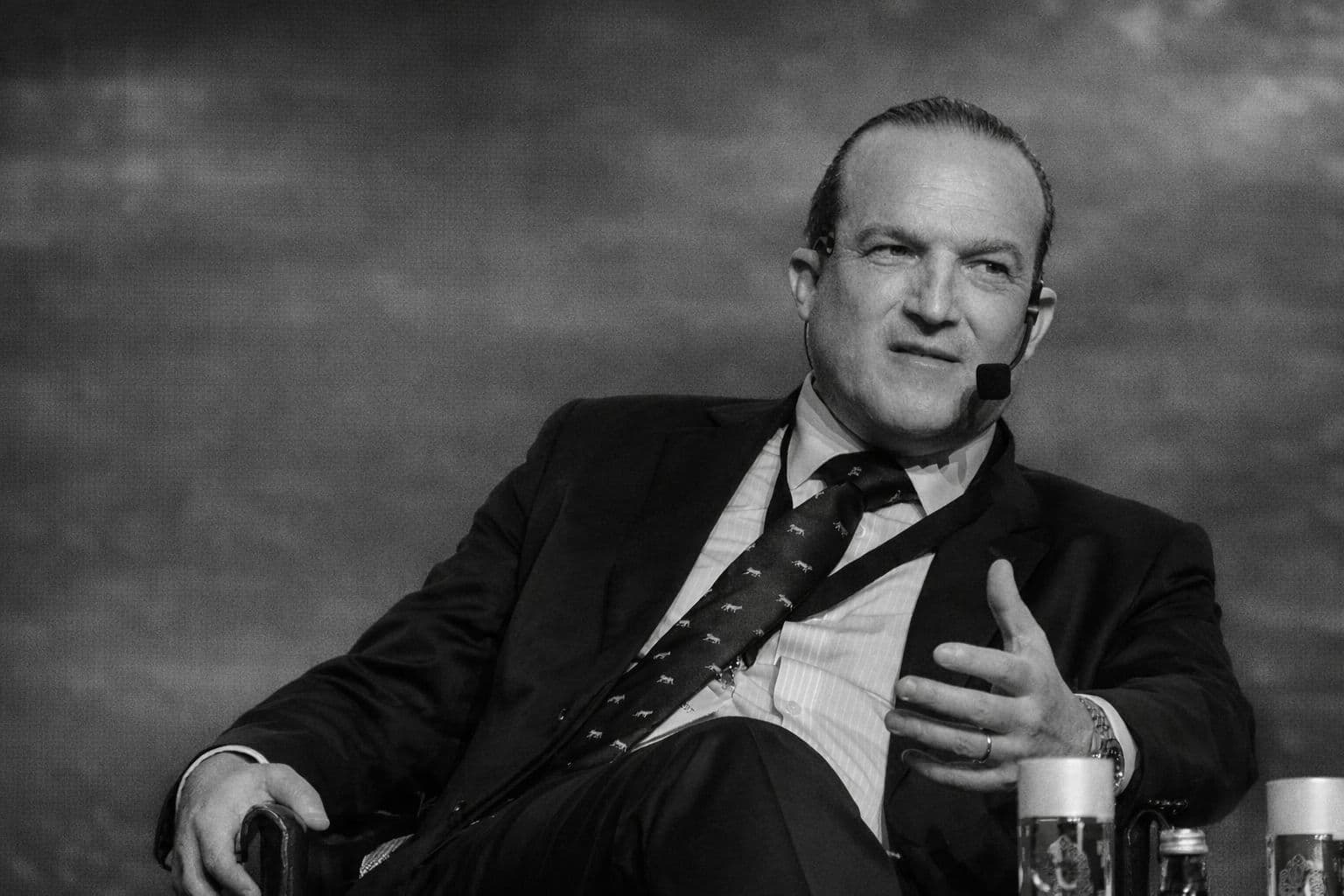
Dr. Raphael Nagel
June 5, 2025

Hardening is not a cycle. It is a structural repricing of risk that the European industrial property market has decided to keep until the operators on the ground prove the loss data wrong.
The word "cycle" suggests symmetry, an upswing followed by an inevitable softening. What is happening across European industrial property covers since the second half of 2023 is something different. Capacity has narrowed, deductibles have moved, exclusions have multiplied, and reinsurance has set a floor under primary pricing that the primary market cannot dig below without losing its treaty support. The 2026 renewal season will not undo this. The numbers reported by GDV in Germany, ABI in the United Kingdom, and the technical disclosures of MAPFRE and Generali point in the same direction. Industrial property has moved from a buyer's market to a structured negotiation in which the insured is expected to bring evidence, not arguments.
This article describes what that means sector by sector across the continent, who is writing the policies that still get written, and which measures actually shift terms at the bound stage. It is written for operators, not brokers, and the perspective is that of a manufacturer who has watched insurance language migrate into procurement specifications. The book BOSWAU + KNAUER. From Building to Security Technology develops the underlying argument that physical security technology has become an economic instrument because insurance has redefined what counts as a risk-bearing asset.
What hardening actually means in 2026 terms
Hardening, in the current European context, is not primarily about base rate increases. The headline rate movements that brokers report, low single digits in some lines, mid double digits in others, are the visible part of a deeper repricing. What has changed is the structure of the contract. Deductibles on natural catastrophe perils have doubled or tripled at many European industrial sites since 2022. Sub-limits on business interruption, named-peril cyber endorsements, and contingent business interruption have been introduced where they did not previously exist. Exclusions for strike, riot, and civil commotion, dormant in most policies for two decades, have returned in markets exposed to civil unrest. War and cyber war language has been rewritten after the LMA clauses of 2021 to 2023, and the question of what constitutes a state-sponsored attack is no longer abstract.
Underwriters have shifted from accepting submissions on the basis of broker narratives to demanding evidence files. A submission for a logistics platform with five hundred million euros in declared values now routinely runs to several hundred pages. It includes loss prevention reports, fire engineering assessments, IEC 62443 statements for industrial control systems, NIST CSF 2.0 alignment summaries where relevant, ISO 27001 certificates, and asset-level depreciation schedules. What used to be optional is now indicative. A submission without these documents is not declined, it is simply priced as if the worst plausible case applied. That pricing is rarely competitive.
The GDV figures published in early 2025 for the German industrial segment indicate combined ratios that have improved modestly compared to 2022 and 2023 but remain above the long-term technical target. ABI data for the United Kingdom commercial property market tells a similar story. The improvement is real, but it is the result of premium adequacy catching up with loss experience, not of underlying loss frequency falling. NICB-style aggregated theft and vandalism data is harder to compile at European scale because each country reports separately, but the directional message from national associations is consistent. Frequency of small and medium losses is stable to rising. Severity, driven by replacement costs, supply chain disruption, and business interruption, continues to climb.
Hardening, in 2026 terms, means that the contract is the negotiation. Price follows.
Sector by sector across the continent
Industrial property is not one market. It is a federation of risk pools that share legal frameworks and reinsurance counterparties but diverge sharply in loss profile. The 2026 view requires a sector-level read.
Manufacturing remains the deepest pool. Within it, automotive component suppliers and the broader machine-building segment are facing harder conditions than chemical processing, which has its own complex history with European insurers. The reason is supply chain interdependency. A fire at a tier-two automotive supplier in the Czech Republic now generates contingent business interruption claims across three or four countries within forty-eight hours. Underwriters have learned this and priced accordingly. Chemical processing, by contrast, is risk-engineered to a level that even hardening cannot move much further, because the operators long ago internalised the cost of loss prevention.
Logistics and warehousing has hardened more sharply than any other segment except perhaps food processing. The combination of high-value goods concentrated in single buildings, the rise of automated storage and retrieval systems with their fire-load implications, the lithium-ion battery exposure in everything from forklifts to product inventory, and the growth of e-commerce inventory holdings has rewritten the underwriting view. A modern logistics platform of fifty thousand square metres carrying mixed goods is now treated as a large commercial fire risk with cyber-physical exposure. Sprinkler adequacy, ESFR standards, smoke control, compartmentation, and security technology coverage are evaluated together. A facility that meets the building code but not the insurer's loss prevention engineering standard will be quoted at terms that effectively price it out.
Food processing has hardened on the back of contamination losses, product recall exposure, and ammonia refrigeration risks. Pharmaceuticals, paradoxically, has hardened less than expected because the underlying risk management discipline imposed by GMP regulation has kept loss frequency low, even as severity per loss has climbed.
Data centres are a category unto themselves. Underwriting capacity remains available but at terms that require redundancy documentation, fire suppression engineering, and increasingly physical security continuity that meets IEC 62443 and ISO 27001 expectations at the same time. The convergence of physical and cyber risk is now explicit.
Renewables, particularly utility-scale solar and onshore wind, have hardened because hail, named windstorm, and serial defect exposures have generated loss ratios that the market did not anticipate when it entered the segment aggressively five years ago. Capacity is contracting. Several Lloyd's syndicates that wrote freely in 2020 and 2021 have either exited or imposed minimum deductibles that make small and medium projects uneconomic to insure on a standalone basis.
Critical infrastructure operators, including water utilities, energy distribution, and telecommunications, face a different conversation. The conversation has moved from property cover to operational resilience, with CISA-style frameworks and the BSI's KRITIS guidance acting as reference points even where they are not legally binding outside Germany.
Who underwrites what remains underwritable
The European industrial property market is concentrated in a smaller group of carriers than the broker market suggests. At the top of the pyramid, four to six European insurers carry the majority of large industrial risks. Allianz Global Corporate and Specialty, AXA XL, Zurich, MAPFRE Global Risks, Generali Global Corporate and Commercial, and HDI Global remain the primary capacity providers for declared values above one hundred million euros. Below them, a layer of regional specialists, including R+V, Helvetia, and Baloise, writes mid-market industrial risks with selective appetite. Lloyd's syndicates participate in the excess layers and in specialty segments such as renewables, fine art storage, and warehousing of high-theft commodities.
The pattern across these carriers in 2025 and into 2026 is convergent. Each has narrowed appetite in at least one segment, typically logistics, recycling, and timber processing. Each has tightened underwriting requirements around natural catastrophe modelling, with RMS and AIR outputs now standard in submissions. Each has added cyber endorsements or exclusions that did not exist five years ago. The technical disclosures of MAPFRE for 2024, and the corresponding segment commentary in Generali's results, show combined ratios in property and casualty that justify continued discipline rather than relaxation.
Underwriting authority has moved upward inside these organisations. Decisions that were once made at the regional branch are now referred to country or European head office for risks above defined thresholds. This concentration slows the quotation process and forces brokers to prepare submissions earlier. For the insured, the practical consequence is that renewal preparation should begin no later than one hundred and twenty days before expiry, not the sixty days that were common a decade ago.
The mutuals and captives are growing in importance. FM Global, with its loss prevention engineering approach, continues to take share among industrial operators who can meet its standards. Captive formations in Luxembourg, Ireland, and Malta have accelerated. Operators with sufficient scale are retaining more risk on their own balance sheet and buying excess cover from the commercial market, which has the effect of pushing the commercial market further toward attritional-free, large-loss-only coverage. ASIS International commentary on enterprise security risk management has documented this shift as part of a broader move toward integrated risk financing.
How reinsurance sets the floor
Primary insurers do not set their own terms in isolation. They negotiate annually with reinsurers, and what happens in January and April reinsurance renewals propagates through the primary market for the following twelve months. The 2023 reinsurance renewal was the inflection point. Reinsurers, having absorbed several years of natural catastrophe losses that exceeded their pricing assumptions, demanded structural changes. Retentions moved upward sharply. Aggregate covers were curtailed or repriced. Per-event deductibles on natural catastrophe treaties doubled or tripled in some European programmes.
The 2024 and 2025 renewals did not reverse these changes. They consolidated them. Going into the January 2026 renewal, the reinsurance market signals are mixed. Property catastrophe reinsurance capacity has grown modestly as new capital has entered through insurance-linked securities and traditional sidecars. This new capacity has put pressure on rates at the top of programmes, particularly for diversifying perils. But it has not flowed into the working layers, where primary insurers actually feel the impact. The working layer remains tight.
What this means for the industrial insured is that the primary market cannot offer terms that the reinsurance market does not support. A primary underwriter who wanted to write a logistics risk at attritional rates would not be able to recover those losses from treaty, because the treaty has been written to assume that primary deductibles and sub-limits will absorb them. The floor on primary terms is therefore set in Bermuda, Zurich, and Munich, not in the office where the policy is bound.
This structural reality is what makes the current hardening different from previous episodes. In 2001 and 2002, after September 11, the market hardened sharply and then softened within three to four years as new capacity entered. The capacity that has entered the current market has not entered the working layers. It has stayed at the top, where it earns a higher risk-adjusted return without competing for the layers that primary insurers actually need to cede. Until that changes, the floor holds.
What actually moves terms at the bound stage
Operators ask two questions about hardening. The first is what the new terms will cost. The second is what can be done to influence them. The answer to the second question has become more specific in the last three years because underwriters have become more specific about what they reward.
Loss prevention engineering, in the FM Global tradition but also as applied by the engineering teams of Allianz, Zurich, and HDI, remains the single largest lever. A site that has been engineered to recognised standards, with documented sprinkler adequacy, fire compartmentation, electrical thermography programmes, and hot work permit systems, will be quoted at materially different terms from a site that has not. The differential at the bound stage can be twenty to forty percent on premium and a full deductible band on natural catastrophe perils.
Physical security technology has joined loss prevention engineering as a recognised variable. Underwriters now ask specifically about perimeter detection, video analytics with verified response protocols, access control aligned with the site's risk profile, and the integration of these systems with the operator's incident response procedures. A site that can demonstrate continuous monitored security, with documented response times and verified alarm chains, presents a different risk to the theft and vandalism underwriter than one that relies on periodic patrols. The same applies to construction sites, which is why the recent generation of mobile security towers and autonomous patrol systems has found a market not because operators wanted new technology but because their insurers gave them a reason to want it.
Cyber-physical convergence is the third lever. IEC 62443 alignment for industrial control systems, NIST 800-53 controls where US ownership is in the structure, and ISO 27001 certification for the broader information security management system are now baseline expectations for facilities above a certain complexity. A submission that addresses these frameworks explicitly tends to attract a more competitive quotation than one that does not.
Documentation discipline is the fourth lever, and the least appreciated. Underwriters do not read every page of a submission, but they notice when a submission is internally consistent, when asset values reconcile across schedules, when business interruption calculations align with declared revenues, and when previous loss data is presented without gaps. The cost of preparing a coherent submission is small relative to the premium impact of an incoherent one.
What holds
The European industrial property insurance market in 2026 is not in the early stages of a hardening cycle. It is in the consolidation stage of a structural repricing that began in 2022 and that the reinsurance market has decided to defend. Operators who interpret the current conditions as temporary will be wrong. The terms available today are, in directional terms, the terms that will be available for the foreseeable medium term. The only variable that the insured controls is the quality of the evidence file presented at renewal.
For operators who want to test their position against the current underwriting expectations, the appropriate first step is a structured assessment of physical and cyber-physical security against the standards that insurers now reference. A three to five day audit, conducted at the site level and tied to the specific risk profile of the operation, produces a document that translates directly into renewal preparation. That is the second of the three paths described in BOSWAU + KNAUER. From Building to Security Technology, and it is the one that most closely matches the question that hardening poses.
The first path, a confidential sixty-minute conversation, is appropriate for operators who want to test the relevance of the topic before committing to an audit. The third path, a ninety-day pilot at a defined site, is appropriate for operators who already know what they need to demonstrate and want operational evidence to present at the next renewal. All three paths produce a deliverable the operator owns, with or without continuation.
Frequently asked questions
Which sectors are hardening fastest?
Logistics and warehousing, recycling, timber processing, and utility-scale renewables are hardening fastest in 2026. Each combines high accumulation, evolving loss patterns, and capacity contraction at the carrier level. Logistics in particular has seen deductibles double and sub-limits introduced for business interruption that did not exist in 2020. Food processing and data centres are hardening at a steady rate. Pharmaceuticals, chemical processing under recognised loss prevention regimes, and well-engineered manufacturing are hardening more slowly because their underlying risk discipline has held loss ratios within underwriting tolerance.
Who underwrites?
Large European industrial property risks are concentrated among Allianz Global Corporate and Specialty, AXA XL, Zurich, MAPFRE Global Risks, Generali Global Corporate and Commercial, and HDI Global. Below this layer, regional specialists including R+V, Helvetia, and Baloise write mid-market industrial business. Lloyd's syndicates participate in excess layers and specialty segments. FM Global continues to grow among operators who meet its loss prevention engineering standards. Captives in Luxembourg, Ireland, and Malta absorb a growing share of attritional risk, with the commercial market increasingly focused on large-loss layers.
How does reinsurance affect this?
Reinsurance sets the floor that primary insurers cannot price below without losing treaty support. The 2023 reinsurance renewal restructured European treaties through higher retentions, repriced aggregates, and doubled per-event deductibles on natural catastrophe layers. The 2024 and 2025 renewals consolidated these changes rather than reversing them. New capacity has entered the top of programmes through insurance-linked securities but has not flowed into the working layers where primary insurers actually need it. Until working-layer capacity expands, primary terms cannot soften meaningfully.
What measures help?
Documented loss prevention engineering to recognised standards is the single largest lever, typically worth twenty to forty percent on premium and a full deductible band. Physical security technology with verified response protocols, perimeter detection, integrated video analytics, and access control aligned with site risk, has become a quoted variable. Cyber-physical alignment with IEC 62443, NIST CSF 2.0, NIST 800-53, and ISO 27001 frameworks is now baseline for complex sites. Documentation discipline in submissions, with consistent asset schedules, business interruption calculations, and loss history, materially affects the quotation received.
Related topics
- Insurance Premium Reduction Through AI Surveillance
- Cyber-Physical Insurance in the Gulf: 2026 Market Survey
- When Insurers Will Mandate AI Surveillance: A Real Calendar
- UK Industrial Property Insurance 2026: The Premium Cycle
Take the next step: See prices & ROI · Explore the products · Send a no-obligation request. BOSWAU + KNAUER – direct from the factory in Filderstadt, reply within 5 working days.
About the author
Dr. Raphael Nagel (LL.M.) is founding partner of Tactical Management. He acquires and restructures industrial businesses in demanding market environments and writes on capital, geopolitics, and technological transformation. raphaelnagel.com
More reading
Since 1892.
The firm is reached at boswau-knauer.de or +49 177 2266267.