
Blog
Access Control with Emirates ID: Federal Biometrics
Emirates ID federal integration, EIDA reader compatibility, Saudi Absher equivalence. How national ID becomes site ID.

Dr. Raphael Nagel
August 19, 2025
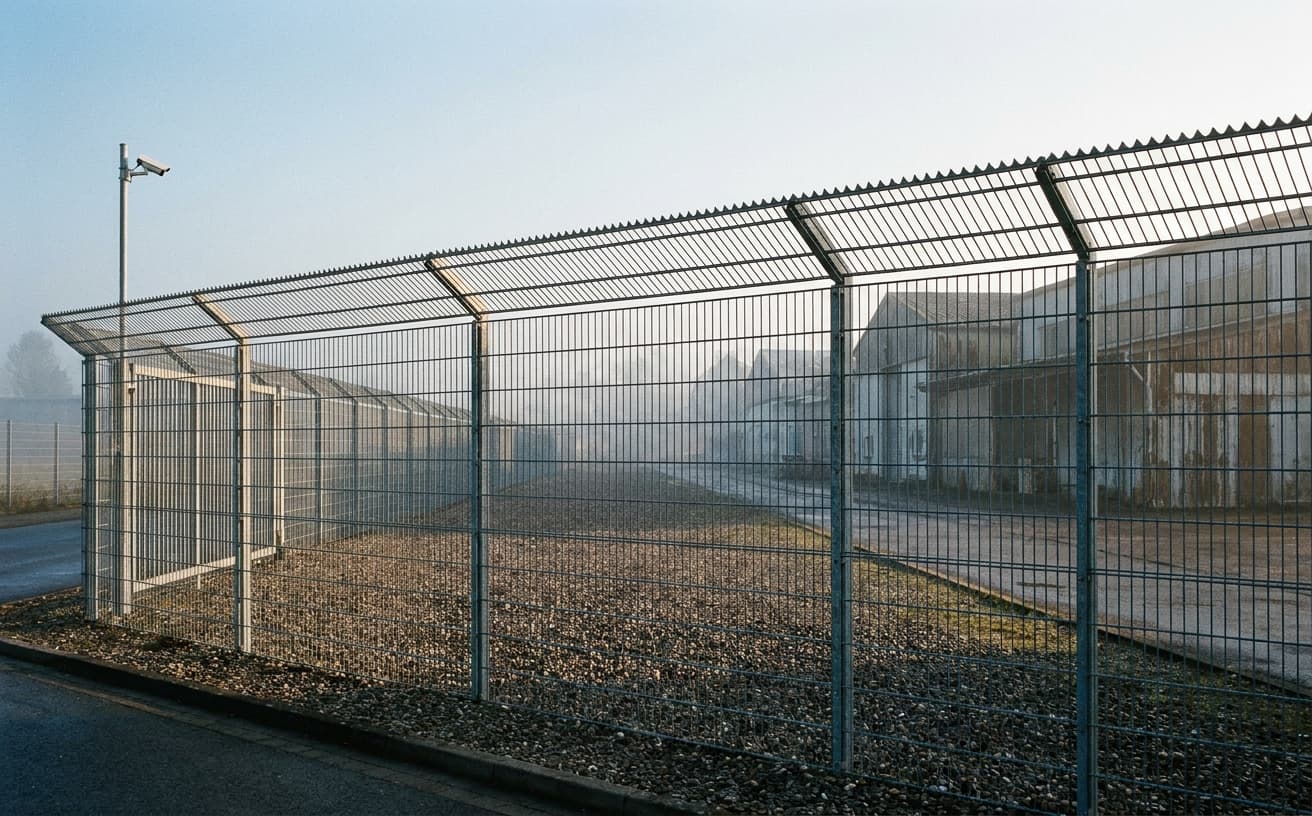
Access control in the Gulf has stopped being a question of hardware and has become a question of identity sovereignty. The credential that opens a gate at an industrial site in Jebel Ali, a refinery perimeter in Ruwais or a logistics hub in Khalifa Port is no longer a proprietary card issued by a facility manager. It is, increasingly, the same card the holder used that morning at a federal counter, at a bank branch and at a hospital reception. The Emirates ID, and its Saudi counterpart anchored in the Absher and Tawakkalna ecosystems, has become the de facto site credential for large parts of the GCC industrial economy.
This shift has consequences that operators of industrial assets in the region have not fully absorbed. A site that integrates Emirates ID is no longer running a closed access control system. It is running a node attached to a federal identity infrastructure, with all the obligations, the constraints and the leverage that such a position implies. The argument that follows treats this not as a feature, but as an architectural decision that touches procurement, compliance, biometrics, data residency and the contractual position of the operator against both the regulator and the integrator. It is written for site directors, heads of physical security and HSE leads who already know that the next perimeter audit will ask harder questions than the last one.
The federal credential as site credential
The Emirates ID is issued by the Federal Authority for Identity, Citizenship, Customs and Port Security, commonly referenced under the acronym ICP, formerly known as EIDA. The card carries a contact chip with a public key infrastructure, a fingerprint biometric template, a facial image and a unique identification number that is bound to the holder for life. Saudi Arabia operates an analogous structure through the National Information Center and the Absher platform, with biometric anchors that have been progressively extended through Tawakkalna and Nafath authentication. Bahrain, Oman, Qatar and Kuwait each maintain comparable national identity schemes with reader-level compatibility that varies by generation.
For an industrial operator, the practical question is not whether the credential exists, but what it replaces. In a conventional access control deployment, the operator issues a proprietary card, manages its lifecycle, enrols the biometric, defines the validity period and revokes the credential when the holder leaves. Every step is under the operator's control and every step is the operator's liability. When the Emirates ID becomes the credential, several of those steps move outside the operator's perimeter. The card is issued federally. The biometric of record is held federally. The identity is verified federally. The operator inherits a credential whose authenticity is stronger than anything a private system could generate, and surrenders the convenience of being the sole authority over its lifecycle.
This trade is rarely articulated in those terms during procurement. It should be. The strength of the federal credential is that it cannot be forged at the level of an industrial site. The cost is that the operator's access control logic must now treat the federal layer as a dependency. If federal verification services are unreachable, the site must have a defined behaviour. If a card is revoked federally without notification to the site, the site must have a reconciliation cadence. If a contractor's status changes in the federal labour database, the access right must follow. The integration is not a wiring diagram. It is a governance question with technical artefacts.
The frameworks that already cover this question are well known to anyone who has read NIST 800-53 on identity and access management, the access control families of IEC 62443 for industrial environments, and the ISO 27001 controls on supplier and third-party relationships. None of them were written with Emirates ID specifically in mind. All of them apply. The work of the security architect is to translate the federal credential into the control language those frameworks recognise, so that the next auditor finds a system that is defensible in both directions.
Reader compatibility and the EIDA technical stack
EIDA-compatible readers are not a single product category. The federal specification covers card authentication, biometric match-on-card, online verification through the federal identity gateway and offline verification using the certificate chain stored on the chip. A reader installed at an industrial turnstile may perform any subset of these operations, and the subset chosen has direct consequences for both throughput and assurance.
The simplest deployment treats the Emirates ID as a serialised card. The reader extracts the identification number, looks it up against a local whitelist and grants or denies access. This is functionally equivalent to using the card as a barcode, and it discards almost every property that makes the federal credential valuable. It is also, in the experience of operators across the region, the most common implementation in legacy industrial sites. The card works at the gate, but the system has no cryptographic basis to claim that the person presenting the card is the person the card was issued to.
A more serious deployment performs match-on-card biometric verification. The holder presents the card, places a finger on the reader, and the fingerprint template stored on the chip is compared to the live capture without the template ever leaving the card. This architecture is favoured by privacy regulators because the biometric never enters the operator's network. It is also favoured by security architects because the credential is bound to the holder at the moment of use, not at the moment of enrolment. The throughput cost is measured in seconds per transaction, which matters on a shift change at a refinery gate where several hundred workers cross within twenty minutes.
The most demanding deployment performs online verification against the federal gateway, confirming in real time that the card is valid, that the holder's status permits entry and that no federal flag has been raised against the identification number. This architecture requires network connectivity, service-level agreements with the federal interface providers and a fallback mode that does not collapse the gate when the link drops. It is the architecture used by airports, by federal buildings and, increasingly, by critical infrastructure operators who have decided that the cost of a federal round-trip is lower than the cost of an unverified entry. The BSI guidance on identity federation and the CISA recommendations on identity-centric zero trust both point in this direction. The Gulf is, in some respects, ahead of European and North American practice in actually deploying it at industrial scale.
Biometric custody and the data residency question
The integration of Emirates ID into a site access control system raises a question that procurement documents almost never ask in clear terms. Where does the biometric live, and who is responsible for it. The answer determines the operator's exposure under the UAE Personal Data Protection Law, the Saudi PDPL, and the sector-specific regulations that apply to oil and gas, ports, aviation and utilities.
If the architecture is match-on-card, the biometric of record never enters the operator's environment. The operator processes a yes-or-no verification result and stores a transaction log. This is the cleanest position legally and the easiest to defend in an audit. The operator can demonstrate that no biometric template was ever stored on its servers, that no biometric was ever transmitted across its network in identifiable form and that the federal authority remains the sole custodian of the underlying template.
If the architecture involves any form of biometric storage at the site, the position changes. Some operators have chosen to enrol a second biometric, distinct from the federal one, in order to retain independence from federal availability. Others have chosen to cache federal templates locally for performance reasons. Both approaches create custody obligations. The data must be encrypted at rest, segregated from operational systems, accessible only to named roles and retained only for the period that a documented purpose justifies. The NIST CSF 2.0 functions of protect and govern map onto this directly, and ISO 27001 Annex A controls on cryptography and on access give the operational shape.
The mistake to avoid is to assume that because the federal authority owns the identity, the operator is absolved of biometric custody when it processes any derived data. The site that captures a fingerprint at its own reader, even to compare against a card-resident template, is processing biometric data in the legal sense of every regional framework. The argument that the data was discarded immediately after comparison is sound, provided the system is designed to make that argument verifiable. If it is not designed to make it verifiable, the argument fails at the first audit.
Absher equivalence and the Saudi cross-border case
For operators with sites on both sides of the UAE-Saudi border, or with workforce flows that cross between the two jurisdictions, the question of credential equivalence becomes operational. The Saudi national identity infrastructure, anchored in Absher for citizens and Muqeem for residents, with Tawakkalna and Nafath as the authentication layers, is functionally analogous to the Emirates ID system but is not interoperable at the card level. A reader configured for Emirates ID will not natively read a Saudi national ID card. A reader configured for the Saudi credential will not natively read the Emirates ID.
The integration path is therefore not at the card layer but at the identity layer. An access control platform that supports both systems does so by maintaining two parallel verification pipelines, each terminating at a different federal gateway, and consolidating the results into a single authorisation decision. This is technically straightforward and operationally demanding. Each pipeline requires its own service agreements, its own credential management, its own fallback logic and its own audit trail. Operators who treat the two systems as a single project consistently underestimate the integration effort by a factor that surfaces in the third month of deployment.
There is a second consideration that is harder to articulate but that decision-makers in the region understand intuitively. Federal identity systems are instruments of state. The data flows that pass through them are visible, at some level, to the issuing state. An operator that integrates both Emirates ID and Saudi national ID at the same gate is, by implication, generating presence records that have value to two sovereign authorities. This is neither good nor bad in itself, but it is a fact that should be acknowledged in the governance documentation of the operator, and discussed with legal counsel before, not after, the system goes live. The author's volume BOSWAU + KNAUER. From Building to Security Technology develops the broader argument that security architecture in critical sectors cannot be separated from the sovereignty of the data it generates. The Gulf case is the clearest example currently available.
The contractor lifecycle and federal labour databases
Industrial sites in the Gulf operate with workforce compositions in which permanent employees are a minority and contractors, sub-contractors and temporary labour represent the bulk of daily site presence. The Emirates ID integration becomes operationally valuable precisely at this point. A contractor's right to be on a site is not a property of the contract between the operator and the contracting company. It is a property of the contractor's status in the federal labour and immigration databases, which is in turn linked to the Emirates ID.
A site that integrates this lineage in its access control logic can do something that legacy systems cannot. It can deny entry to a worker whose visa has expired the previous day, whose labour card has been cancelled, whose employer relationship has changed without the site being notified, or whose health and safety certification has lapsed in the federal register. The denial happens at the gate, in real time, without the site security officer needing to know any of the underlying facts. The federal layer provides the truth, and the access control logic enforces it.
The implementation discipline that this requires is substantial. The site must define which federal data points are authoritative for which access decisions. It must define the cadence of reconciliation, which in practice means how often the local cache is refreshed against the federal source. It must define the behaviour when federal services are unavailable, and that behaviour must be a documented policy decision, not an emergent property of the software. NICB-style anti-fraud practice translates, in this context, into the recognition that the most valuable credential is the one that is hardest to misrepresent, and that the operator's role is to consume that credential correctly rather than to recreate it.
The ASIS International guidance on workforce screening, and the IEC 62443 control families on user account management, both converge on the same point. The credential lifecycle in an industrial site must mirror the credential lifecycle in the federal source. Any drift between the two is a vulnerability. The integration of Emirates ID is, properly understood, a mechanism for eliminating that drift by construction.
What holds
Emirates ID integration is not a procurement line item. It is a decision about which authority the site recognises as the source of identity truth, and it is a decision that reshapes the operator's obligations in compliance, biometric custody, network architecture and supplier governance. The technical components are available from a range of integrators in the region. The architectural discipline to deploy them correctly is rarer.
What separates a defensible deployment from a fragile one is not the choice of reader, the brand of controller or the colour of the turnstile. It is the clarity with which the operator has answered four questions before the first card is read. Which federal services are authoritative for which decisions. Where, if anywhere, biometric data is stored under the operator's responsibility. What the system does when the federal layer is unavailable. How the contractor lifecycle in the federal labour database flows into the access right at the gate. Operators who can answer those four questions in writing have an architecture. Operators who cannot have a procurement.
For decision-makers preparing to take this question seriously, the structured starting point is Path II from the firm's engagement model. A three to five day audit, conducted on site, that produces a written assessment of the existing access control architecture against the federal integration possibilities, with a prioritised remediation matrix and a documented assumption set that the operator can challenge. Where the matter is more exploratory, Path I, a sixty-minute confidential conversation, is sufficient to establish whether the question is worth pursuing at all. Both paths leave the operator in possession of the analysis. Neither path commits the operator to anything beyond the analysis itself.
Frequently asked questions
How does Emirates ID integrate?
The Emirates ID integrates into an industrial access control system through readers that conform to the federal specification published by ICP, formerly EIDA. The integration operates at three possible depths. Surface integration treats the card as a serialised token and reads the identification number. Mid-depth integration performs biometric match-on-card, comparing a live fingerprint to the template stored on the chip. Deep integration performs online verification against the federal identity gateway, confirming validity in real time. The chosen depth determines both the assurance level and the network dependencies the site must accept.
Who reads it?
EIDA-compatible readers are produced by a range of manufacturers certified by the federal authority. The certification covers card authentication, biometric handling and, where applicable, online gateway communication. The choice of reader is less consequential than the choice of integration architecture, but readers do differ materially in throughput, environmental tolerance and the cryptographic operations they support natively. Industrial sites typically require IP-rated enclosures, operation across the Gulf temperature range and tamper-evident construction. The federal certification list should be consulted before procurement, and the certification status verified at the time of purchase, not at the time of specification.
Is biometric data stored?
It depends on the architecture. In a match-on-card deployment, the biometric template remains on the federal credential and is never stored by the operator. In deployments that cache federal templates locally for performance, or that enrol a separate site biometric, the operator becomes a custodian of biometric data and falls within the scope of the UAE Personal Data Protection Law and analogous regional frameworks. The decision to store or not to store should be made consciously, documented in the governance record and reflected in the data protection impact assessment. Operators who assume their integrator has made this decision correctly are usually mistaken.
What is Absher?
Absher is the digital services platform operated by the Saudi Ministry of Interior, providing authentication and identity services to Saudi citizens and residents. In combination with Tawakkalna and Nafath, it forms the authentication layer that sits on top of the Saudi national identity infrastructure. For industrial operators with cross-border workforce flows, Absher serves a function analogous to the Emirates ID gateway in the UAE, but the two systems are not interoperable at the card level. Integration of both requires parallel verification pipelines and parallel governance arrangements. The functional equivalence is real. The technical equivalence is not.
Related topics
- Building a UK Industrial SOC: TUPE, SIA & Living Wage Math
- Layered Perimeter Security on an Industrial Site
- Industrial Perimeter Security: Architecture Layered for Cost
- IT/OT Convergence Inside Aramco: A Model for the GCC
- Security Robots in Saudi Arabia: Vision 2030 & NEOM
Take the next step: See prices & ROI · Explore the products · Send a no-obligation request. BOSWAU + KNAUER – direct from the factory in Filderstadt, reply within 5 working days.
About the author
Dr. Raphael Nagel (LL.M.) is founding partner of Tactical Management. He acquires and restructures industrial businesses in demanding market environments and writes on capital, geopolitics, and technological transformation. raphaelnagel.com
More reading

Since 1892.
The firm is reached at boswau-knauer.de or +49 177 2266267.