
Blog
Art Insurance in the Gulf: Louvre Abu Dhabi and Lloyd
High-value art transit and exhibition cover, Lloyd cooperation with regional carriers. The cultural-sector insurance ecosystem.
Dr. Raphael Nagel
August 22, 2025

Fine art insurance in the Gulf is not a niche of the property market. It is a separate discipline that has been quietly built around a small number of state-backed cultural assets whose individual values exceed those of mid-sized industrial plants.
The Louvre Abu Dhabi, the forthcoming Guggenheim Abu Dhabi, the Zayed National Museum and the wider Saadiyat cultural cluster have done something that the regional insurance market did not anticipate fifteen years ago. They have produced a permanent demand for nail-to-nail cover, transit cover, exhibition cover and terrorism endorsement on collections whose single items pass the hundred million dollar mark. The volume is too large for any single regional carrier to retain. It is too specialised for a generalist underwriter to price. The result is an ecosystem in which Lloyd's syndicates, continental European reinsurers, and Emirati and Saudi carriers have learned to share both risk and authority in a way that has no real parallel outside London, Zurich and New York.
The asset class the market had to learn
A painting is not a building. It does not depreciate on a fixed schedule, it does not have a replacement cost in the conventional sense, and its value can shift by an order of magnitude between two auction seasons. The insurance industry has known this for at least a century, which is why fine art lines were developed inside Lloyd's long before the Gulf entered the conversation. What changed with the Saadiyat programme is that a region with limited prior cultural-asset underwriting suddenly required policies for objects whose declared values rivalled the total premium income of some of its smaller insurance companies.
The first response, between roughly 2009 and 2015, was to route nearly everything through London. The Louvre Abu Dhabi inter-governmental agreement with France set the tone. Loans from the Musée du Louvre, the Musée d'Orsay, the Centre Pompidou and other French institutions carried their own French-state indemnity arrangements for portions of the risk, with private market cover layered above. The private market layer was almost entirely Lloyd's-led, with AXA Art, Hiscox and a small group of specialist syndicates writing the primary slices. Regional carriers participated, but mostly as fronting entities or as small-line followers.
The second response, which is the one that defines the market today, has been the gradual building of regional underwriting capability. ADNIC, Oman Insurance Company (now Sukoon), Orient Insurance, GIG Gulf and a handful of Saudi carriers have all developed fine art capabilities. They do not pretend to write the full risk. They participate as co-insurers, often on a quota share basis, with Lloyd's leading and providing the wording. This is not a token arrangement. Regional carriers now retain meaningful percentages on transit risks within the GCC, on exhibition risks at Saadiyat venues, and on certain categories of permanent collection cover. The ceded portion still flows to London and Munich, but the underwriting conversation now happens in Abu Dhabi and Dubai as much as in EC3.
The asset class itself has also expanded. The original conversation was about European old masters and impressionists on loan. The conversation today includes Islamic manuscripts, contemporary regional works acquired at auction in Dubai and London, large-scale installations whose value lies partly in artist certification, and digital works whose insurance treatment is still being negotiated. Each category requires a slightly different wording. The market has been forced to mature quickly.
The Lloyd's cooperation architecture
The relationship between Lloyd's and regional Gulf carriers in fine art is not the relationship most people imagine when they hear the phrase reinsurance cooperation. It is closer to a co-underwriting arrangement with a clear division of authority. The Lloyd's lead carries the pen on wording, on claims philosophy and on accumulation management. The regional follower carries local knowledge, local regulatory standing and, increasingly, real underwriting judgement on transit and storage risks within the region.
Lloyd's presence in the region has been formalised through the Dubai International Financial Centre. Lloyd's has operated through the DIFC since 2015, and a number of managing agents have offices there. This matters for fine art because it means that a syndicate can write a Saadiyat risk without the policy leaving the regulatory perimeter that the cedant prefers. The DIFC platform also allows the use of English law wordings, which is the market standard for fine art globally. Saudi Arabian cultural projects, particularly those connected to the Diriyah Gate and AlUla developments, have followed a slightly different path, with more of the cover written through the Riyadh market under SAMA supervision, but with the same London syndicates standing behind the regional carriers.
The cooperation works because the economics are clear. A Saadiyat exhibition with declared values in the low billions of dollars cannot be retained by any single regional carrier without violating its solvency limits. It cannot be retained by a single Lloyd's syndicate either. The structure that has emerged uses the regional carriers as the contractual counterparty for the museum, with reinsurance flowing upward through a layered programme. The lead Lloyd's syndicate sets the conditions for the entire tower. Conditions include not only price and exclusions but security requirements that the regional carrier then enforces on the ground. This is where the cooperation gets operationally interesting, because the security requirements are written in London but executed in Abu Dhabi, and the gap between those two cities in terms of museum security culture has had to be closed.
The closing of that gap has been the quiet story of the past decade. French expertise, transferred through the Agence France-Muséums arrangement that underpins the Louvre Abu Dhabi, brought European museum security standards to Saadiyat from the start. The standards have since been adopted, with local adaptation, by other institutions in the cluster. They form the baseline against which Lloyd's now underwrites.
What the security baseline actually demands
The security requirements attached to a high-value art policy in the Gulf are not generic. They are written into the policy or referenced as warranties, and breach of warranty is grounds for declinature. The baseline is recognisable to anyone who has worked with European or American fine art underwriters, but it has been adapted for Gulf conditions, particularly for climate, for the volume of construction activity around cultural sites, and for the specific transit corridors that move objects between airports, ports, free zones and museum premises.
Physical security at the venue is the starting point. Underwriters expect compliant intruder detection, compliant fire suppression that is appropriate for art (which generally means clean agent or hypoxic systems rather than water-based suppression for primary storage and gallery zones), 24/7 manned monitoring, access control with auditable logs, and a documented incident response procedure that has been rehearsed. The standards referenced in policy wordings tend to draw on a combination of European norms, ASIS International guidance, and the International Committee of Museum Security recommendations. NIST 800-53 and ISO 27001 appear in the network security warranties for institutions that have integrated digital infrastructure, which is now most of them. IEC 62443 is referenced where building management systems are connected to the same networks that carry security data.
Transit is the second pillar and the one where most claims activity occurs in any fine art portfolio. The Gulf has specific characteristics here. Distances between Abu Dhabi, Dubai, Sharjah, Doha and Riyadh are not large by international standards, but the road transit corridors pass through industrial zones and free zone perimeters that have their own access regimes. Air transit volume through Abu Dhabi International, Dubai International and the cargo hubs at Al Maktoum has grown to the point where dedicated art-handling capacity exists, but warranties typically require named agents, specified handlers, secure storage at transit hubs that meets agreed standards, and convoy or escort arrangements for high-value moves. The National Insurance Crime Bureau guidance on transit security, while developed for a different market, is frequently referenced as a comparable benchmark.
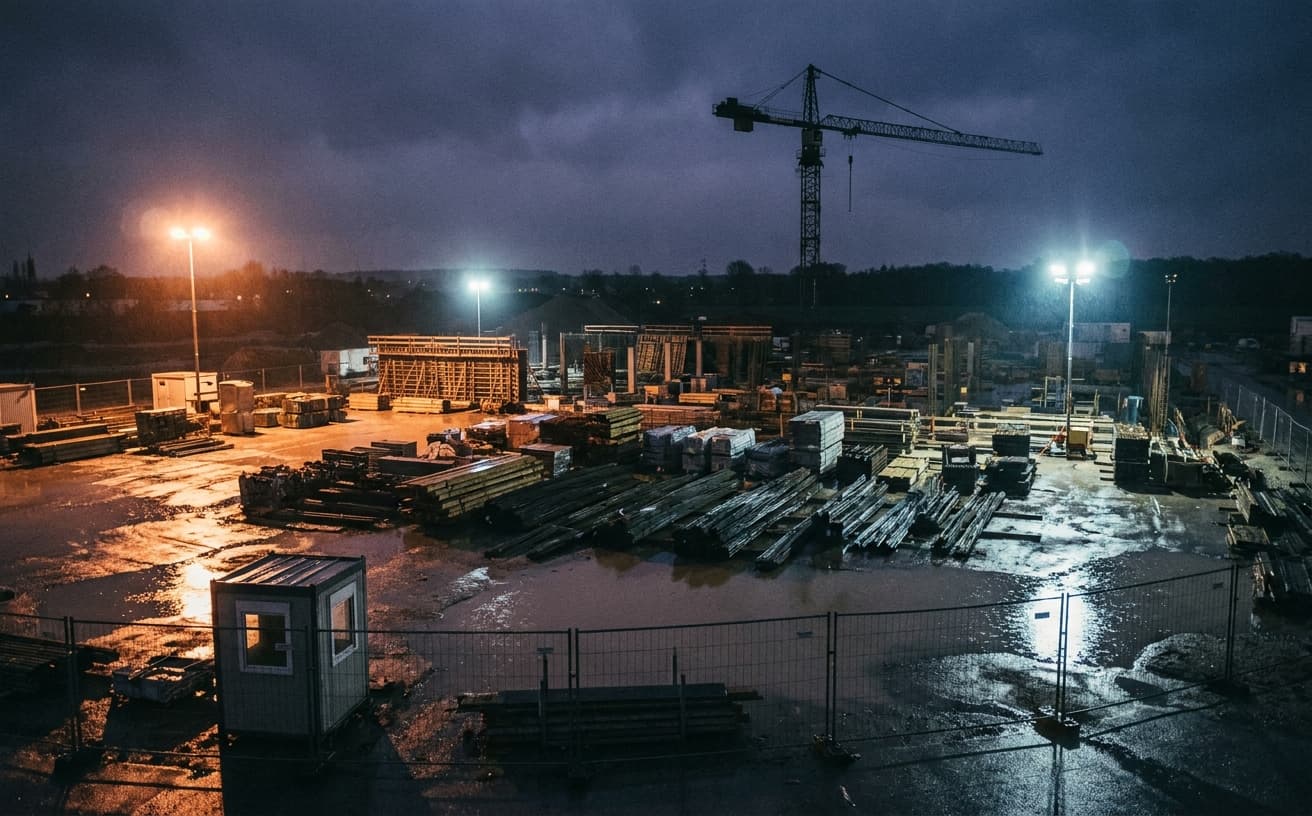
The third pillar, often underestimated, is the construction-adjacent risk. Saadiyat Island is still under active development. Cultural institutions sit next to live construction sites for adjacent projects. Vibration, dust, water intrusion from construction activities, and the security implications of large transient construction workforces all enter the underwriting conversation. This is one of the points where the operator-to-operator perspective developed in the book BOSWAU + KNAUER. From Building to Security Technology becomes directly relevant. The discipline of treating construction-site security as a measurable, technological function rather than as a guard-and-fence improvisation has migrated into the cultural sector, because the institutions sit inside or next to construction zones for years at a time. Mobile video towers, autonomous patrol units and AI-supported video analytics, originally developed for industrial and construction applications, now appear on the perimeter monitoring lists of cultural-cluster operators. CISA and BSI guidance on critical infrastructure protection is being adapted to cultural assets, because the threat models overlap more than the cultural sector likes to admit.
Where the wordings get unusual
Fine art policies in the Gulf carry clauses that would surprise a property underwriter. They are not exotic for the discipline, but they are specific enough that they cannot be lifted from a standard wording without modification.
The first category is the depreciation clause. A damaged painting that has been restored is worth less than the same painting undamaged, even after the restoration is complete and physically invisible. The policy typically pays the cost of restoration and, separately, the diminution in market value. The diminution figure is negotiated post-loss, sometimes with reference to auction comparables and sometimes through appointed experts. The mechanism is contentious and is one of the reasons that London leads prefer to retain claims authority rather than delegate to regional followers. The expertise required to negotiate a diminution figure for a Tiepolo or a Rothko is not widely distributed.
The second category is the pairs and sets clause. Where an object is part of a set, damage to one item triggers a payment that reflects the loss of integrity of the whole set. This matters for manuscript collections, for ceremonial objects, and for certain contemporary works that are conceived as multi-part installations. The clause has to be drafted carefully because the definition of a set can be contested.
The third category is the title and authenticity exclusion, which in the Gulf has acquired regional features. Provenance disputes involving objects that passed through wartime Europe, objects with contested origin in the broader Middle East, and objects whose attribution has been revised by subsequent scholarship all sit in this exclusion. The market generally does not cover the financial consequences of a successful title claim or a deattribution. The Gulf institutions have invested heavily in provenance research, partly because the insurance market made clear that it would not absorb this risk.
The fourth category is the terrorism and political violence treatment. Standard fine art wordings either exclude terrorism or write it back through a specific endorsement. In the Gulf, the endorsement is usually written, but the pricing and the conditions reflect the regional threat environment. The GDV statistical work on terrorism risk and the ASIS guidance on cultural-property protection both inform the underwriting, but the lead Lloyd's syndicates apply their own accumulation models, which take into account the concentration of cultural value on Saadiyat Island and the proximity of high-profile institutions to one another. Accumulation is the underwriter's permanent concern in this market.
The fifth category, increasingly visible, is the cyber endorsement. As cultural institutions integrate building management, climate control, access control and collections management systems into shared networks, the possibility of a cyber-physical incident affecting environmental conditions or security functions becomes real. NIST CSF 2.0 has become the most commonly referenced framework in policy wordings that address this exposure. The endorsements are still developing. The market has not settled on a standard.
What holds
The Gulf fine art insurance market is now a working ecosystem. It is not large by global standards, but it has produced a stable structure in which Lloyd's authority, regional underwriting capacity, French and European cultural expertise, and Emirati and Saudi institutional patronage coexist. The structure works because each participant respects the others' competence within a defined scope. London writes the wording and leads the claims. Regional carriers provide the contractual interface and increasing underwriting judgement. Cultural institutions invest in the security infrastructure that makes the cover possible at a tolerable premium. The system has not been tested by a major loss event involving a flagship object, and underwriters know that the day this happens, the wordings, the security standards and the cooperation architecture will all be re-examined. Until then, the market continues to expand.
The operational point that the cultural sector has internalised, and that the industrial and construction sectors elsewhere are still working through, is that security at this level is a measurable function with documented inputs and verifiable outputs. It is not a service one buys to feel protected. It is an underwriting precondition with audited compliance, and it shapes the economics of the institution.
Decision-makers in adjacent sectors, whether they manage industrial sites, logistics hubs or critical infrastructure assets, can take the same path. A confidential sixty-minute conversation, the format described as Path I in BOSWAU + KNAUER. From Building to Security Technology, is the lowest-friction starting point. The audit described as Path II produces a written report that survives independent scrutiny. The choice of how far to go is the operator's. The asset class, whether it is a painting or a turbine, does not negotiate.
Frequently asked questions
Who underwrites Gulf museum art?
The lead underwriting authority for high-value Gulf museum art sits with a small group of Lloyd's syndicates and specialist continental European carriers. AXA Art, Hiscox and several specialist Lloyd's syndicates write the primary layers, with continental reinsurers participating on the upper layers. Regional carriers, including ADNIC, Sukoon, Orient Insurance and GIG Gulf, act as the contractual counterparty for the institutions and retain a meaningful share on transit and exhibition risks. State indemnity arrangements, particularly the French inter-governmental agreement underpinning the Louvre Abu Dhabi, cover specific portions of loan exposure.
How does Lloyd work with regional carriers?
Lloyd's operates in the region through the DIFC platform, which allows syndicates to write Gulf risks under English law without leaving the regulatory perimeter that Emirati cedants prefer. The cooperation is structured as co-underwriting rather than pure reinsurance. The Lloyd's lead sets wording, pricing and security warranties. The regional carrier holds the policy with the institution, enforces warranties locally and retains a defined share of the risk. Claims authority typically remains with the Lloyd's lead, particularly for diminution-of-value and authenticity matters where specialised expertise is concentrated in London.
What security is required?
Underwriters expect compliant intruder detection, clean-agent fire suppression in gallery and storage zones, 24/7 manned monitoring, access control with auditable logs, and a documented and rehearsed incident response procedure. Transit requirements specify named agents, secure transit hubs and escort arrangements for high-value moves. Network security warranties commonly reference NIST CSF 2.0, ISO 27001 and, where building management systems are connected, IEC 62443. Construction-adjacent risks on Saadiyat are addressed through perimeter monitoring technologies including mobile video towers, autonomous patrol units and AI-supported video analytics, adapted from industrial applications.
What are unusual clauses?
Four clause types recur. The depreciation clause separates restoration cost from diminution in market value after a damaged object is repaired. The pairs and sets clause triggers payment reflecting loss of integrity to a multi-part work or collection. The title and authenticity exclusion removes cover for provenance disputes and deattribution, a sensitive matter given regional acquisition histories. The terrorism endorsement is typically written back, with accumulation modelling that takes account of value concentration on Saadiyat Island. Cyber endorsements addressing cyber-physical risks to environmental and security systems are increasingly added, though wording standards remain unsettled.
Take the next step: See prices & ROI · Explore the products · Send a no-obligation request. BOSWAU + KNAUER – direct from the factory in Filderstadt, reply within 5 working days.
About the author
Dr. Raphael Nagel (LL.M.) is founding partner of Tactical Management. He acquires and restructures industrial businesses in demanding market environments and writes on capital, geopolitics, and technological transformation. raphaelnagel.com
More reading
Since 1892.
The firm is reached at boswau-knauer.de or +49 177 2266267.