
Blog
GCC Aviation Security: GCAA, GACA and ICAO Convergence
GCAA UAE, GACA Saudi, and ICAO Annex 17 alignment explained. How Gulf aviation authorities harmonize security standards across the region.

Dr. Raphael Nagel
May 25, 2025
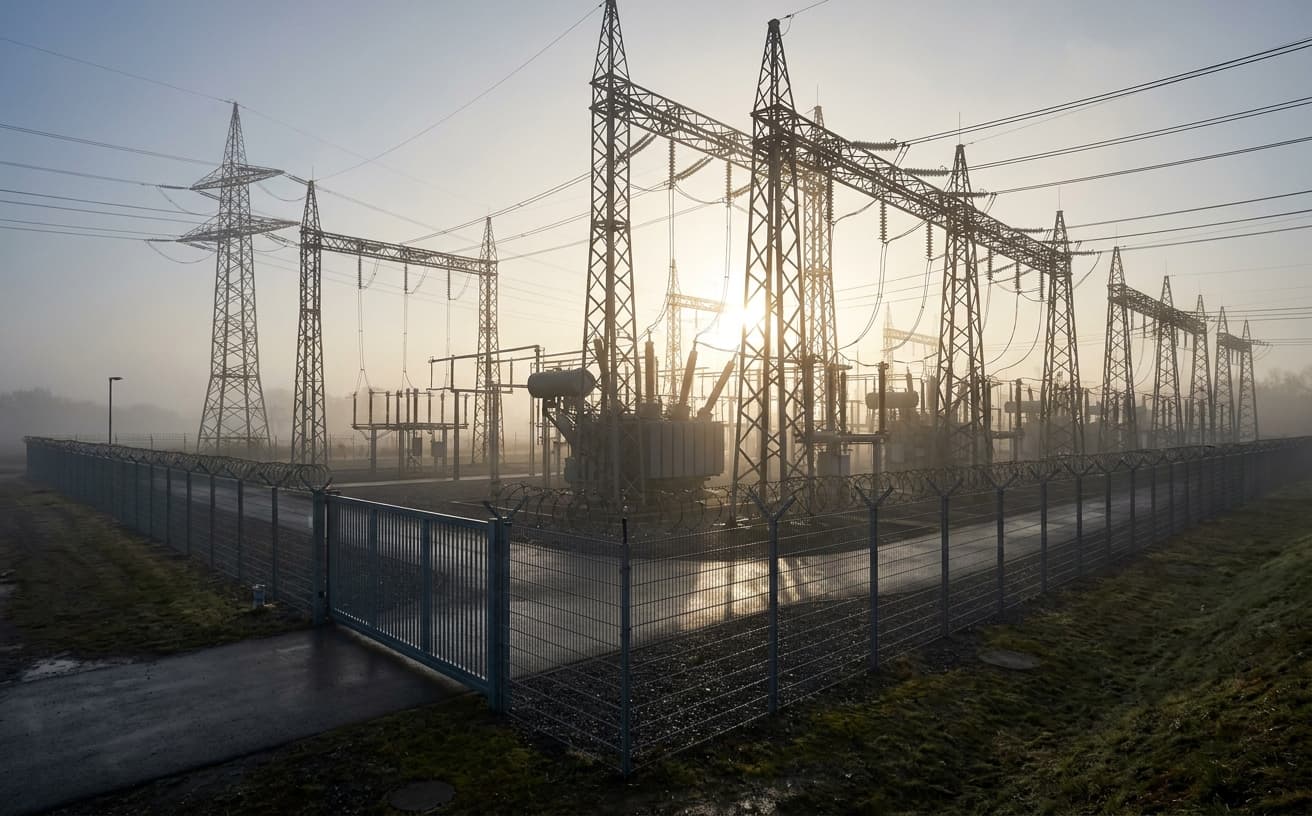
Gulf aviation security is not a regional adaptation of European practice. It is a parallel regulatory architecture, built faster, tested under heavier traffic loads, and increasingly aligned with the same ICAO baselines that German and French operators reference, while diverging in enforcement style and in the speed at which technical mandates become operational.
The institutional figures that matter on the Arabian Peninsula are the General Civil Aviation Authority of the United Arab Emirates and the General Authority of Civil Aviation of the Kingdom of Saudi Arabia. Both have spent the past decade rebuilding their aviation security frameworks around ICAO Annex 17 and the related Aviation Security Manual, Doc 8973. Both have absorbed elements of the European NIS2 conversation and of NIST CSF 2.0 thinking on cyber posture. Neither has simply copied. The result is a body of rules that operators flying into Dubai, Abu Dhabi, Riyadh, Jeddah and the secondary fields have to read on its own terms.
This article sketches the convergence and the friction. It is written for security directors of airport operators, ground handlers, fuel providers, cargo terminals and the construction firms that build airside infrastructure in the Gulf. The frame is the same frame used in BOSWAU + KNAUER. From Building to Security Technology: security is an investment when it reduces direct losses, follow-on losses, and insurance exposure simultaneously. Aviation in the GCC compresses all three.
The GCAA framework and its operational logic
The GCAA regulates civil aviation across the seven emirates of the United Arab Emirates. Its remit covers airworthiness, air navigation, licensing, safety and security. On the security side, the authority issues Civil Aviation Regulations, known as CARs, that translate ICAO Annex 17 obligations into binding national requirements. CAR-SEC is the cluster that aviation security professionals refer to. It is structured around the National Civil Aviation Security Programme, the National Civil Aviation Security Training Programme, and the National Civil Aviation Security Quality Control Programme. The three documents form a closed loop. The first defines what must be done. The second defines who is trained to do it. The third defines how compliance is measured.
What sets the GCAA apart from older European regulators is the speed of its iteration cycle. Where EASA and the German LBA work in multi-year amendment rhythms, the GCAA tends to publish technical clarifications quarterly. This has consequences for operators. A perimeter intrusion detection system installed at Dubai International in 2019 against the standard of that year will not necessarily meet the 2024 expectations on detection latency, video analytics performance, or cyber-segmentation between operational technology and the corporate network. The GCAA expects upgrades, and it audits against the current standard, not the standard at the time of installation.
The authority operates a layered oversight model. Airport operators are responsible for the security of the airport perimeter, terminal, and airside infrastructure. Air carriers are responsible for the security of their aircraft, their crew, and their cargo. Ground handling agents, catering providers and fuel suppliers each carry defined obligations under their operating licences. The GCAA performs unannounced inspections, classified tests, and recurrent audits across all of them. Findings are graded in severity. Critical findings carry the suspension of the security approval, which in practical terms means the operator cannot continue commercial activity until remediation is verified.
For technology providers, the consequences are direct. A surveillance platform installed at Sharjah or Al Maktoum must be ready to demonstrate, under audit conditions, that it functions as specified, that its data is retained for the period mandated by the CAR, that its operators are trained to the level required, and that the cyber architecture isolates safety-critical systems from administrative ones. This is closer to the IEC 62443 logic for industrial control than to a classical CCTV procurement. Operators that approach Gulf aviation security as a building services topic discover late that they are in a regulated industry.
GACA and the Saudi acceleration
The Saudi General Authority of Civil Aviation operates under the broader umbrella of Vision 2030 and the National Aviation Strategy that targets a tripling of passenger traffic by the end of the decade. Its security mandate is structured around the same ICAO Annex 17 baseline, but the Saudi context introduces variables that the UAE does not have at the same scale. Hajj and Umrah traffic concentrates millions of pilgrims into Jeddah and Medina in defined windows. The Eastern Province carries the energy infrastructure that has historically been the country's highest-value target. The new airport project north of Riyadh and the connected developments at NEOM impose security planning at a scale that has no recent precedent.
GACA differs from the GCAA in several practical respects. The Saudi authority operates a tighter integration with the Ministry of Interior and the Presidency of State Security than the Emirati model. Security clearances for personnel handling aviation security duties pass through a more centralised vetting structure. The published regulatory base is somewhat less granular in technical detail than the CAR-SEC catalogue, but the operational expectation expressed during audits and during licensing is no less demanding. Where the GCAA documents the rule and audits against the document, GACA more often documents the principle and audits against an interpretation that is communicated through direct guidance.
For operators building airside infrastructure in Saudi Arabia, this means that contractual specification has to be backed by liaison with the regulator throughout the project lifecycle, not only at handover. A perimeter system that meets the literal text of the published Saudi aviation security regulation may still be required to upgrade if the GACA inspector concludes that the current threat picture demands an additional layer. This is not arbitrary. It reflects a regulatory philosophy that treats security as a continuously calibrated state rather than a one-time compliance certificate. ASIS International guidance on enterprise security risk management captures the same logic in a different register.
The Saudi system also reflects the experience of actual incidents. The 2019 attacks on Abqaiq and Khurais reshaped the threat assessment for critical infrastructure adjacent to airfields. The drone and missile threat is treated as a present operational risk, not a theoretical scenario. Counter-UAS capabilities are written into airport security plans at a depth that European operators are only now beginning to match. This forces technology providers to deliver not the static perimeter surveillance of the 2010s but an integrated detection, classification and response posture that combines radar, RF detection, optical tracking, and coordinated airspace deconfliction with the military authorities.
ICAO Annex 17 as the convergence layer
Both authorities anchor their work in ICAO Annex 17 and the supporting Doc 8973 Aviation Security Manual. This is the operational reality that allows a European carrier to fly into Dubai or Riyadh under broadly compatible security assumptions. Annex 17 sets the standards and recommended practices, the SARPs, on passenger and baggage screening, cargo and mail security, in-flight security, airport access control, perimeter protection, and the management of restricted areas. Both GCAA and GACA implement the Annex 17 SARPs and submit to the ICAO Universal Security Audit Programme, the USAP-CMA, which measures the effective implementation of those standards.
Effective implementation is the metric that matters. ICAO publishes results that compare states on how thoroughly they have translated the SARPs into national law, into national programmes, into oversight functions, and into measurable performance. Both the UAE and Saudi Arabia score above the global average across the eight critical elements that USAP-CMA examines. This is not a marketing point. It is the basis on which insurers, lessors, and code-share partners assess Gulf operations as a regulated environment comparable to mature European jurisdictions.
The convergence layer extends into cyber. ICAO has integrated aviation cybersecurity into its policy framework through the Aviation Cybersecurity Strategy and the related action plan. The GCAA has translated this into specific cyber requirements for airport operators and air carriers. GACA has done the same through guidance issued in coordination with the National Cybersecurity Authority. Both authorities reference, directly or indirectly, the controls of NIST 800-53 and the structural logic of NIST CSF 2.0, and both increasingly expect ISO 27001 certification of the information security management system of the regulated entity. The IEC 62443 family is the reference for operational technology in airside systems, including baggage handling, aircraft fuelling automation, and gate control. The convergence is not complete. It is sufficient that a security architecture built to international references will satisfy Gulf regulators if it is implemented with discipline.
Where the SARPs leave room for national interpretation, the Gulf authorities tend to choose the more demanding option. Cargo screening at origin, hold baggage reconciliation, and the screening of supplies entering security restricted areas are examples where the literal Annex 17 text allows several pathways, and where GCAA and GACA have selected the pathway that imposes the higher technical and procedural burden. Operators that arrived in the region expecting a lighter regime have had to revise their assumptions.
Enforcement, audits, and the cost of non-conformance
Enforcement in the GCC is performed primarily by the national authority, supported by specialised police and intelligence services for matters that cross into criminal investigation or counter-terrorism. The GCAA conducts its own audits, tests, and inspections through its aviation security inspectorate. GACA does the same through its security oversight directorate. Both reserve the right to conduct covert tests, the so-called red team exercises, that probe the actual performance of screening and access control under realistic conditions. Failure rates in covert testing are taken as a direct measure of programme effectiveness and feed into licensing decisions.
The cost of non-conformance has three layers. The first is regulatory: fines, suspension of operations, withdrawal of security approval. The second is commercial: insurers reprice risk, partners reconsider code-shares, lessors include security compliance in lease conditions. The third is reputational, and in the Gulf it is rarely visible in public reporting but it is closely tracked among regulators and operators in the region. A carrier or airport operator that fails a USAP-CMA audit or a national inspection acquires a record that is hard to clear. The figures published by industry bodies such as IATA on the cost of security incidents, and the qualitative observations of NICB-equivalent insurance bodies on aviation-related claims, point in the same direction: prevention through engineered controls is cheaper than the consequence chain that follows a verified breach.
This is the point at which the building-trade logic of BOSWAU + KNAUER. From Building to Security Technology becomes directly applicable. Aviation security in the Gulf is not primarily a question of guards at gates. It is a question of integrated systems that detect, classify, document and respond within latencies that human operators alone cannot meet, while leaving the legally responsible decision with a named human in a defined chain of command. The detection layer must be robust against weather, dust, heat, and adversarial manipulation. The data layer must satisfy national retention rules and cross-border transfer rules that differ between the UAE, Saudi Arabia, and the European origin of much of the inbound traffic. The response layer must coordinate with military airspace authorities, with national police, and with the regulator. The architecture that delivers this is the same architecture that BSI publishes for critical infrastructure protection in Germany, that the GDV references in its insurance guidance, and that CISA describes in its sector-specific plans for transportation systems. The vocabulary differs. The substance converges.
What holds
GCC aviation security has matured into a regulated environment that operators familiar with European or North American frameworks can navigate with limited translation effort, provided they accept that the Gulf authorities will iterate faster, audit more directly, and expect technical performance that is closer to the upper bound of the published standards than to their literal minimum. The GCAA and GACA differ in style. They converge in substance on the ICAO Annex 17 baseline and on the cyber overlay drawn from NIST and ISO references.
For technology providers, contractors, and security directors entering or expanding in the region, the practical implication is that the architecture deployed in Dubai or Riyadh should be designed for audit on the day it is commissioned and for upgrade on a recurring cycle for as long as it remains in service. Robustness, documented performance, integration with national command structures, and disciplined data handling are the four pillars. Operators that build to these pillars will pass the inspections that matter. Operators that build to a cheaper specification will pay the difference in remediation, in lost slots, and in insurance.
A first conversation of sixty minutes, Path I in the structure described at the close of BOSWAU + KNAUER. From Building to Security Technology, is sufficient to determine where a given operation stands against the current GCAA or GACA expectations. From there, Path II, a three to five day audit, produces the documented baseline that the regulators themselves require. The work is not exotic. It is disciplined.
Frequently asked questions
What does the GCAA regulate?
The General Civil Aviation Authority of the United Arab Emirates regulates the full scope of civil aviation across the seven emirates. On the security side, this includes the National Civil Aviation Security Programme, the National Training Programme, and the National Quality Control Programme. The GCAA issues binding Civil Aviation Regulations, conducts inspections and covert tests, and audits airports, air carriers, ground handlers, catering providers, fuel suppliers, and cargo operators against ICAO Annex 17 standards and against its own technical clarifications, which are updated on a quarterly cadence.
How does GACA differ?
The Saudi General Authority of Civil Aviation operates under the National Aviation Strategy tied to Vision 2030 and works in tighter integration with the Ministry of Interior and state security structures than the UAE model. Its published regulations are less granular in technical detail, but audit expectations are equally demanding. GACA tends to communicate operational requirements through direct guidance during inspections and licensing rather than through exhaustive written specification. Counter-UAS capability and protection of infrastructure linked to the energy sector receive particular attention given the post-2019 threat picture.
Are standards aligned?
Both authorities implement ICAO Annex 17 and the supporting Doc 8973 Aviation Security Manual. Both undergo the ICAO USAP-CMA audit cycle and score above the global average on effective implementation across the eight critical elements. On the cyber overlay, both reference the ICAO Aviation Cybersecurity Strategy and align with the controls of NIST 800-53, the structure of NIST CSF 2.0, the management system logic of ISO 27001, and the operational technology requirements of IEC 62443. The Gulf authorities frequently select the more demanding interpretation where Annex 17 permits alternatives.
Who enforces?
Enforcement is performed by the national authority through its aviation security inspectorate, supported by specialised police and state security services for criminal and counter-terrorism matters. The GCAA and GACA conduct announced and unannounced inspections, covert red team tests of screening and access controls, and recurrent audits of all regulated entities. Sanctions range from documented findings requiring remediation to suspension of the security approval, which halts commercial activity. Findings feed into licensing decisions, insurance pricing, and the formal record submitted to ICAO under the USAP-CMA programme.
Related topics
- GCC Water Security: Desalination Under Pressure
- OT Security in the GCC: ISA-99 and IEC 62443 Reality
- Security Robots in Smart Districts: Msheireb Doha
- IT/OT Convergence Inside Aramco: A Model for the GCC
- Cyber-Physical Insurance in the Gulf: 2026 Market Survey
Take the next step: See prices & ROI · Explore the products · Send a no-obligation request. BOSWAU + KNAUER – direct from the factory in Filderstadt, reply within 5 working days.
About the author
Dr. Raphael Nagel (LL.M.) is founding partner of Tactical Management. He acquires and restructures industrial businesses in demanding market environments and writes on capital, geopolitics, and technological transformation. raphaelnagel.com
More reading

Since 1892.
The firm is reached at boswau-knauer.de or +49 177 2266267.