
Blog
IT/OT Convergence Inside Aramco: A Model for the GCC
Aramco IT/OT, OTCC standards, sector spillover into UAE and Qatar. How the largest operator shaped a regional approach.

Dr. Raphael Nagel
September 16, 2025
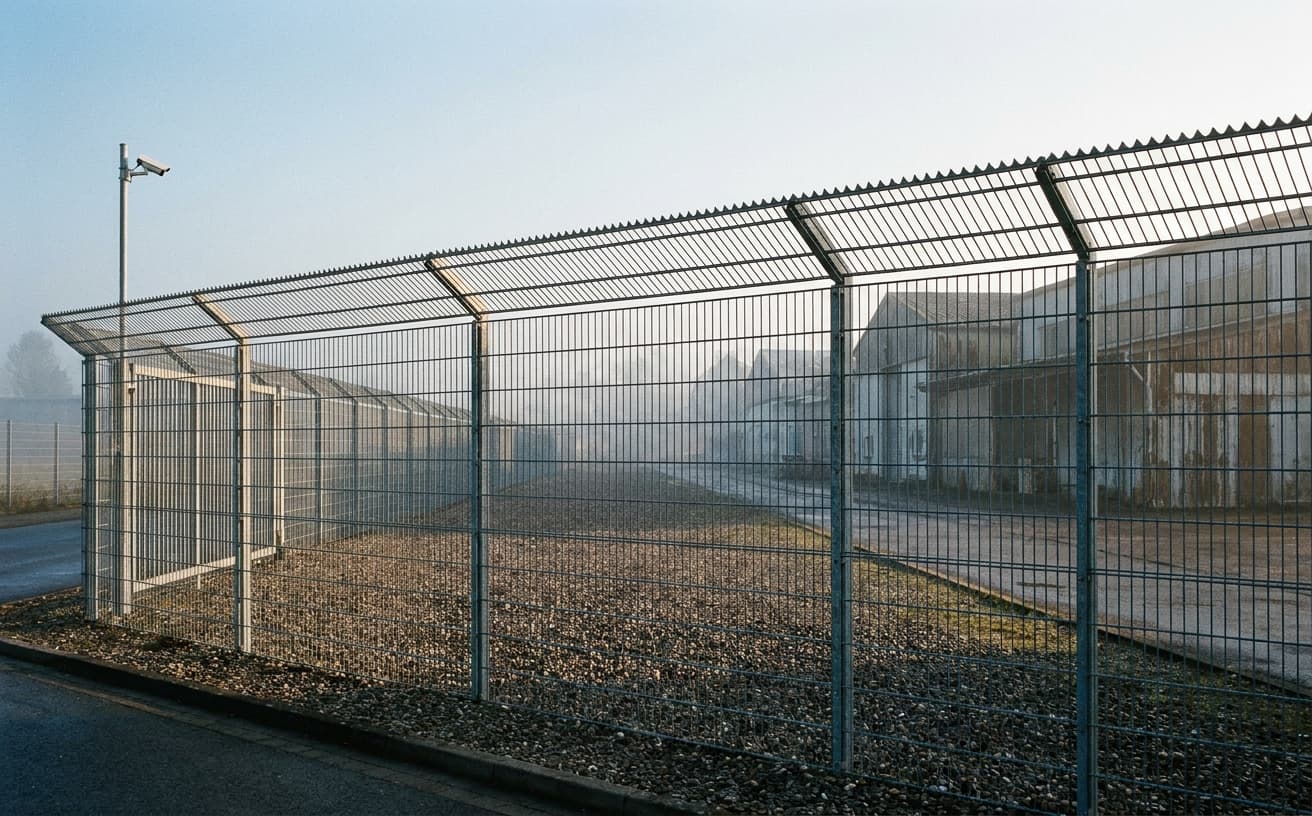
Convergence, in the Gulf, is not a slide in a vendor deck. It is a regulatory fact written by the largest operator in the region and then exported to every neighbour that depends on the same energy logistics.
What Saudi Aramco built between roughly 2017 and 2022, under the label of the Operational Technology Cybersecurity Controls, has done more to shape the practical security posture of GCC industry than any abstract appeal to NIST CSF 2.0 or IEC 62443 ever could. The reason is structural. Aramco is not a regulator that asks suppliers to comply with frameworks. It is a buyer that decides which engineering firms, integrators and product vendors are allowed onto its sites. Compliance in that environment is not a certification; it is a market access condition. When the same buyer also represents a meaningful share of the upstream and downstream activity that drives Qatari, Emirati and Kuwaiti contractors, the practical effect is regional harmonisation without a treaty.
This article describes how that harmonisation happened, what the OTCC actually requires in operational terms, and where the model breaks down when it is copied without context by operators in Abu Dhabi, Doha or Manama.
The Shamoon inheritance
Every conversation about IT/OT convergence inside Aramco starts, whether explicitly or not, with the August 2012 wiper incident that destroyed roughly thirty thousand workstations in a matter of hours. The attack itself was an IT event. The lesson the company drew from it was an OT lesson. The wiper did not cross into process control because the air gaps held, but the speed of the IT collapse made clear that if the same actor had targeted the gateways between business networks and refinery control systems, the company would have lost not only desks but also the capacity to ship hydrocarbons. The board-level conclusion was that the boundary between IT and OT had to be reconstructed as a deliberate engineering artefact rather than an accident of legacy network topology.
This reconstruction took roughly five years to formalise. The internal programme moved through three phases. The first was inventory. Aramco did not have, in 2013, a defensible asset register of its industrial control systems across upstream, midstream and downstream. The second phase was segmentation, which involved building a defensible Purdue-style architecture across hundreds of facilities, with documented conduits between zones rather than the de facto flat networks that had grown organically since the 1990s. The third phase, which began in earnest around 2017, was the codification of all of this work into a controls document that could be imposed on suppliers without further negotiation. That document became the OTCC.
What distinguishes the Aramco approach from the equivalent efforts at European supermajors during the same period is the degree of vertical integration. Aramco runs its own cybersecurity operations centre for OT, separate from the IT SOC, with its own analysts, its own playbooks and its own incident command structure. The separation is deliberate. The company concluded, correctly in the view of most operators who have since followed the same path, that an analyst trained on enterprise IT alerts is not the right person to triage an alarm on a distributed control system in a gas plant. The skill sets overlap but do not substitute. CISA has published guidance to similar effect, and NIST 800-82 codifies much of the same logic, but Aramco built the operational structure before either reference document reached its current form.
What OTCC actually requires
The Operational Technology Cybersecurity Controls, published by the Saudi National Cybersecurity Authority in late 2022 and refined since, is often described in regional press as an Aramco document. That description is half right. The NCA holds the pen and the regulatory authority, but the technical substance reflects the lessons Aramco had already learned and the controls Aramco was already imposing on its own suppliers. The document essentially nationalised a corporate standard.
The structure of the OTCC will be familiar to anyone who has read IEC 62443 or NIST 800-53. It defines four security levels, broadly corresponding to the criticality of the asset, with progressively stricter requirements at each level. Level 4 facilities, which include major refineries, gas plants and oil export terminals, must implement controls that go well beyond what most European critical infrastructure operators consider standard. Asset inventory must be continuous and machine-readable, not annual and spreadsheet-based. Network segmentation must be enforced by inspection-capable devices, not by VLAN configuration alone. Remote access by vendors must transit through brokered sessions with full keystroke logging and time-bound authorisation. Backup and recovery must be tested against scenarios that include the simultaneous loss of engineering workstations and historians, not only the loss of individual servers.
The most consequential requirement, in operational terms, is the rule on network monitoring inside the OT environment. Level 4 facilities must operate passive monitoring across all process control networks, with detection coverage that includes both protocol-aware analysis for industrial traffic and behavioural baselines for engineering workstation activity. This requirement alone has reshaped the regional integrator market, because it forces every engineering firm that wants to bid on Aramco work to have either an in-house OT monitoring practice or a credible partnership with a vendor whose products have been validated against Saudi operating conditions.
The document does not invent new cryptographic primitives or novel architectural concepts. Its significance lies elsewhere. It translates international frameworks into a set of auditable, contractually enforceable requirements that fit the actual installed base of GCC industrial assets. Operators who have tried to apply NIST CSF 2.0 directly to a brownfield refinery know the gap between the framework and the field. The OTCC closes that gap with prescriptive language, and it does so in a form that aligns with how regional procurement actually works.
How the model spreads beyond the Kingdom
The export of the Aramco approach into the wider GCC did not happen through diplomatic channels. It happened through supply chains, joint ventures and personnel movement. ADNOC, which operates the equivalent function in the United Arab Emirates, observed the Saudi build-out closely and ran a parallel programme through the second half of the 2010s. The UAE published its Information Assurance Standards earlier than Saudi Arabia published the OTCC, but the operational depth of the ADNOC programme converged on the same controls because the engineering firms working on both sides of the border were the same firms.
The mechanism is straightforward. A major EPC contractor working on an ADNOC sour gas project employs control system engineers who, two years earlier, were configuring DCS architectures for an Aramco gas plant. They bring with them the segmentation patterns, the asset register conventions, the vendor remote access rules and the incident reporting habits they internalised on the Saudi project. The ADNOC project specifications absorb these patterns by default, because writing different specifications would mean training a new generation of engineers from scratch.
Qatar Energy follows a similar pattern, with additional weight given to LNG-specific concerns. The North Field expansion projects have drawn on integrator pools that overlap heavily with the Saudi and Emirati pools, and the OT cybersecurity specifications in those project tenders read as variants of the OTCC with adjustments for the cryogenic process environment and the higher proportion of foreign technology partners involved in LNG trains. Kuwait Petroleum Corporation and Bahrain's BAPCO have moved more slowly, but the direction is the same. The Gulf Cooperation Council Secretariat has discussed harmonisation of cybersecurity standards across member states for several years, but the de facto harmonisation through procurement is already further advanced than the de jure harmonisation through GCC instruments.
The spillover is not limited to upstream and downstream hydrocarbons. The desalination sector, which represents a critical infrastructure dependency comparable to electricity in much of the Gulf, has begun adopting the same controls. The water utilities in Saudi Arabia, the UAE and Qatar increasingly require their automation contractors to demonstrate compliance with OT cybersecurity standards that are functionally indistinguishable from the OTCC, even when the formal regulatory basis is different. The same is true for the regional electricity transmission operators, several of which have moved their cybersecurity governance closer to the hydrocarbons model after observing the limited usefulness of pure IT frameworks in operational environments.
Where the model resists transplantation
The Aramco approach works in Saudi Arabia for reasons that are not fully transferable. The first reason is the dominant position of a single national operator. When one company represents the majority of the relevant industrial activity, it can impose controls without coordination problems. In jurisdictions with more fragmented operator landscapes, the equivalent imposition would require either a regulator with the authority to compel and the technical depth to specify, or a degree of voluntary coordination among operators that is rarely observed in practice. The UAE has moved towards the regulatory model through the Cyber Security Council and sector-specific authorities, but the fragmentation between ADNOC, the various emirate-level utilities and the free-zone industrial parks complicates enforcement in ways that Saudi Arabia does not face.
The second reason is the scale of the cybersecurity workforce that Aramco has built internally. The company employs hundreds of OT cybersecurity professionals, with career paths that allow specialisation across upstream, downstream and corporate functions. Few other regional operators can match this scale, and the practical effect is that compliance with the controls becomes performative rather than substantive when the operator lacks the in-house capacity to verify what its contractors are doing. Audits become checkbox exercises. Asset registers are maintained but not used. Monitoring tools generate alerts that no one investigates. The form of the OTCC travels easily across borders. The substance does not.
The third reason is the supplier relationship. Aramco has the leverage to require vendors to modify their products for the Saudi market, to host source code in escrow inside the Kingdom and to accept third-party validation of their security claims. Smaller operators do not have this leverage. They receive the standard product, with whatever cybersecurity properties the vendor chose to build, and they discover the gaps during commissioning rather than during procurement. This is not a problem unique to the Gulf. ISO 27001 certifications and IEC 62443 conformance claims are routinely thinner than buyers assume, and ASIS International has documented the gap between attested controls and operational reality across multiple industries. But the gap is more consequential when the buyer cannot compel remediation.
The fourth reason is geopolitical. Aramco operates within a single national jurisdiction with a unified legal framework around state secrets, export controls and incident disclosure. Operators in jurisdictions that span multiple regulatory regimes, or that depend on technology suppliers headquartered in countries whose relationship with the host state is variable, face complications that the Saudi model does not address. The OTCC assumes a stable supplier base and a stable threat model. Operators outside the Kingdom often face neither.
What other operators copy, and what they should
The pattern observable across the GCC, and increasingly beyond it, is that operators copy the document and underinvest in the operational structure that makes the document work. They write tender specifications that reference OTCC-equivalent controls. They require contractors to deliver asset registers, segmentation diagrams and monitoring deployments. They commission these deliverables and file them. What they often do not do is build the internal capacity to maintain the controls after the project handover, to investigate the alerts that the monitoring systems generate, or to update the asset register as the plant evolves through normal turnaround cycles.
The result is a regional landscape in which the formal cybersecurity posture, measured by document compliance, has improved significantly over the past five years, while the operational cybersecurity posture, measured by mean time to detect and respond to actual incidents, has improved less than the document trail would suggest. This gap is not a regional problem. It is observable in European critical infrastructure operators that have implemented NIS2 controls on paper without building the operational depth to use them, and it is observable in North American operators that have layered NIST CSF assessments on top of legacy environments without restructuring the legacy environments themselves. The BSI in Germany has noted similar patterns in its annual reports. The GDV has documented the insurance implications.
The operators who get more value from the Aramco model are those who treat the OTCC not as a checklist but as a description of a target operating state, and who invest in the personnel and process changes that the target state requires. This is a multi-year programme. It cannot be procured as a service. It can be supported by external partners, but the support has to be structured around capability building rather than deliverable production.
The book BOSWAU + KNAUER. From Building to Security Technology argues, in a different industrial context, that security systems work only when the operator owns them in a substantive sense, not when they are outsourced as black boxes. The same logic applies at the scale of national critical infrastructure. The OTCC works inside Aramco because Aramco owns the controls. It works less well elsewhere when the controls are imposed on operators who have not internalised them.
What holds
The Aramco approach to IT/OT convergence is the most consequential industrial cybersecurity programme in the Gulf and one of the most consequential in the world. It has reshaped how operators specify, contractors deliver and vendors design for the regional market. The OTCC is the visible artefact of a much deeper organisational reconstruction that took roughly a decade to complete and that continues to evolve.
The transplant of this approach to other GCC operators is uneven. Document compliance has spread quickly. Operational depth has spread more slowly. The gap between the two is the territory in which most regional incidents now occur, because attackers find the seams between attested controls and actual practice with reliable efficiency. Closing this gap is not a matter of better documents. It is a matter of building, in each operator, a version of the internal capacity that Aramco built between 2012 and 2022.
For operators considering where to start, a sixty-minute confidential conversation about the actual maturity of the OT cybersecurity posture, rather than the attested maturity, is the entry point. From there, a three to five day audit against the operational substance of frameworks such as the OTCC, IEC 62443 and NIST CSF 2.0 will produce a picture that document reviews do not. Path III, the ninety-day pilot, is appropriate where the operator has already identified a specific control gap and wants to see whether a particular intervention closes it under realistic conditions. The choice among the three depends on where the operator currently stands. The OTCC describes the destination. The route is individual.
Frequently asked questions
How did Aramco approach this?
Aramco approached IT/OT convergence as an engineering programme rather than a policy exercise. Beginning after the 2012 Shamoon incident, the company spent roughly five years rebuilding asset inventories, enforcing segmentation between business and process networks and codifying controls into supplier-enforceable requirements. The work was structured around a dedicated OT security operations centre staffed separately from the IT SOC, with playbooks designed for industrial environments. The approach is distinguished by vertical integration, scale of internal workforce and the leverage to require vendors to modify products for the Saudi market.
What is OTCC?
The Operational Technology Cybersecurity Controls is a document published by the Saudi National Cybersecurity Authority that codifies prescriptive security requirements for industrial control environments. Structurally it resembles IEC 62443 and NIST 800-53, with four security levels tied to asset criticality. Substantively it reflects the controls Aramco had already imposed on its supplier base. Level 4 facilities, including major refineries and export terminals, must implement continuous asset inventory, inspection-enforced segmentation, brokered vendor remote access and passive network monitoring across all process control networks. It is auditable and contractually enforceable.
How does it spread to the region?
The spread happens through supply chains and personnel movement rather than treaties. Engineering firms working across Saudi, Emirati and Qatari projects carry the same architectural patterns and specification habits from one client to the next. ADNOC, Qatar Energy and increasingly the regional desalination and electricity operators have absorbed OTCC-equivalent requirements into their tender specifications by default. The GCC Secretariat has discussed formal harmonisation, but de facto convergence through procurement is already further advanced. The mechanism is straightforward: the integrators are the same, so the controls are the same.
What other operators copy?
Operators across the GCC and beyond have copied the document structure of the OTCC. They have written tender specifications referencing equivalent controls, required contractors to deliver asset registers and monitoring deployments, and filed the resulting documentation. What they have copied less successfully is the operational depth, the internal workforce and the supplier leverage that make the Aramco programme function. The result is a regional pattern in which attested compliance has improved faster than operational capability, leaving a gap between document and practice that defines where most current incidents occur.
Related topics
- GCC Water Security: Desalination Under Pressure
- OT Security in the GCC: ISA-99 and IEC 62443 Reality
- Industrial SOC Staffing in the GCC: The Cost Reality
- Radar Perimeter Detection in the Desert: Range and Clutter
- Access Control with Emirates ID: Federal Biometrics
Take the next step: See prices & ROI · Explore the products · Send a no-obligation request. BOSWAU + KNAUER – direct from the factory in Filderstadt, reply within 5 working days.
About the author
Dr. Raphael Nagel (LL.M.) is founding partner of Tactical Management. He acquires and restructures industrial businesses in demanding market environments and writes on capital, geopolitics, and technological transformation. raphaelnagel.com
More reading

Since 1892.
The firm is reached at boswau-knauer.de or +49 177 2266267.