
Blog
Mid-Market Industrial Security: The Cost of Waiting
The next generation will come. The losses you absorb until then will not be refunded. A blunt look at the cost of delaying physical security investment in.

Dr. Raphael Nagel
January 7, 2026
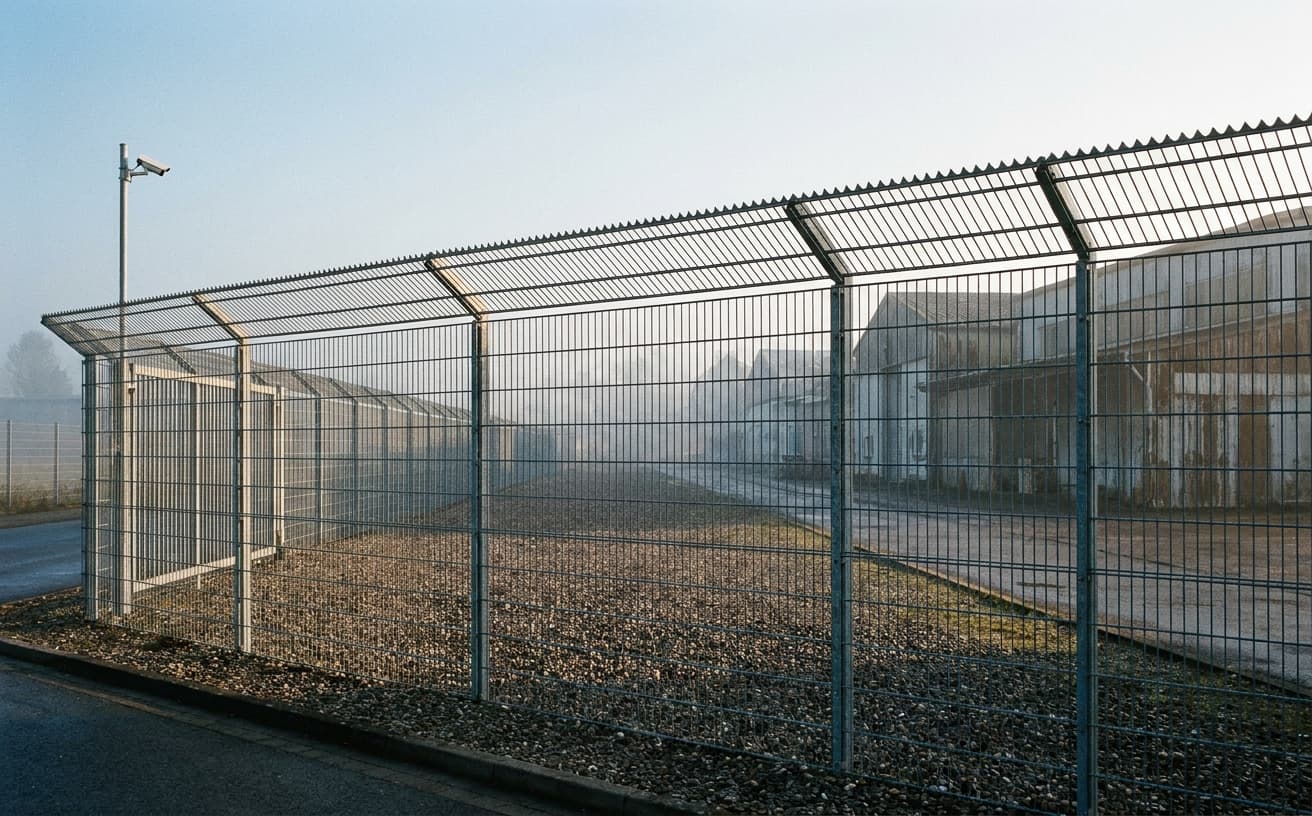
Deferral is a decision, not the absence of one. Every mid-market operator who postpones a security upgrade is choosing to carry a loss profile for another fiscal year, and the loss profile rarely waits politely for the next budget cycle.
The argument that follows is uncomfortable because it cuts against the most common posture in the mid-market: wait for the next generation, wait for prices to drop, wait until the existing kit fails outright. Each of these waits has a price tag. The price tag is not visible in any single quarter, which is precisely why it accumulates without resistance. Operators who run the calculation honestly tend to discover that the cost of doing nothing has already exceeded the cost of acting, often by a significant multiple, and that the deferred capex has been silently converted into ongoing opex through guard hours, insurance premiums, write-offs booked as shrinkage, and project delays absorbed into general overhead.
This article addresses operators in the ten to two-hundred million euro revenue band. Above that, security budgets behave differently because risk committees and group-level CISOs are in the loop. Below that, the calculation is simpler because the absolute numbers are small enough to defer indefinitely. The mid-market is the band where the math turns against waiting and where the organisational structure makes that math hardest to see.
The economics of waiting
The standard argument for waiting rests on three assumptions, all of which are wrong when examined in sequence. The first assumption is that next-generation technology will be meaningfully cheaper than the current generation. The second is that the existing security posture is holding the line. The third is that postponement is reversible, that the decision to wait this year can be revisited next year on the same terms.
On price, the historical pattern in industrial security technology is not a steep cost curve down. It is a gradual one, perhaps five to ten percent annually on hardware, often offset by feature inflation and certification requirements that did not exist in the prior generation. IEC 62443 conformance, for instance, adds engineering cost rather than reducing it. NIST CSF 2.0 introduces governance overhead. Waiting two years to save fifteen percent on hardware while absorbing two years of unmitigated loss is a negative trade in every realistic scenario.
On the existing posture, the question operators rarely ask is whether their current measures are still working, or whether they have been quietly degrading. A guard contract signed in 2019 at a certain hourly rate now buys fewer hours, and the hours it buys are filled by personnel with less experience because the labour market for security guards has tightened. A camera system installed in 2016 was specified for a perimeter that has since been extended twice. The CCTV codec is no longer supported. The DVR runs on a Windows version that cannot be patched. The status quo is not static. It is decaying, and the decay accelerates.
On reversibility, the assumption that waiting preserves optionality is wrong because the risk environment does not wait. CISA bulletins through 2024 and 2025 have documented a steady shift in adversary tooling toward targets that were considered too small to interest professional actors five years ago. The National Insurance Crime Bureau reports patterns of organised equipment theft that now reach mid-market industrial sites routinely. GDV data on industrial insurance claims in Germany show frequency increases in categories that used to be statistical noise. The window in which a mid-market operator could quietly fall below the threshold of professional attention is closing. Waiting does not preserve the option to act later under similar conditions. It surrenders that option.
What deprecation actually looks like
Operators who have not bought security technology recently tend to underestimate how fast the technology stack moves. The hardware element, the camera or the sensor or the access reader, deprecates slowly. The software element, the analytics layer, the integration middleware, the management platform, deprecates fast. A camera installed five years ago may still produce a usable image. The analytics pipeline that gave that image meaning has moved through several architectural generations in the same period.
The practical consequence is that mid-market operators running on installations older than seven years are typically operating two layers of technology. The visible layer, cameras and sensors and locks, looks acceptable in an internal walk-through. The invisible layer, the analytics and orchestration and reporting, is either absent or running on infrastructure that no current vendor supports. When something goes wrong, the visible layer captures the event, and the invisible layer fails to act on it. The footage exists. Nothing happened in response. The operator discovers, after the fact, that the system was archival rather than operational.
Deprecation also affects the integration surface. ISO 27001 controls referenced in customer contracts now routinely require evidence of physical security integration with IT security incident response. NIST 800-53 control families assume an integrated logging posture that older physical security systems cannot provide. Operators who passed audits in 2020 on the basis of stand-alone CCTV are now finding that the same audits in 2026 require integrated event handling, identity correlation, and incident timelines that span the OT and IT boundary. The old systems cannot produce this evidence. The audit fails. The customer contract is at risk. The cost of the failed audit, measured in deal slippage and remediation under deadline pressure, dwarfs the cost of the upgrade that would have prevented it.
The third dimension of deprecation is workforce. Security personnel who can operate legacy systems are retiring or moving to integrators. New hires do not learn the old interfaces because no current training programme covers them. The operator who postpones the upgrade is, in parallel, postponing access to a workforce that can keep the old system running. At some point, often without a clear trigger, the system becomes effectively unsupportable in-house, and the operator is forced into an emergency procurement under conditions that exclude competitive pricing.
Sizing the spend without illusions
The mid-market operator's most common procurement mistake is to size the security budget against last year's security budget rather than against the asset base being protected. This is how budgets calcify. A site that has grown from forty million in asset value to seventy million over five years is still protected with the budget it had at forty million, because the budget line was set against the prior figure and indexed for inflation rather than for exposure.
A defensible sizing approach starts with the asset base, including replacement value of equipment, inventory at risk, business interruption exposure, and contractual liabilities triggered by incidents. ASIS International guidance on enterprise security risk management offers a workable framework, as does the BSI's IT-Grundschutz methodology adapted for physical security. The output is not a single number. It is a range, expressed as a percentage of protected asset value, that varies by sector and risk profile. For mid-market industrial sites, the range observed in practice tends to fall between 0.3 and 1.2 percent of protected asset value annually, encompassing both opex and amortised capex.
Operators below 0.3 percent are typically under-protected, and the gap shows up in claims experience over a three to five year window. Operators above 1.2 percent are usually carrying redundant measures, often because successive security managers have layered new controls on top of legacy ones without retiring anything. The sweet spot is sector-dependent and site-dependent, and the only way to find it is to do the work of mapping current spend, current exposure, and current claim history against each other. Most mid-market operators have never done this mapping because the data lives in three different departments that do not share it.
A note on capex versus opex framing. The temptation to push security spend into opex through managed services contracts is understandable, particularly in mid-market finance teams that prefer predictable monthly figures. The trap is that opex framing makes it harder to argue for a step-change in protection, because every increment is visible in the monthly run rate. Capex framing, properly amortised, lets the operator make a single investment decision with a clear return profile. The argument developed at length in BOSWAU + KNAUER. From Building to Security Technology, is that security investments amortised across multiple sites and multiple years deliver returns that opex-only structures cannot match, because the platform logic of modern security technology rewards scale and standardisation.
The hidden cost of soft deferral
Hard deferral, the decision to postpone a defined project, is at least visible. Soft deferral is more common and more expensive. It looks like a budget approved at eighty percent of what was requested. It looks like a project scoped for three sites and executed at two. It looks like a phased rollout where phase two is permanently next quarter. The accumulated effect of soft deferral across a mid-market portfolio is a security posture that exists on paper but does not function as a system.
Soft deferral has a specific cost signature. Sites operate with incompatible equipment generations, which means that incidents at one site cannot be correlated with patterns at another. Reporting becomes manual, which means it becomes infrequent, which means trends are invisible until they show up as claims. Maintenance contracts are negotiated site by site, which means vendor leverage is multiplied across the portfolio. The unit cost of every transaction is higher than it should be, and the visibility of every incident is lower than it should be.
The remedy is not a heroic single project. The remedy is a portfolio-level decision to standardise the security stack across sites within a defined window, typically eighteen to thirty months. The decision is uncomfortable because it forces the operator to acknowledge that the current state is not the result of a strategy but the residue of a series of soft deferrals. Acknowledgement is the precondition for action. Without it, the next budget cycle will produce the same pattern.
A useful diagnostic is to ask, for each site in the portfolio, three questions. How old is the oldest active component in the security stack. What percentage of the stack is on a supported software version. How many vendors are involved in maintaining the stack. Operators who run this diagnostic honestly tend to find that their portfolio is older, less supported, and more fragmented than they thought. The diagnostic does not cost anything. The refusal to run it costs every year.
What the next generation will and will not deliver
The pro-wait argument often rests on the promise of the next generation, the one with better AI, better integration, lower power requirements, better edge processing. Some of this will arrive. Most of it will arrive incrementally, in ways that do not justify the wait. The shifts that matter for mid-market operators are already in the field, not in the pipeline.
Edge analytics with adequate accuracy for industrial environments is already commercially available. The question is not whether it works but whether the operator's existing infrastructure can accept it. The answer, for most mid-market sites, is no, which means the next-generation analytics still requires a stack refresh before it can be deployed. Waiting for the analytics to mature further does not eliminate the stack refresh requirement. It only delays it.
Integration between physical security and identity management has reached the point where the savings on access provisioning alone, in mid-market organisations with high contractor turnover, can justify a meaningful share of the security capex. This is not next-generation. It is current-generation, available now, and being deployed by competitors. The operator who waits is paying the integration premium twice, once in lost efficiency today and once in catch-up cost tomorrow.
What the next generation will not deliver is a fundamentally different cost structure. The marginal cost of a security camera will not collapse. The marginal cost of an integration project will not collapse. The marginal cost of skilled installation labour will rise, not fall, in line with the broader trades labour market. Operators waiting for a cost inflection are waiting for something that the supply side of this industry does not produce. The inflection that does occur, the one that matters, is on the loss side, where the absence of modern protection produces a steadily worsening claims profile that eventually forces emergency action under bad conditions.
What holds
The mid-market operator who has read this far has, in all likelihood, already made the calculation in private. The numbers point one direction. The organisational inertia points the other. The question is not whether the investment is justified. The question is whether the operator is willing to disturb the equilibrium that the deferral has produced, an equilibrium in which no single quarter looks bad enough to force action.
What holds against that inertia is structure. A confidential conversation, Path I in the framework of BOSWAU + KNAUER. From Building to Security Technology, takes sixty minutes and produces a written orientation that did not exist before. A three to five day audit, Path II, produces a portfolio-level diagnostic with sized recommendations and a sequencing plan. A ninety-day pilot, Path III, produces operational data on a single site against a defined success measure, which is the foundation any board committee needs to approve a portfolio-wide rollout. None of these paths require a procurement decision in advance. All of them produce evidence the operator does not currently have.
The losses absorbed between now and the next budget cycle will not be refunded. The losses absorbed between this budget cycle and the next generation, whichever generation that turns out to be, will also not be refunded. The mid-market operator who reads this and does nothing has not avoided a decision. The decision has been made.
Frequently asked questions
Why do mid-market operators delay security upgrades?
Three reasons dominate. First, the absence of a single catastrophic incident in recent memory creates the impression that the current posture is adequate, when in fact it is producing chronic low-level losses that are absorbed into overhead. Second, security spend lives in a budget line that is rarely owned by anyone with portfolio-level visibility, so no individual has the incentive to argue for the full investment. Third, the perceived complexity of a stack refresh is overestimated relative to the perceived risk of the status quo. The combination produces deferral as a default, year after year.
How fast does physical security technology actually deprecate?
Hardware deprecates over seven to ten years in industrial environments, with the limiting factor usually being software support rather than mechanical failure. Software and analytics deprecate faster, typically three to five years before a meaningful capability gap emerges. Integration interfaces deprecate fastest, often within two to three years as standards evolve. The compound effect is that a security stack assembled seven years ago is operating with software and integration layers that no current vendor would specify, even if the cameras themselves still produce acceptable images. The image is not the system.
How do you size a mid-market security spend?
Size against protected asset value, not against last year's budget. For mid-market industrial sites, observed annual spend tends to fall between 0.3 and 1.2 percent of protected asset value, encompassing both opex and amortised capex. The position within that range depends on sector, claims history, contractual requirements from customers, and regulatory exposure. ASIS International guidance and BSI methodology both offer workable frameworks. The output should be a range with sensitivity analysis, not a single number, because the variables that drive it change over the investment horizon.
What grant or incentive programs apply in 2026?
The landscape varies by jurisdiction and shifts annually, so the right answer for any specific operator depends on location, sector, and the nature of the planned investment. In Germany and the broader EU, programmes tied to critical infrastructure resilience, cyber-physical integration, and small to mid-market industrial modernisation continue to evolve, with relevant guidance from BSI and national equivalents. Operators should not let grant timelines drive the core investment decision, because the loss exposure does not pause for grant cycles. Grants reduce the cost of a justified investment. They do not justify an unjustified one.
Related topics
- Security as Code: Platform Thinking for Physical Defense
- Perimeter Security Systems: The Seven-Layer Model
- Can a Security Robot Replace a Guard? Five Honest Steps
- NPSA and UK Physical Security: The New National Standard
- UK Energy CNI: ESO, National Grid & Substation Attacks
Take the next step: See prices & ROI · Explore the products · Send a no-obligation request. BOSWAU + KNAUER – direct from the factory in Filderstadt, reply within 5 working days.
About the author
Dr. Raphael Nagel (LL.M.) is founding partner of Tactical Management. He acquires and restructures industrial businesses in demanding market environments and writes on capital, geopolitics, and technological transformation. raphaelnagel.com
More reading
Since 1892.
The firm is reached at boswau-knauer.de or +49 177 2266267.