
Blog
NIST 800-53 Physical Controls: What Every CISO Mistranslates
The PE control family, line by line, with the implementation patterns operators actually use. The translation between framework and floor.

Dr. Raphael Nagel
February 20, 2025
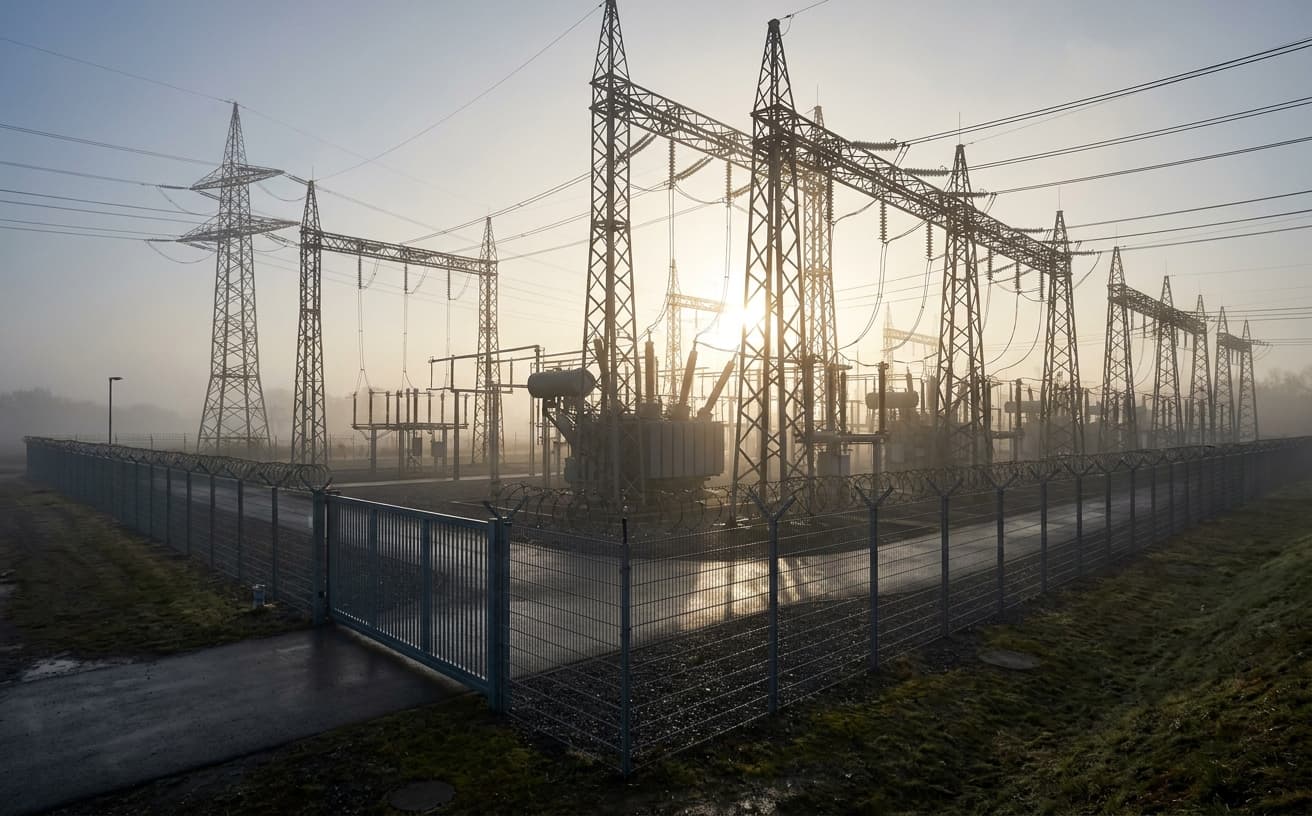
The PE control family in NIST 800-53 is not a checklist for facility managers. It is an operational architecture written in compliance grammar, and the mistranslation between the two is where most programs lose their footing.
CISOs read PE-1 through PE-23 as physical security requirements that belong to someone else. The result is a documentation layer in the GRC tool that has no relationship to what happens at the gate, the loading dock, the equipment room or the perimeter at three in the morning. Auditors then walk through, confirm the documentation exists, tick the box, and leave. The control family was satisfied. The site was not protected. This article translates the PE family back into the language of the floor, where it belongs.
What the PE family was written to do
The Physical and Environmental Protection family in NIST 800-53 Revision 5 contains roughly twenty-three controls covering access authorization, access enforcement, monitoring, visitor management, power equipment, emergency lighting, fire protection, temperature and humidity, water damage, delivery and removal of system components, alternate work sites, asset location, and information leakage. Read in sequence, the family describes a building. Read in isolation, each control becomes an artifact.
The mistranslation starts at PE-2, Physical Access Authorizations. The control requires that the organization develop, approve and maintain a list of individuals with authorized access to the facility where the information system resides. In most programs, this is interpreted as a badge roster maintained by HR or facility services. In practice, the control describes a living relationship between identity, role, time window and physical zone. A vendor servicing the chiller plant at 02:00 on a Sunday is authorized for a different facility logic than the same vendor walking into the data hall at 14:00 on a Tuesday. PE-2 does not ask whether the badge works. It asks whether the authorization is current, scoped and revocable. Most organizations cannot answer the second question in real time.
PE-3, Physical Access Control, is where the gap widens. The control specifies that access is enforced at entry and exit points, that access is verified before granted, and that physical access devices are inventoried, controlled and audited. The translation to the floor is that every door, gate, turnstile, mantrap and loading bay needs a documented enforcement mode, a verification mechanism, and a recovery procedure when the mechanism fails. Few facilities can produce this on demand. They can produce a card reader vendor and a service contract. The control was written for the first. The auditor accepts the second.
PE-6, Monitoring Physical Access, asks for monitoring of physical access to detect and respond to physical security incidents. The word that matters is respond. Cameras that record but do not trigger, logs that exist but are never reviewed, motion sensors that alarm into an unstaffed console, none of these satisfy PE-6 in substance. They satisfy it in form. The difference is the entire program.
Where the translation breaks at the perimeter
PE-3, taken seriously, forces a conversation about layered access that most organizations have not had. A perimeter fence with a single gate, monitored by a guard who also handles visitor sign-in, is not a control. It is a single point of failure dressed as procedure. The IEC 62443 reference architecture, which CISOs working in operational technology environments will recognize, frames this as zone and conduit segmentation. PE-3 is the same idea in compliance language. The control assumes that physical access is layered, that each layer has an enforcement mode appropriate to its risk, and that the layers are independent enough that compromise of one does not collapse the others.
In practice, the layering breaks at predictable points. The visitor escort policy assumes the escort is present. The escort, in eighty percent of observed cases, walks the visitor to a destination and returns to other work. The visitor is now inside the second layer without supervision. PE-3(2), Facility Access Records, requires that visitor access records be maintained. The record exists. The supervision did not. The control was not satisfied in substance.
The loading dock is the second predictable failure point. PE-16, Delivery and Removal, specifies that deliveries and removals of system components are authorized, monitored and controlled. In most facilities, the loading dock is staffed by a logistics function that reports to operations, not to security. The driver who delivers replacement servers and the driver who removes obsolete equipment look identical to that function. The chain of custody for what enters and what leaves is, in most audits, a signature on a clipboard. NIST 800-53 does not accept a clipboard. It accepts a process that demonstrates control over the physical movement of components that touch the system boundary. The clipboard is evidence of an attempt. It is not evidence of a control.
PE-8, Visitor Access Records, and PE-3(1), Physical Access Control for Information System, deepen the requirement. The records must be reviewed, retained for a defined period, and produced on request. Retention is rarely the problem. Review is. A record that nobody examines is a record that detects nothing. CISA guidance on insider threat indicators, and the broader threat intelligence literature, consistently points to anomalies in physical access logs as early signals. The control assumes someone is looking. The implementation often assumes someone might look later.
The environmental controls nobody reads
PE-9 through PE-15 cover power equipment, emergency power, emergency lighting, fire protection, temperature and humidity, water damage protection. CISOs delegate this block to facilities management and stop reading. The mistranslation is severe because these controls are where availability lives, and availability is one third of the security triad the CISO is paid to defend.
PE-9, Power Equipment and Cabling, requires that power equipment and cabling be protected from damage and destruction. In a colocation facility, this means that the cable trays serving the racks are physically inaccessible to anyone without authorization to the cage. In a tenant suite in a multi-tenant building, it often means that the building's electrical room is accessible to building maintenance staff who have no relationship to the tenant's security program. The risk is not theoretical. The cabling vulnerability has been documented in multiple incident reviews. The CISO who has not walked the cable path from the utility entrance to the rack does not know whether PE-9 is satisfied.
PE-11, Emergency Power, and PE-12, Emergency Lighting, are tested by most organizations on an annual cycle. The test is announced. The fuel level in the generator tank is topped up the week before. The transfer switch is exercised under load for the duration the test plan specifies. The control is documented as satisfied. The question NIST 800-53 actually asks is whether the emergency power system will function under unannounced conditions, after months of standby, with the actual load profile of the facility. That question is answered by failure, not by test plans. A program that has never experienced an unplanned transfer event does not know what its emergency power posture is. It knows what the test report says.
PE-13, Fire Protection, and PE-14, Temperature and Humidity Controls, sit at the intersection of security and life safety. The controls require detection, suppression and environmental monitoring. The implementation usually exists. The integration with the security operations center usually does not. A fire alarm that triggers the building's fire panel but does not notify the SOC means the SOC learns about a physical incident in its data hall from the news, or from a colleague calling from outside. ISO 27001 Annex A.11, which mirrors the PE family in structure, makes the integration requirement explicit. NIST 800-53 implies it. Auditors rarely test it.
How the audit accepts what the site does not deliver
The audit gap is structural. Assessors working against NIST 800-53 are trained to verify the existence of documented controls, sample evidence within a defined retention window, and confirm that the control owner can describe the process. The methodology is sound for what it tests. What it does not test, in most engagements, is whether the control performs under adversarial conditions. The PE family is particularly vulnerable to this gap because physical controls are easier to observe than to test.
A walkthrough of a data center will confirm that badges are required at the entry, that the man-trap functions, that the camera coverage exists, that the visitor log is in use, that the loading dock has a procedure. The walkthrough does not test whether a determined individual can tailgate through the man-trap, whether the cameras have a blind spot at the loading dock, whether the visitor escort policy survives the third hour of a long visit, whether the loading dock procedure recognizes a driver who has been there four times and is now arriving with a different vehicle. ASIS International physical security assessment methodology covers these tests. NIST 800-53 assessment guides reference them. The actual audit usually does not perform them.
The result is a control environment that is compliant on paper and porous in practice. The CISO who reads only the audit report concludes the PE family is in good shape. The CISO who walks the site at 23:00 on a Saturday reaches a different conclusion. The author's manuscript, BOSWAU + KNAUER. From Building to Security Technology, develops this point at length in the chapter on real conditions on construction sites. The argument transfers cleanly to data center and critical infrastructure environments. Conditions on the floor are not what the documentation describes. The documentation describes the intent. The floor describes the outcome.
This is where the NIST CSF 2.0 framing becomes useful. CSF 2.0, released in 2024, restructures the functions around Govern, Identify, Protect, Detect, Respond, Recover. The Protect function inherits the PE family's logic and pushes it toward operational outcomes rather than control existence. CSF 2.0 does not replace 800-53. It re-frames it. A program that maps its PE controls into the CSF 2.0 Protect function and then asks the Detect and Respond questions against the same physical estate will surface gaps the 800-53 audit missed. The two frameworks are complementary. The CISO who treats them as alternatives is choosing one set of blind spots over another.
What mandatory actually means
The question of which controls are mandatory is the most consistently mistranslated question in the entire family. NIST 800-53 is, by itself, not mandatory. It becomes mandatory through the policy frame that adopts it. FISMA imposes 800-53 on federal information systems through FIPS 200 and the associated baselines. The Department of Defense imposes a variant through the DoDI 8500 series. CMMC 2.0 imposes a subset on the defense industrial base. Critical infrastructure sectors in the United States increasingly reference 800-53 through sector-specific guidance from CISA, FERC, NRC and others. In Europe, BSI IT-Grundschutz and the NIS2 implementing regulations create parallel obligations that map, imperfectly but recognizably, onto the same control logic.
The baseline matters. NIST 800-53B defines low, moderate and high baselines. The PE family is represented in all three, with the high baseline adding control enhancements that address sophisticated adversary scenarios. An organization that has selected the moderate baseline because its data is categorized moderate, and that has not revisited the categorization in three years, may be operating against a control set that is no longer aligned with its actual risk. The categorization is the entry point to the baseline. The baseline is the entry point to mandatory. The CISO who has not revisited the categorization is not operating against the controls they think they are.
The GDV in Germany, the NICB in the United States, and the broader insurance underwriting community have begun to reference 800-53 baselines in policy negotiations for cyber and property coverage. The mandatory framing is shifting from regulatory to commercial. An organization that cannot demonstrate PE family implementation at a defensible baseline is increasingly finding that its insurance terms reflect the gap. Mandatory, in this sense, is being defined by the parties that pay for the failure. The regulator follows.
What holds
The PE family is not a facilities problem. It is a security architecture problem expressed in physical terms. The CISO who delegates it to building services has delegated a third of the security posture and accepted the audit report as substitute for ground truth. The translation between the framework and the floor is the work that does not appear in the GRC tool and that determines whether the program is real.
The work begins with a walk. Not a tour led by the facilities manager. A walk at an unscheduled hour, with the control list in hand, asking at each point whether the control performs or whether it merely exists. The gap between performance and existence is the program's actual risk posture. The audit will not surface it. The incident will.
For organizations that want the gap surfaced before the incident does, the three-to-five day audit described in the author's manuscript is the appropriate instrument. It produces a standort assessment, a vulnerability catalog, an incident history reconstruction, an economics model in three scenarios, a prioritized recommendation matrix, an implementation plan, and an explicit list of the assumptions on which the conclusions rest. The output is usable with or without the assessor. That independence is the point. A sixty-minute confidential conversation is the entry point for organizations that want to test the approach before committing to the audit. The conversation produces an assessment of the situation, not a sales pitch. The decision to proceed belongs entirely to the organization.
Frequently asked questions
What are NIST 800-53 PE controls?
The PE controls are the Physical and Environmental Protection family within NIST Special Publication 800-53 Revision 5. The family contains approximately twenty-three controls covering physical access authorization and enforcement, monitoring of physical access, visitor management, delivery and removal of components, power and emergency systems, fire protection, environmental controls, and protection against information leakage through physical channels. The family is one of twenty control families in the publication and applies to all federal information systems and to organizations that adopt the framework voluntarily or through sector-specific obligations.
How are they verified in audit?
Verification typically follows the NIST 800-53A assessment guide, which specifies examination of documentation, interviews with control owners, and testing of the control mechanism. In practice, most audits emphasize examination and interview and apply limited testing. Sampling windows usually cover three to twelve months of evidence. The methodology confirms that controls exist and are documented. It rarely tests whether controls perform under adversarial conditions. Organizations that want assurance beyond documentation should commission separate physical security assessments using ASIS International methodology or equivalent, run in parallel with the compliance audit.
How does NIST CSF 2.0 relate?
NIST CSF 2.0, published in 2024, is a higher-level framework organized around six functions: Govern, Identify, Protect, Detect, Respond, Recover. The PE family in 800-53 maps primarily into the Protect function, with elements extending into Detect and Respond. CSF 2.0 does not replace 800-53. It provides a structure for communicating posture to executives and boards and for aligning the technical control set with business outcomes. Organizations typically use CSF 2.0 for governance and reporting, and 800-53 for the underlying control implementation. The two frameworks are designed to work together.
Which controls are mandatory?
Mandatory status depends on the policy frame. For United States federal information systems, FISMA and FIPS 200 make 800-53 mandatory, with specific controls selected based on the system categorization and the corresponding baseline defined in 800-53B. For the defense industrial base, CMMC 2.0 imposes a subset. For critical infrastructure, sector regulators reference 800-53 through their own guidance. For private organizations, mandatory status often arrives through contractual obligation, insurance underwriting requirements, or sector-specific regulation rather than direct federal mandate. The baseline applicable to an organization depends on its categorization and its regulatory context.
Related topics
- NIST 800-53 Physical Security Controls in Practice
- UK Energy CNI: ESO, National Grid & Substation Attacks
- UAE Incident Reporting: The 72-Hour Reality for Operators
- Spanish Ley PIC vs Portuguese RNSCC Compared
- Critical Infrastructure in Italy: ACN & Real Mandates
Take the next step: See prices & ROI · Explore the products · Send a no-obligation request. BOSWAU + KNAUER – direct from the factory in Filderstadt, reply within 5 working days.
About the author
Dr. Raphael Nagel (LL.M.) is founding partner of Tactical Management. He acquires and restructures industrial businesses in demanding market environments and writes on capital, geopolitics, and technological transformation. raphaelnagel.com
More reading

Since 1892.
The firm is reached at boswau-knauer.de or +49 177 2266267.