
Blog
NIST 800-53 Physical Security Controls in Practice
The control catalogue is long. The deployments are short. A practitioner reading of the PE family and what falls out of it in real industrial buildouts.

Dr. Raphael Nagel
December 7, 2025
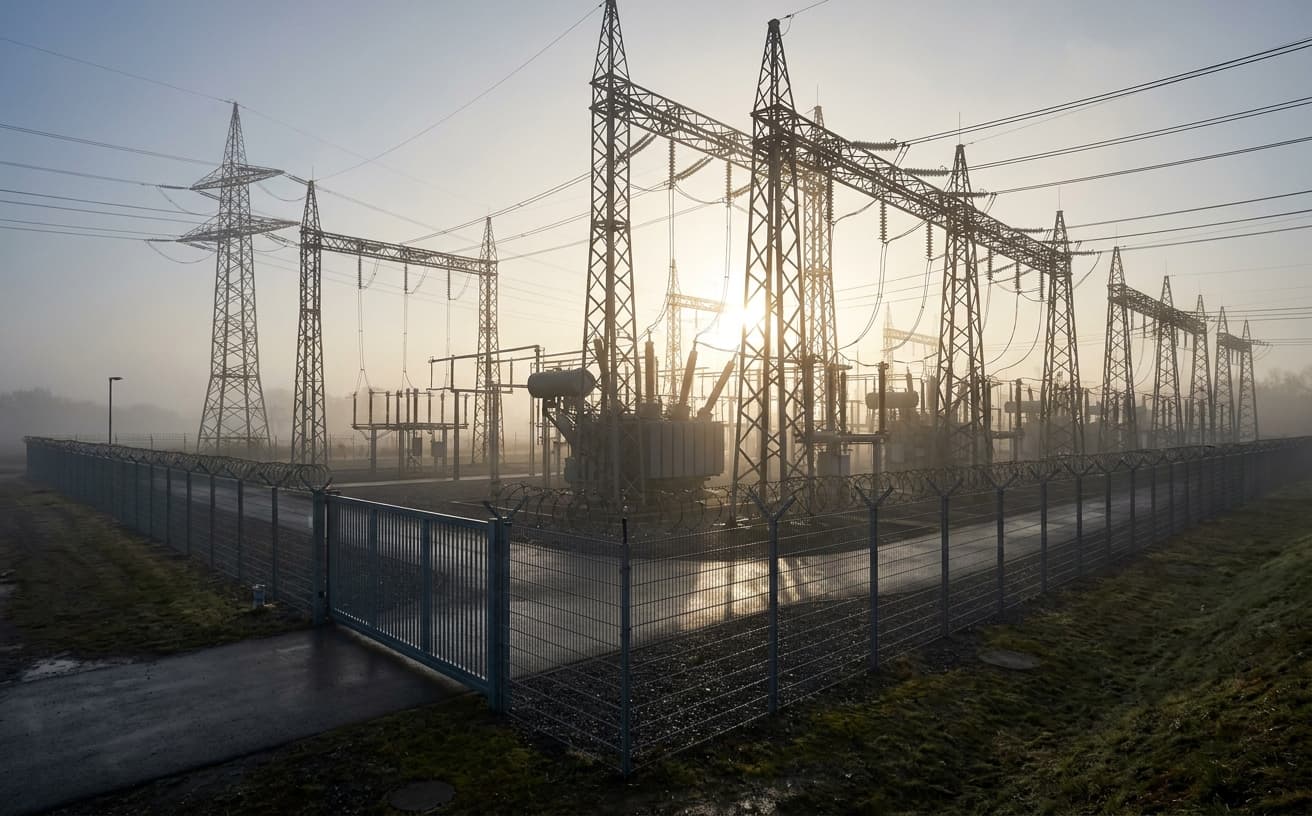
A control catalogue is not a security programme. The two are often confused, and the confusion is most expensive in the physical layer, where concrete and steel resist the abstractions of a paragraph numbered PE-3.
NIST Special Publication 800-53, in its current revision, lists more than a thousand controls and control enhancements across twenty families. The PE family, Physical and Environmental Protection, contains roughly twenty base controls with multiple enhancements each. Read end to end, the family takes hours. Implemented honestly, it takes years. Most operators do neither. They map the controls to what they already have, write the gaps into a Plan of Action and Milestones, and move on. The result is a binder that passes audit and a perimeter that does not pass a serious adversary.
The argument that follows is about what falls out of PE in real industrial deployments. Not the theoretical scope of the family, but the controls that actually get implemented, the documentation that actually gets produced, and the gap between the two that auditors learn to live with and operators learn to hide.
Why PE reads differently from the rest of 800-53
The other control families in 800-53 describe a world that software people understand. Access Control, Audit and Accountability, System and Communications Protection. These families assume a digital substrate. A logical access decision is made, logged, reviewed. The controls follow the data. They are auditable because the data is auditable.
PE breaks this pattern. It describes a world of doors, locks, badges, cameras, generators, fire suppression, environmental monitoring. The substrate is concrete and copper. The control decisions are made by people standing in front of physical barriers, often outside the line of sight of any logging system. PE-3, Physical Access Control, asks the organisation to enforce physical access authorisations at entry and exit points. The control text is two sentences. The implementation is a guard force, a badge system, a visitor log, a procedure for what happens when the badge reader fails, a procedure for what happens when the guard is sick, a procedure for what happens when a contractor arrives without prior notification at twenty-two hundred hours on a Saturday. None of this is in the control text. All of it determines whether the control works.
This mismatch produces a specific failure mode. Operators read PE-3 and check the box because they have a badge reader. The badge reader is unmaintained, the database has not been reviewed in eighteen months, and the override key is kept in a drawer that has been opened seven times this quarter without record. The control is implemented in the binder. It is not implemented in the building. An auditor who walks the perimeter discovers this within an hour. An auditor who reads the binder discovers nothing.
The PE family is therefore the family where the gap between documentation and reality is widest, and where the cost of that gap shows up first when a real incident occurs. The other families fail silently in logs that nobody reads. PE fails in front of cameras that nobody watches, with consequences that arrive at the loading dock at three in the morning.
The controls that actually get implemented
In a typical industrial buildout governed by 800-53, perhaps six to eight controls in the PE family receive serious engineering attention. The rest are documented to a level sufficient for audit and revisited only when something breaks.
PE-2, Physical Access Authorisations, is implemented because access lists exist for badging anyway. PE-3, Physical Access Control, is implemented because doors and turnstiles are part of the building. PE-6, Monitoring Physical Access, is implemented because cameras are installed. PE-8, Visitor Access Records, is implemented because reception logs exist. PE-12, Emergency Lighting, and PE-13, Fire Protection, are implemented because building codes require them independent of 800-53. PE-14, Temperature and Humidity Controls, is implemented because data centre operations require it. PE-15, Water Damage Protection, is implemented as a side effect of building services.
That is the working set. Eight controls that survive the journey from the catalogue to the building because they coincide with engineering and code requirements that would exist without 800-53.
The remaining controls receive variable treatment. PE-4, Access Control for Transmission, which addresses physical protection of cabling, is often documented at the level of conduit runs and is rarely audited beyond the data centre. PE-5, Access Control for Output Devices, is a relic of the era when printer output was a primary leakage vector and is now mostly a paragraph asserting that printers are inside the secure perimeter. PE-9, Power Equipment and Cabling, and PE-10, Emergency Shutoff, are implemented seriously only in facilities where the operator has already had an electrical incident. PE-11, Emergency Power, is implemented in proportion to the operator's tolerance for downtime, which is usually less than the tolerance the catalogue assumes. PE-16, Delivery and Removal, and PE-17, Alternate Work Site, are documented to a level that satisfies the assessor and rarely tested.
The control enhancements, which extend base controls with additional requirements at higher impact levels, follow the same pattern. The enhancements that align with engineering reality survive. The enhancements that require new processes outside the existing operational rhythm get written into the System Security Plan and remain there as language.
This is not a failure of the catalogue. The catalogue is comprehensive by design. It is a failure of the implementation model that treats every control as equal. The controls are not equal. Some defend against scenarios that have happened in the operator's own history. Others defend against scenarios that exist only in the catalogue. Operators allocate engineering attention to the first set and language to the second. The audit process, properly conducted, exposes this allocation. Improperly conducted, it confirms the binder.
What audit verification actually looks like
The verification of PE controls in an 800-53 audit follows a sequence that any practitioner recognises. The assessor reviews the System Security Plan, identifies the controls in scope, requests evidence for each control, and conducts site visits to verify that the evidence corresponds to physical reality.
The evidence requested is predictable. For PE-3, the assessor asks for the list of personnel authorised for unescorted access, the procedures for granting and revoking access, and a sample of badge transactions over a defined period. For PE-6, the assessor asks for camera placement diagrams, retention policies, and a sample of incident reviews. For PE-8, the assessor asks for the visitor log and procedures. The evidence package is assembled, reviewed, and the assessor walks the site.
The site visit is where the gap shows. A competent assessor does three things. They observe the entry procedure as a visitor, which reveals whether the documented process is followed when nobody knows the assessor is watching. They request access to a sample of secure areas, which reveals whether the badge system enforces what the list claims. They examine the camera coverage at one or two points, which reveals whether the diagrams correspond to the installed equipment.
A less competent assessor reads the binder, signs the report, and leaves. The difference between the two is the difference between an audit that produces security and an audit that produces paper. The catalogue does not distinguish between them. NIST CSF 2.0, which references 800-53 as an informative source, also does not distinguish. The distinction is made by the procurement decision that selects the assessor and by the willingness of the operator to accept a finding.
The most productive audits the manufacturer has observed are those where the operator briefs the assessor on the known weaknesses in advance and asks the assessor to test them. This inverts the usual dynamic, in which the operator hides weaknesses and the assessor hunts for them. It produces a report that is shorter, harder, and more useful. It also requires an operator who does not depend on the audit outcome for a contract or a certification. Most operators do depend on the outcome, which is why most audits are negotiations rather than tests.
For physical security specifically, the verification weakness is systemic. Assessors are typically trained in information system audit, not in physical security. They are competent to verify that a badge system exists and that a procedure is written. They are less competent to verify that the badge system is configured to reject revoked credentials within the time window the procedure claims, or that the camera coverage actually overlaps the entry point as drawn. ASIS International has published guidance on physical security assessment that addresses this gap, but the guidance is not embedded in the 800-53 assessment process. The operator who wants verification beyond the binder commissions it separately.
The documentation that is actually expected
A complete documentation package for the PE family, sufficient to pass an audit at the moderate impact level, contains roughly the following artefacts. A physical security policy, dated and signed at an appropriate organisational level. A set of procedures covering access authorisation, visitor management, key management, and incident response. A System Security Plan section that describes how each PE control is implemented, with references to the procedures. An access list with review evidence. A visitor log. Camera placement and retention documentation. Maintenance records for physical security systems over a defined period. Incident reports for physical security events, where any have occurred. A Plan of Action and Milestones identifying control gaps and the timeline for closing them.
The package is large. A well-organised operator maintains it in a controlled document repository with version history and approval workflow. A less organised operator assembles it before each audit from various locations, which is recognisable in the inconsistent dates and the procedures that reference systems that have been replaced.
What is not expected, but is increasingly valuable, is documentation that goes beyond the control language. A threat model for the physical perimeter, identifying which adversary scenarios the controls are designed to defeat. A coverage analysis showing where the controls overlap and where they do not. A test programme that exercises the controls under realistic conditions, including the failure modes that procedures describe but never test. This documentation is not required by 800-53. It is required by the operator who wants the controls to work.
The relationship to other frameworks is worth noting in the documentation. An operator who is also certified to ISO 27001 will have an Annex A control set that overlaps with 800-53 but is not identical. The physical security controls in ISO 27001, in the A.7 family of the current revision, are fewer and more abstract. Mapping between the two is straightforward at the level of the control title and laborious at the level of the implementation evidence. Operators in industrial environments will additionally reference IEC 62443, which addresses physical security for industrial automation and control systems with a different vocabulary again. BSI guidance for German operators of critical infrastructure adds another layer. The documentation set that satisfies all of these simultaneously is large, and the consolidation effort is rarely budgeted.
The manuscript "BOSWAU + KNAUER. From Building to Security Technology" notes that documentation is the second stage of decline when it stops being updated. The observation applies to control documentation directly. A System Security Plan that has not been revised in two years is not a security artefact. It is an archaeological artefact. The audit process treats it as the former. The adversary treats it as the latter.
How NIST CSF 2.0 and 800-53 fit together in practice
NIST CSF 2.0, published in 2024, is a framework for organising cybersecurity activity into six functions: Govern, Identify, Protect, Detect, Respond, Recover. It is not a control catalogue. It is a structure within which control catalogues are applied. 800-53 is one such catalogue, referenced extensively in the CSF 2.0 informative references. ISO 27001 is another. IEC 62443 is a third.
The practical effect for physical security is that CSF 2.0 provides the language in which the operator reports security posture to executives and external stakeholders, while 800-53 provides the language in which the operator demonstrates compliance to assessors. The two are not in conflict, but they require translation. A statement that the organisation has implemented Protect.AC, the Access Control category of CSF 2.0, is not the same as a statement that the organisation has implemented the PE family of 800-53, although the two overlap. The translation tables exist, published by NIST and by various industry bodies, but the translation is not automatic and the gaps are real.
For an industrial operator subject to multiple regimes, the practical approach is to build the control documentation against 800-53 as the most detailed catalogue, and to produce CSF 2.0 reporting as a derived view. This is more work than producing only CSF 2.0 reporting, but it survives audit by regulators who require detailed control evidence. The reverse approach, producing CSF 2.0 reporting first and reconstructing 800-53 evidence on demand, fails predictably under audit pressure because the underlying evidence has never been organised against the detailed catalogue.
CISA guidance for critical infrastructure operators leans toward CSF 2.0 as the executive framework and 800-53 or sector-specific equivalents as the operational catalogue. The leaning is sensible. Executives do not read control catalogues. Assessors do not read framework summaries. Each audience receives the appropriate artefact, derived from the same underlying evidence. The work that this requires is largely the work of organising the evidence, which is the work that distinguishes a security programme from a security binder.
For physical security specifically, the integration of CSF 2.0 and 800-53 highlights a structural weakness. Both frameworks treat physical security as a subset of cybersecurity, addressed through the protection of information systems against physical compromise. Neither framework addresses physical security as a domain in its own right, with its own threat models and its own implementation logic. The operator who wants to address physical security as a domain reaches outside both frameworks, to ASIS International guidance, to NICB reporting on theft and intrusion patterns, to GDV statistics on insurance claims, and to operational experience that no framework captures.
What holds
The PE family of 800-53 is a useful but partial description of physical security. The controls that get implemented are the controls that align with engineering and code requirements. The documentation that gets produced is the documentation that the audit process demands. The gap between the two is the gap between compliance and security, and it is wider in the physical layer than in any other family in the catalogue.
An operator who wants the controls to work treats the catalogue as a checklist of topics to address rather than a specification of measures to install. The threat model comes first. The control selection follows. The documentation captures the selection. The audit verifies the documentation. The verification is sufficient for compliance and insufficient for security. The supplementary verification, conducted by the operator on the operator's own initiative, is what closes the gap.
For operators considering where to begin, the manufacturer offers three paths described in detail in the book "BOSWAU + KNAUER. From Building to Security Technology". A confidential sixty-minute conversation establishes whether the question is worth pursuing. A three to five day audit produces a written report with six defined deliverables, including a vulnerability catalogue and an economic case across three scenarios. A ninety-day pilot installs a system at one defined site and produces the data on which a scaling decision can be made. The audit, in particular, is structured to produce documentation that survives an 800-53 assessment and tests the controls beyond what the assessment would reach.
Frequently asked questions
Which NIST 800-53 controls apply to physical security?
The PE family, Physical and Environmental Protection, contains the primary physical security controls. It includes roughly twenty base controls covering access authorisation, monitoring, visitor management, emergency systems, environmental controls, and protection of delivery and output areas. Related controls appear in other families. AC-2 addresses account management for badge systems. MP-4 addresses media storage including physical media. CP-7 addresses alternate processing sites. A complete physical security implementation references controls from multiple families, with PE as the centre of gravity.
How are these controls verified in audit?
Verification combines documentation review and site inspection. The assessor examines the System Security Plan, procedures, access lists, visitor logs, camera coverage documentation, and maintenance records. The site visit observes entry procedures, tests badge access against the authorisation list, and examines camera placement against the documented diagrams. A competent assessor tests the failure modes the procedures describe. A less competent assessor reviews documentation only. The depth of verification depends substantially on the assessor selected, not on the framework itself.
What documentation is expected?
A physical security policy, signed at an appropriate level. Procedures for access authorisation, visitor management, key management, and incident response. A System Security Plan section addressing each PE control. Current access lists with review evidence. Visitor logs over the assessment period. Camera placement, coverage, and retention documentation. Maintenance records for physical security systems. Incident reports for any physical security events. A Plan of Action and Milestones identifying gaps and remediation timelines. The package is substantial and benefits from controlled document management rather than pre-audit assembly.
How does NIST CSF 2.0 relate to 800-53?
CSF 2.0 is a framework organising cybersecurity into six functions. 800-53 is a control catalogue referenced as an informative source within CSF 2.0. The two are complementary rather than alternative. CSF 2.0 provides executive-level structure and reporting language. 800-53 provides operational-level control specifications and audit evidence. The practical approach builds detailed evidence against 800-53 and derives CSF 2.0 reporting as a view. The reverse direction, deriving 800-53 evidence from CSF 2.0 reporting, fails under audit pressure because the underlying evidence is not organised at sufficient detail.
Related topics
- NIST 800-53 Physical Controls: What Every CISO Mistranslates
- NPSA and UK Physical Security: The New National Standard
- UK Energy CNI: ESO, National Grid & Substation Attacks
- UAE Incident Reporting: The 72-Hour Reality for Operators
- Spanish Ley PIC vs Portuguese RNSCC Compared
- CWA 15793 Construction Site Security: The Unread Standard
Take the next step: See prices & ROI · Explore the products · Send a no-obligation request. BOSWAU + KNAUER – direct from the factory in Filderstadt, reply within 5 working days.
About the author
Dr. Raphael Nagel (LL.M.) is founding partner of Tactical Management. He acquires and restructures industrial businesses in demanding market environments and writes on capital, geopolitics, and technological transformation. raphaelnagel.com
More reading
Since 1892.
The firm is reached at boswau-knauer.de or +49 177 2266267.