
Blog
Perimeter Security Systems: The Seven-Layer Model
A cornerstone guide to perimeter security as a layered architecture. Why every vendor pitches one layer and how to assemble the seven that actually work.

Dr. Raphael Nagel
December 12, 2024
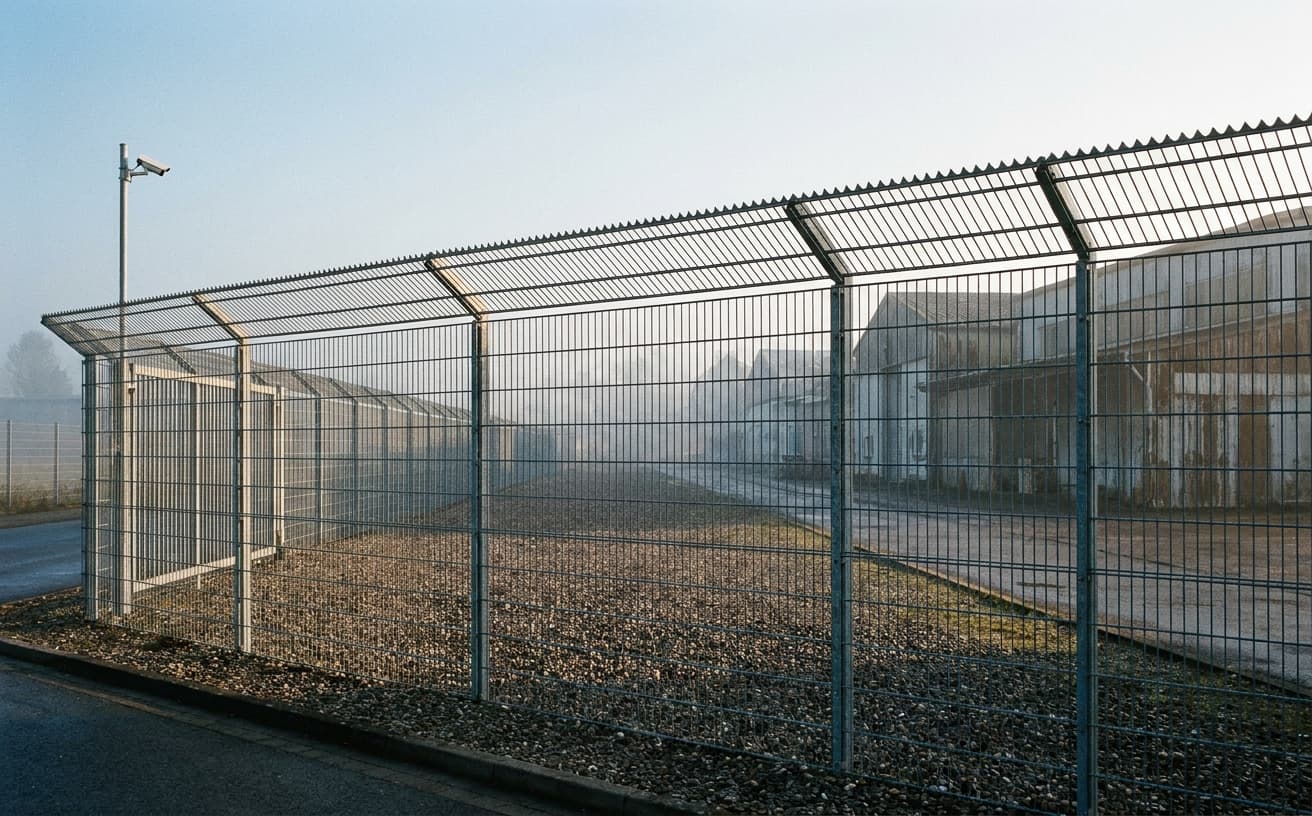
Perimeter security is not a fence with a camera on top. It is an architecture, and the operators who treat it as a product line are the ones who keep paying for the same incident twice.
The confusion is not accidental. Every vendor in the market sells one layer and calls it the system. The fencing contractor sells fencing. The CCTV integrator sells cameras. The guard company sells presence. The analytics firm sells software. Each of them is competent in a narrow trade, and each of them implicitly suggests that their trade is the spine of the perimeter. None of them is wrong about their own layer. All of them are wrong about the whole. A perimeter that holds is a composition of seven layers, each with a defined function, each measurable in isolation, each meaningless without the others. This article describes those layers in the order an attacker encounters them, names what fails in each, and points at how the architecture is tested.
The argument here is informed by IEC 62443's zone and conduit logic, NIST CSF 2.0's identify, protect, detect, respond, recover sequence, ASIS International's perimeter guidance, and the operational experience documented in the manuscript BOSWAU + KNAUER. From Building to Security Technology. None of these sources, taken alone, gives an operator a buying framework. Together they do.
The deterrence layer and what it actually deters
The outermost layer of any perimeter is not physical. It is the impression a site makes on a person who is calculating whether to attempt something. CISA refers to this in its physical security guidance as the visible posture of a site. ASIS literature has called it the announcement function. The point is the same. Most people who damage, steal from, or intrude on a site decide whether to do so before they reach the fence. The decision is made from a distance, in passing, and it is influenced by what the site signals about its readiness.
Deterrence operates on three signals. The first is order. A site that looks organised, lit, observed, and maintained signals that someone is paying attention. A site with weeds at the fenceline, dim lighting, and outdated signage signals the opposite. The second signal is technology that is visible without being theatrical. A camera that is conspicuous but plainly functional, a tower that is recognisable as a tower, signage that names recording and response, all communicate that an attempt will be observed. The third signal is presence, whether human or robotic. A patrol that varies its pattern, a mobile platform that moves through the site on irregular intervals, a vehicle marked with a security livery, each of these creates uncertainty in the mind of the observer who is trying to model the site's rhythm.
Deterrence is the cheapest layer to install and the most expensive layer to underestimate. It does not stop the determined attacker. It removes the opportunistic attacker and the impulsive vandal from the population of threats the rest of the system must handle. Removing that population is not a small effect. In data drawn from construction sites, industrial estates, and logistics yards, the opportunistic category accounts for the majority of incidents by count, though not by value. A perimeter that handles the opportunistic share through deterrence frees the rest of the architecture to address the smaller number of structured threats. This is the layer most often dismissed as cosmetic. It is the layer most often misallocated. Operators spend on the visible without testing whether the visible communicates the intended posture, or they spend on the invisible and wonder why the site is repeatedly probed. The test is simple. A competent assessor stands at the access road, looks at the site for ninety seconds, and writes down what the site is telling him. If that report matches the operator's intent, the deterrence layer is functioning. If it does not, the rest of the architecture is carrying a load it should not be carrying.
The physical barrier layer and its real function
The fence is not the perimeter. The fence is the second layer of the perimeter, and its function is not to stop, but to delay and to channel. This distinction is the single most misunderstood element in physical security buying. Operators procure barriers as though they were absolute. They are not. Every barrier in commercial use has a defeat time, measured in seconds or minutes by a determined attacker with the appropriate tools. The relevant question is not whether a fence can be defeated, but how long the defeat takes and what the detection and response layers do during that interval.
NIST 800-53 references this in the PE family of controls under the language of delay and detection. IEC 62443, when applied beyond its industrial control origins to physical zoning, treats barriers as zone boundaries with associated conduits, each with a defined trust differential. ASIS guidance on physical asset protection breaks barriers into three classes, low, medium, and high security, each with a different defeat profile. The operator's task is to match the barrier class to the value of the asset behind it and to the response time of the layers behind the barrier. A high-value asset behind a low-security fence is acceptable only if the detection layer triggers within seconds and the response layer arrives within the defeat time. A low-value asset behind a high-security fence is wasted capital, unless the fence is also serving a deterrence or channeling function that justifies the cost.
Channeling is the function vendors rarely discuss. A well-designed barrier system does not surround a site uniformly. It creates a small number of intended entry points and forces both authorised and unauthorised traffic through them. This is not a restriction of convenience, it is a concentration of observation. An attacker who has to choose between defeating a hard barrier and using a soft entry point will use the soft entry point if it exists. If the soft entry points are also the most heavily observed and access-controlled, the attacker faces a choice between two unfavourable options. This is the design that holds. The barriers most operators install are continuous and unconcentrated. They invite the attacker to choose his own entry point, which means the detection and response layers must cover the entire perimeter rather than a defined number of channels. That coverage is achievable, but it is expensive, and it is rarely what the operator paid for.
The detection layer and the false alarm problem
Detection is the third layer, and it is the layer where most perimeter systems fail in the field rather than in the specification. A detection system that produces high false alarm rates is, within twelve to eighteen months, a detection system that is ignored, throttled, or switched off by the operators who are supposed to act on its outputs. GDV data on commercial alarm response, and the experience documented across European industrial sites, both point at the same pattern. The technical capability of detection technology has improved substantially over the past decade. The discipline of integration around it has not improved at the same rate.
A detection layer worth installing satisfies three conditions. It uses multiple modalities, so that a single failure mode does not blind the system. Optical, thermal, acoustic, and seismic sensors each have weaknesses that the others compensate for. A system built on cameras alone fails in fog and in glare. A system built on motion sensors alone fails against patient intruders. A multimodal system fails less often and fails more gracefully. The second condition is correlation. Events from one sensor are not treated as alarms until a second, independent sensor confirms them within a defined time and spatial window. This single discipline reduces false alarm rates by an order of magnitude in most deployments, and it is the discipline most often omitted because each sensor was procured from a different vendor and the integration was assumed rather than designed. The third condition is context. A perimeter detection system that does not know the schedule of the site, the weather, the wildlife patterns, the planned maintenance, will treat every routine event as a candidate alarm. A system that knows these things filters them at the source. The construction of this context is not a software task, it is an operational task, and it is the task that distinguishes a detection layer that operators trust from one they bypass.
The metrics that matter in the detection layer are detection rate, false alarm rate, and time to alarm. All three should be specified before procurement and tested after installation. The specification language most operators inherit from vendors does not include all three. It includes the first, sometimes, in laboratory conditions. The other two are determined in the field, and by then the contract is closed.
The access control layer beyond the badge
Access control is the fourth layer, and it is the layer where the assumption gap between security and operations is widest. Operations want frictionless movement. Security wants verified identity at every transition. The compromise most sites adopt, a badge reader at the gate and an honour system thereafter, is not a compromise. It is an unsecured interior wrapped in a thin shell of authentication.
A serious access control layer treats the perimeter not as a single boundary but as a sequence of zones, each with its own trust level, and movement between zones as a controlled event. IEC 62443 articulates this for industrial environments, and the same logic applies to physical security. The badge at the outer gate authenticates entry to the lowest trust zone, which typically includes parking and reception. Movement into operational areas requires a second authentication, ideally with a different factor. Movement into restricted areas requires a third. The factors should not all be card-based. A combination of credential, biometric, and behavioural verification, where the third is something as simple as a confirmation from a host, raises the cost of impersonation substantially. ISO 27001 references this in the language of layered access control, and the language maps cleanly onto physical environments.
The failure modes of access control are predictable. Tailgating, where one credentialed person admits one or more uncredentialed persons through the same opening, accounts for a large share of unauthorised access in commercial sites. Credential sharing, where a single credential is passed among multiple people, accounts for another large share. Both of these failures are operational, not technical. The technical solutions, anti-passback rules, mantrap configurations, video verification at controlled points, exist and work. They are rarely installed in full because the operations side of the business resists the friction. The question for the operator is not whether the access control technology is capable. It is whether the organisation will tolerate the friction required to make the technology effective. If the answer is no, the access control layer is decorative, and the rest of the architecture must be designed accordingly.
A second failure mode is credential lifecycle. A badge issued to a contractor in March and not revoked when the contractor leaves in June is an active credential in the hands of a former insider. The administrative discipline required to keep the credential population current is mundane, expensive, and routinely abandoned. An audit of credential populations in mid-sized industrial sites typically finds between five and fifteen percent of active credentials assigned to persons no longer affiliated with the site. That number is the size of the insider threat exposure that the access control layer is silently carrying.
The surveillance and analytics layer
Surveillance is the fifth layer, and it has changed more in the past five years than any other layer in the architecture. The change is not the camera. The camera has improved, but incrementally. The change is the analytics layer that sits on top of the camera and turns video from a passive record into an active source of detection and verification. This is the layer that vendors have most aggressively oversold, and operators have, in many cases, justifiably grown sceptical of.
The honest description of what analytics can and cannot do is narrower than the marketing. Modern object detection and classification, trained on relevant data, performs reliably in identifying persons, vehicles, and a defined set of objects in defined conditions. Behavioural classification, where the system attempts to distinguish normal from anomalous activity, performs less reliably and is heavily dependent on the quality of the training data and the stability of the environment. Identity recognition, in the sense of recognising individuals across cameras and across days, is technically possible but legally constrained in most European jurisdictions under GDPR and related frameworks, and the operational case for it on commercial perimeters is weaker than vendors suggest.
The analytics layer's real value is filtering. A site with twenty cameras generates more video than any human operator can monitor in real time. Without analytics, the cameras are a forensic resource, useful after an incident, not during it. With analytics that filter the video stream and surface only events that meet defined criteria, the cameras become a real-time detection asset. One operator can supervise twenty or fifty cameras, where previously twenty or fifty would have required twenty or fifty operators or, more realistically, would have been left unmonitored. This shift, from forensic to live, is the single largest productivity gain in physical security in the past decade, and it is the gain operators most often fail to capture because they buy the cameras without the analytics, or buy the analytics without configuring them, or configure them once and never recalibrate as the site changes.
The analytics layer also produces data that the other layers can use. A pattern of probing along a particular fence section, detected by analytics over weeks, informs where to harden the barrier. A correlation between weather conditions and false alarms, surfaced by analytics, informs how to tune the detection layer. The analytics layer is the layer that learns, and a perimeter without a learning layer is a perimeter that responds the same way to year five as it did to year one, while the threats have evolved.
The response layer and the time problem
The sixth layer is response, and response is governed by a single number that operators consistently fail to specify. The number is the time from alarm to intervention. Every other capability in the architecture is calibrated to this number. A detection layer that triggers in three seconds is wasted if the response takes forty-five minutes. A barrier that delays an attacker by ten minutes is sufficient only if the response arrives in under ten minutes. The arithmetic is simple. The execution is not.
Response can be internal, external, or hybrid. Internal response, where the site's own personnel intervene, is fastest but requires staffing that few sites maintain around the clock at the necessary scale. External response, typically by a contracted guard service or by police, is slower and dependent on the responder's other commitments at the moment of alarm. Hybrid response, where a remote operator verifies the alarm via the surveillance layer and then dispatches the appropriate resource, is the model most modern perimeters converge on, because it combines the speed of remote verification with the scalability of contracted physical response. The hybrid model also addresses the false alarm problem at the response stage. A remote operator who verifies the alarm before dispatch prevents the response resource from being consumed by false positives, which preserves its availability for true positives.
The response layer's quality is determined by three factors. First, the clarity of the dispatch criteria. An operator who has to make a judgement call on every alarm will, under fatigue, make poor calls. An operator who is following a defined matrix that maps alarm type to response action makes consistent calls. Second, the geographic distribution of response resources. A response unit thirty kilometres from the site cannot meet a five-minute requirement. The siting of response resources is a design decision, not an operational one, and it is made when the contract is signed. Third, the rehearsal cadence. Response capabilities that are not rehearsed degrade. The unannounced test, conducted at intervals defined in advance, is the only way to know whether the contracted response time on paper is the actual response time in the field. BSI guidance on critical infrastructure protection treats rehearsal as a mandatory element of the response posture. Commercial sites that adopt the same discipline find, in the first rehearsal, that the gap between contracted and actual is wider than they assumed.
The integration and audit layer
The seventh layer is integration, and it is the layer that is not sold by anyone because it is not a product. It is the discipline that makes the other six layers function as one system rather than six adjacent systems. A perimeter that has all six prior layers installed by six different vendors, each with its own management console, its own data format, its own alerting logic, is not a perimeter. It is a collection. Integration is what turns the collection into an architecture.
Integration has three components. The first is data integration. The events generated by detection, surveillance, access control, and response should flow into a single record, time-stamped to a common clock, queryable from a single interface. An incident that begins as a detection event, escalates through surveillance verification, triggers an access control response, and concludes with a dispatched physical response, should appear as one incident in the record, not as four. The forensic value of the integrated record, in insurance claims, in regulatory reporting, and in post-incident analysis, is substantial. The operational value, during the incident itself, is greater. An operator who sees one timeline acts more decisively than an operator who is reconciling four. The second component is procedural integration. The handoffs between layers, from detection to verification, from verification to dispatch, from dispatch to intervention, should be defined in writing and rehearsed in practice. The third component is governance integration. The perimeter's performance should be reviewed at a defined cadence by a named owner, with metrics that are tracked over time, and with the authority to commission changes when the metrics indicate degradation.
The architecture is audited along these dimensions. A serious perimeter audit, conducted in three to five days on a typical industrial site, will examine each of the seven layers in isolation, then examine the integration across them. The output is not a list of products to buy. It is a map of where the architecture is sound, where it is weak, and where the weakness is operational rather than technical. NIST CSF 2.0 provides a structure for this kind of assessment under its identify and protect functions. ISO 27001 provides a complementary structure under its physical and environmental security clauses. NICB data on theft patterns at commercial sites in the United States and GDV data on equivalent patterns in Germany both confirm that the sites that are repeatedly targeted are the sites where integration is weakest, not the sites where individual layers are weakest. The attacker probes for the seam between layers, not for the strength within a layer.
What holds
A perimeter holds when seven layers function as one. Deterrence removes the casual threat. Barriers delay and channel the serious threat. Detection identifies the breach. Access control limits the spread. Surveillance verifies and filters. Response intervenes within the defeat time. Integration makes all six function as architecture rather than as a collection of trades. The vendors who sell into this market specialise in one layer each, and most of them do their layer competently. The composition is the operator's responsibility, and it is the responsibility most often delegated by default to whichever vendor showed up first.
The framework set out here is descriptive, not exhaustive. Every site has its own value profile, its own threat profile, its own operational constraints. The seven layers are the structure within which those particulars are addressed. An operator who can describe his perimeter in these seven layers, can name what each layer costs, what each layer detects, and how the layers connect, has an architecture. An operator who cannot, has expenditure without architecture, and the expenditure will continue to grow until the architecture is built.
Three paths exist for operators who have read this far and want to test their own perimeter against the framework. The first is a confidential conversation of sixty minutes, in which the operator describes the current posture and receives an outside reading of where the framework suggests attention. The second is a structured audit of three to five days on site, producing the six deliverables described in the BOSWAU + KNAUER manuscript, including the architecture map across the seven layers and a prioritised remediation plan. The third is a ninety-day pilot on a defined section of perimeter, with success criteria agreed before commencement and data delivered at the end that supports the scaling decision. Each path stands on its own. None of them requires the next. The choice depends on how confident the operator is in his current architecture, and how willing he is to test that confidence against an external view.
Frequently asked questions
What are perimeter security systems?
Perimeter security systems are the combined set of physical, technical, and procedural measures that protect the boundary and the controlled interior of a site against unauthorised access, theft, damage, and disruption. The term is often used loosely to refer to fencing or to camera installations, but a complete perimeter system covers seven distinct layers, from deterrence through integration. Each layer addresses a different stage of an attempted intrusion, and the system holds only when all seven are present and connected. A perimeter system is therefore an architecture, not a product, and it should be specified and audited as such.
What are the seven layers?
The seven layers, in the order an attacker encounters them, are deterrence, physical barrier, detection, access control, surveillance and analytics, response, and integration. Deterrence shapes the decision before the attempt. Barriers delay and channel. Detection identifies the attempt. Access control limits movement once inside. Surveillance verifies and filters. Response intervenes within the time the barrier has bought. Integration binds the prior six into one architecture with a single data record, defined handoffs, and named governance. Each layer has its own metrics and its own failure modes, and the strength of the architecture is the strength of the weakest connection between layers.
Which layer fails most often?
Integration fails most often, because no vendor sells it. Individual layers are usually specified to a reasonable standard within the competence of the contractor who installed them. The failures cluster in the seams. Detection events that do not flow into surveillance for verification. Access control records that do not correlate with detection alarms. Response handoffs that are documented in one system and executed in another. Operators who audit their perimeters along the seven-layer framework typically find that four or five layers are individually adequate, and the architecture is failing because the layers do not function as one system. This is the failure that most rewards corrective investment.
How is the architecture audited?
The architecture is audited in three to five days on site by examining each of the seven layers against defined criteria, then examining the integration across them. Frameworks that support the audit include NIST CSF 2.0, ISO 27001's physical and environmental clauses, IEC 62443's zone and conduit model adapted to physical environments, and ASIS guidance on perimeter design. The output is a written report covering current state, identified weaknesses ranked by risk and remediation cost, a three-scenario economic analysis, a prioritised action matrix, an implementation plan with milestones, and a transparent statement of the assumptions used. The operator owns the report and can act on it internally, externally, or in partnership.
Related topics
- Security as Code: Platform Thinking for Physical Defense
- Layered Perimeter Security on an Industrial Site
- Industrial Perimeter Security: Architecture Layered for Cost
- Industrial Fencing Standards: EN 1717, EN 1090 in Practice
- Mid-Market Industrial Security: The Cost of Waiting
Take the next step: See prices & ROI · Explore the products · Send a no-obligation request. BOSWAU + KNAUER – direct from the factory in Filderstadt, reply within 5 working days.
About the author
Dr. Raphael Nagel (LL.M.) is founding partner of Tactical Management. He acquires and restructures industrial businesses in demanding market environments and writes on capital, geopolitics, and technological transformation. raphaelnagel.com
More reading
Since 1892.
The firm is reached at boswau-knauer.de or +49 177 2266267.