
Blog
Saudi Critical Infrastructure: NCA, ECC & OTCC
NCA, ECC, OTCC and sector-specific mandates. The granular Saudi framework operators learn to live with, mapped for autonomous security platforms.

Dr. Raphael Nagel
September 25, 2025
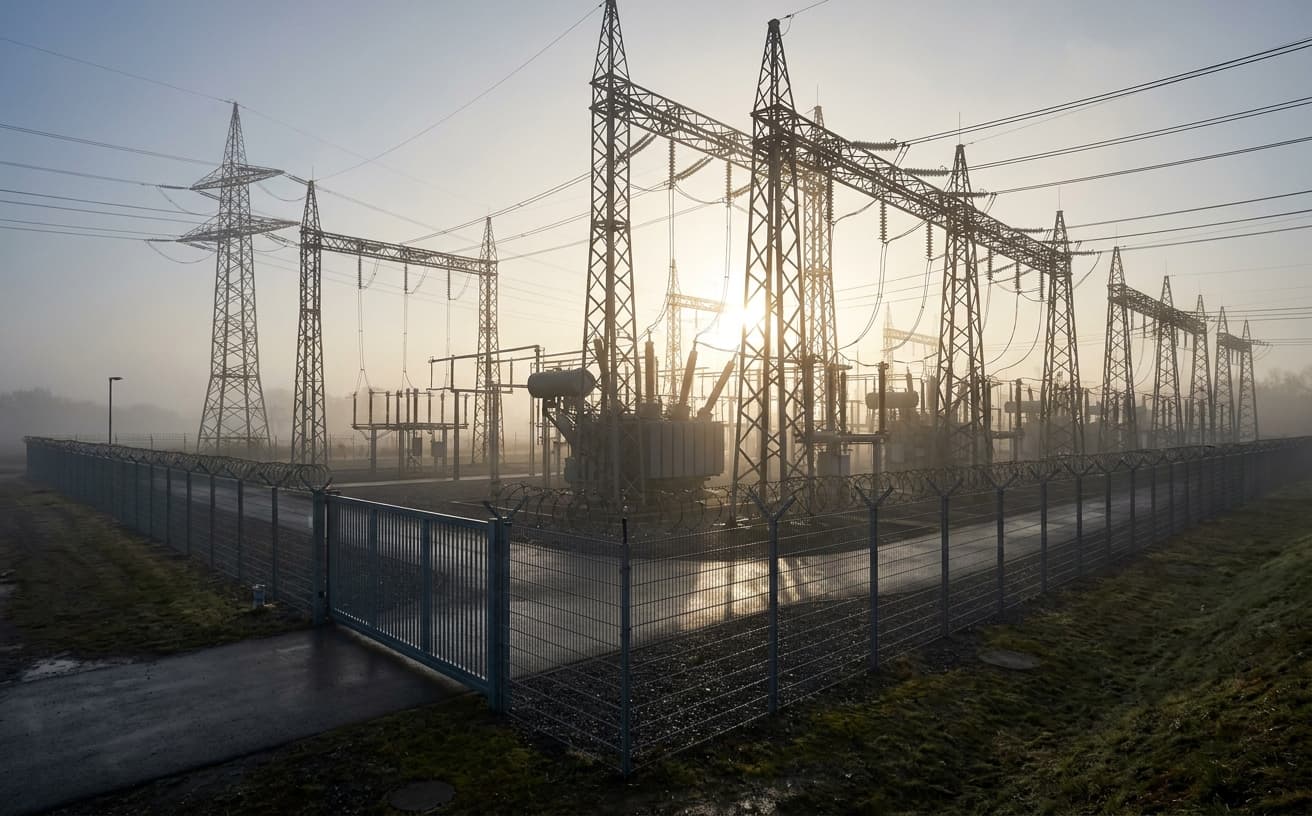
Saudi Arabia has built one of the most prescriptive cybersecurity regimes in the world, and operators who treat it as a paperwork exercise will discover, usually during the first inspection, that it is not.
The Kingdom's framework is not a translation of NIST CSF 2.0 or a regional adaptation of IEC 62443. It is a national construct, owned by a national authority, written for a national risk picture, and enforced with an authority that European operators rarely encounter at home. Foreign vendors and integrators arrive expecting a familiar maturity model and find instead a granular set of controls, sectoral overlays and inspection rights that do not bend to commercial preference. The framework is granular because the Kingdom decided, after a sequence of high-profile incidents in the petrochemical and water sectors, that voluntary standards would not hold under the threat actors it actually faces.
This article describes the footprint operators learn to live with: who issues the rules, what the rules say, how they layer onto operational technology in industrial sites, and what the audit cycle actually looks like in practice. It is written from the perspective of a manufacturer that has spent time on Saudi sites with equipment that is expected to interoperate with controls written by the National Cybersecurity Authority. The argument is descriptive rather than promotional, because the regulatory reality in Riyadh does not respond to marketing.
The National Cybersecurity Authority and its mandate
The National Cybersecurity Authority, established by royal order in 2017, holds a position that has no direct analogue in most European jurisdictions. It is simultaneously the policymaker, the regulator and the operational coordinator for cybersecurity across the Kingdom. Its mandate covers government entities, private sector organisations designated as critical, and any organisation that holds data or operates infrastructure deemed of national importance. The authority sits above sectoral regulators, including SAMA for the financial sector and the Communications, Space and Technology Commission for telecoms, and its controls take precedence where conflicts arise.
Operators who have dealt with BSI in Germany or ANSSI in France will recognise some of the architecture, but the comparison stops at the surface. The NCA is closer in function to a combined CISA and sectoral regulator, with the addition of inspection rights that extend into operational technology environments without the layers of administrative procedure that European operators have come to expect. When the NCA issues a directive, it does not issue guidance in the consultative sense. It issues a binding instrument with timelines, and the timelines are short.
The authority publishes its controls in tiered documents. The Essential Cybersecurity Controls, known as ECC, form the baseline applicable to all government entities and critical national infrastructure operators. Above the baseline sit the Critical Systems Cybersecurity Controls, the Cloud Cybersecurity Controls, the Operational Technology Cybersecurity Controls, and a series of sector-specific instruments that overlay the baseline with industry-particular requirements. Each tier is mandatory for the entities within its scope. There is no opt-out structure, and there is no equivalent of the German principle of proportionality through which an operator can argue that a control is disproportionate to the risk. The argument that a control is impractical does not move the authority.
This concentration of authority has a consequence that foreign integrators frequently underestimate. Decisions that in Europe would be distributed across regulators, sectoral bodies and consultative groups are taken in Riyadh by a single institution with direct access to the political leadership. When the NCA decides that a control needs to change, it changes, and the operators adapt. The framework is not stable in the European sense of stable. It is stable in the sense that the trajectory is consistent, but the specific instruments evolve, and operators are expected to keep up. Operators who treat compliance as a project that ends, rather than a function that runs, fall behind within a single cycle.
The Essential Cybersecurity Controls in practice
The ECC document, in its current revision, contains over one hundred controls organised into five domains: cybersecurity governance, cybersecurity defence, cybersecurity resilience, third-party cybersecurity, and industrial control systems cybersecurity. The structure resembles ISO 27001 in its breadth and NIST 800-53 in its specificity, but it is neither. The controls are written in a directive register, not an advisory one, and they are written to be inspected.
Governance controls require a documented cybersecurity strategy, a board-level reporting line, a defined cybersecurity function with named responsibilities, and an internal audit programme that tests the controls on a defined cycle. The authority expects the strategy to be reviewed annually and the function to report to a level of management that has authority to act. Operators who place the cybersecurity function under IT, with no independent line to the executive, fail the governance assessment regardless of the technical strength of their controls. This is a structural finding, and it is not remediated by training.
Defence controls cover the operational layer. Identity and access management, network segmentation, vulnerability management, secure configuration, cryptography, application security, email security, mobile device management, and the rest of the catalogue that any mature operator will recognise. What distinguishes the ECC implementation is the level of evidence the authority expects. A control is not satisfied by a policy document. It is satisfied by demonstrated implementation, monitored output, and an audit trail that survives external review. The auditor will ask for log samples, configuration extracts, and process records, and the auditor will compare what the operator says against what the systems show.
Resilience controls cover business continuity, disaster recovery, and incident response. The authority expects tested plans, not paper plans, and the testing is expected to include scenarios that involve loss of critical systems, not just availability disruptions. The incident response requirements include notification timelines to the authority, and the timelines are measured in hours, not days. Third-party controls require operators to flow down cybersecurity requirements to suppliers and to verify supplier compliance, which is the point at which foreign vendors discover that their standard contractual terms do not survive Saudi procurement review.
The industrial control systems domain is where the ECC begins to point toward the OTCC, which is the instrument that European industrial operators in the Kingdom find most demanding. The ECC requires operators of industrial systems to segment OT networks from IT networks, to monitor OT traffic, to apply change control to OT configurations, and to maintain an inventory of OT assets that is accurate, not aspirational. These requirements are baseline. The detailed instrument is the OTCC, and the OTCC is where the real work happens.
The Operational Technology Cybersecurity Controls
The OTCC, published in 2022, was the Kingdom's response to a sequence of incidents in which OT environments in regional industrial operators were targeted by capable adversaries. The most cited of these incidents, the TRITON or TRISIS attack on a Saudi petrochemical safety system in 2017, demonstrated to the authority that the gap between IT-centric cybersecurity controls and the reality of industrial environments was a strategic vulnerability. The OTCC closes that gap by writing controls specifically for industrial sites, with reference to IEC 62443 but not bound by it.
The OTCC organises its controls into the same five domains as the ECC, but the content is OT-specific. Asset management requires that every device in the OT environment, including legacy controllers that pre-date the framework, is inventoried with sufficient detail to support patching decisions and incident response. The inventory must include firmware versions, communication protocols, network locations, and criticality classifications. Operators who attempt to satisfy this requirement with spreadsheets maintained by individual engineers discover that the inventory does not survive an inspection. The authority expects automated discovery, validated against engineering records, with documented exceptions for devices that cannot be discovered through network scanning.
Network architecture requirements specify segmentation between OT levels, controlled data flows through documented conduits, and monitoring at the boundaries between segments. The Purdue model is the implicit reference, but the OTCC goes further by requiring that the segmentation is enforced through technical controls rather than administrative ones. A firewall rule that allows broad traffic between IT and OT, even if accompanied by a procedure that says the rule should not be used, fails the assessment. Monitoring requirements include the deployment of OT-specific detection capabilities that understand industrial protocols, not the application of IT-grade tools that treat industrial traffic as noise.
Change management in OT environments is treated with particular care. The OTCC recognises that changes in OT systems carry safety implications that do not exist in IT, and the controls require that changes are reviewed by personnel with operational competence, tested in environments that resemble production, and rolled back through documented procedures when issues arise. The authority expects change records to be auditable, and it expects emergency changes, the changes that operators are tempted to push through without documentation, to be reconstructed after the fact with full evidence.
Incident response in OT environments has its own controls, distinct from the IT incident response requirements. The OTCC requires that incident response procedures account for the physical consequences of OT incidents, that response teams include personnel with operational and safety competence, and that exercises include scenarios in which OT systems are deliberately manipulated. The authority has been clear in its inspections that paper procedures do not satisfy this control. Operators are expected to exercise, document the exercises, capture the lessons, and demonstrate that the lessons were applied in the next cycle.
Sector-specific overlays
Above the ECC and the OTCC, the framework includes sector-specific instruments that overlay additional controls for industries the Kingdom considers strategically important. The energy sector, the water sector, the financial sector, the telecommunications sector, the healthcare sector and the transport sector each have specific requirements that operators must satisfy in addition to the baseline. The overlays are not summaries of the baseline. They add controls, raise thresholds, and shorten timelines.
In the energy sector, the overlays reflect the Kingdom's dependence on hydrocarbon production and the geopolitical sensitivity of the infrastructure. Operators of upstream, midstream and downstream facilities are subject to controls that require continuous monitoring of OT environments, integration with national threat intelligence feeds, and incident reporting that includes technical detail beyond what the baseline requires. Aramco's internal cybersecurity standards, which apply to its operations and to its supplier ecosystem, are aligned with the national framework but extend it in specific directions, particularly around supplier assurance and the integrity of engineering changes. Foreign vendors who supply equipment or services into the Aramco ecosystem find themselves subject to a layered review in which the national controls and the operator-specific controls both apply.
In the water sector, the overlays reflect the strategic value of desalination capacity. The Kingdom's water supply depends on a small number of large desalination plants, and the controls applied to these plants treat them as critical national infrastructure of the highest tier. Cybersecurity at desalination plants is integrated with physical security, safety systems and operational continuity in a manner that aligns conceptually with the IEC 62443 architecture but exceeds it in specific control depth. The water sector overlay has been a frequent driver of investment in OT cybersecurity capabilities in the Kingdom, including in detection, response and segmentation.
In the financial sector, SAMA, the Saudi Central Bank, issues its own cybersecurity framework that aligns with the NCA baseline but adds banking-specific controls around customer data, transaction integrity and operational resilience. The SAMA framework is closer in style to European banking regulation than the broader NCA instruments, but the integration between SAMA and the NCA means that financial sector operators face a single, consistent regulatory expectation across cybersecurity and operational risk. The book BOSWAU + KNAUER. From Building to Security Technology develops, in its chapter on industry and logistics, the principle that integrated regulatory environments produce integrated security postures, and the Saudi financial sector is one of the clearer examples of that principle in operation.
The audit cycle and what it requires
The framework is not enforced through self-assessment. The NCA conducts assessments, both scheduled and unscheduled, and it requires operators to engage authorised third-party assessors for periodic external reviews. The cycle varies by sector and by criticality tier, but for most critical infrastructure operators the cadence includes annual external assessments, quarterly internal assessments, and continuous monitoring against defined metrics. The authority can, and does, conduct inspections outside the scheduled cycle when intelligence indicates that an operator may have a vulnerability that warrants attention.
The external assessment is documentary, technical and operational. Assessors review the operator's policies, procedures and records. They examine technical configurations, log outputs and monitoring tools. They interview personnel, observe operations, and test selected controls through technical means. The assessment produces a report that is shared with the NCA, and the report includes findings, ratings and remediation requirements. Operators are expected to remediate findings within defined timelines, and unresolved findings escalate through the authority's enforcement mechanisms.
The enforcement mechanisms include corrective directives, public disclosure in specific cases, and, for serious or persistent non-compliance, more substantial consequences that the authority has the discretion to apply. The framework does not include the structured fine schedule that European operators are familiar with under GDPR or NIS2, but the absence of a published fine schedule does not mean the absence of consequences. The consequences are applied through the regulatory relationship, and the regulatory relationship matters in a market where government and quasi-government entities are significant customers.
Operators who manage the audit cycle well treat it as a continuous function rather than a periodic event. The internal cybersecurity function maintains the evidence base, runs the internal assessments, prepares for the external assessments, and integrates the findings into a continuous improvement programme. The external assessor is engaged as a partner who tests the function, not as a vendor who certifies a snapshot. The authority's inspections are received as a routine interaction, not as a crisis. This posture is achievable, and the operators who achieve it spend less in compliance than the operators who treat each assessment as a project. The economics of the framework reward continuity. Manufacturers and integrators who supply into this environment carry the same expectation.
What holds
Saudi Arabia has built a framework that is detailed, enforced and evolving. The NCA holds authority that is broader and more direct than what European operators experience at home, the ECC and OTCC together produce a control set that is more granular than ISO 27001 and more directive than NIST CSF 2.0, and the sector overlays add depth in industries the Kingdom treats as strategic. Operators who arrive in the Saudi market expecting to apply their European or American compliance programmes without modification will discover that the modification is substantial, and that the modification touches governance, architecture and operational practice, not just documentation.
The operators who succeed in this environment treat the framework as a structural condition of doing business in the Kingdom. They invest in cybersecurity functions that report at the right level, they build OT capabilities that satisfy the OTCC, they engage with authorised assessors as partners, and they accept that the regulatory relationship is continuous. Foreign vendors and integrators who want to supply into Saudi critical infrastructure adopt the same posture, because their customers will require it.
A sixty-minute confidential conversation with a member of the firm's leadership is the appropriate starting point for operators or investors who are evaluating their position relative to the Saudi framework, whether they operate in the Kingdom today or are evaluating entry. The conversation has no follow-on cost and no follow-on obligation. What it produces is an assessment of the gap between the operator's current posture and the posture the framework requires, which is the basis on which any further decision should rest.
Frequently asked questions
What is the NCA?
The National Cybersecurity Authority is the Saudi government body, established in 2017 by royal order, that holds policy, regulatory and operational responsibility for cybersecurity across the Kingdom. It issues the controls that apply to government entities and critical national infrastructure operators, conducts inspections, coordinates incident response at the national level, and represents the Kingdom in international cybersecurity matters. Its authority extends across sectoral regulators where cybersecurity questions arise. The NCA functions as a combined policymaker, regulator and operational coordinator, with direct access to political leadership and inspection rights that operate without the procedural layers familiar in European jurisdictions.
What is ECC?
The Essential Cybersecurity Controls are the baseline cybersecurity framework issued by the NCA, mandatory for government entities and critical national infrastructure operators. The current revision contains over one hundred controls across five domains: governance, defence, resilience, third-party cybersecurity, and industrial control systems. The structure is comparable in breadth to ISO 27001 and in specificity to NIST 800-53, but the controls are written in a directive register and inspected against demonstrated implementation, not policy documents. The ECC is the baseline. Higher tiers of controls, including the OTCC and sector-specific overlays, apply on top of the ECC for operators in scope.
How does OTCC apply to industrial sites?
The Operational Technology Cybersecurity Controls apply to operators of industrial systems within critical infrastructure sectors. The controls require detailed asset inventories of OT environments, technical segmentation between OT levels and between OT and IT, OT-specific monitoring that understands industrial protocols, change management procedures that account for operational and safety implications, and incident response capabilities that address the physical consequences of OT incidents. The reference architecture aligns with IEC 62443 but extends it in specific directions. Compliance requires investment in OT-native detection, segmentation enforced through technical controls rather than administrative ones, and operational practices that survive external inspection.
How often is audit?
The audit cycle varies by sector and by criticality tier, but most critical infrastructure operators face annual external assessments conducted by authorised third-party assessors, quarterly internal assessments, and continuous monitoring against defined metrics. The NCA can conduct unscheduled inspections at its discretion, particularly when intelligence indicates a vulnerability that warrants attention. External assessments are documentary, technical and operational, including review of policies, examination of configurations and logs, interviews with personnel, and testing of selected controls. Findings carry remediation timelines, and unresolved findings escalate through enforcement mechanisms that include corrective directives and, in serious cases, further consequences applied through the regulatory relationship.
Related topics
- GCC Water Security: Desalination Under Pressure
- OT Security in the GCC: ISA-99 and IEC 62443 Reality
- UK Energy CNI: ESO, National Grid & Substation Attacks
- UAE Incident Reporting: The 72-Hour Reality for Operators
- Critical Infrastructure UAE: TDRA, NESA & the Regulator Map
Take the next step: See prices & ROI · Explore the products · Send a no-obligation request. BOSWAU + KNAUER – direct from the factory in Filderstadt, reply within 5 working days.
About the author
Dr. Raphael Nagel (LL.M.) is founding partner of Tactical Management. He acquires and restructures industrial businesses in demanding market environments and writes on capital, geopolitics, and technological transformation. raphaelnagel.com
More reading

Since 1892.
The firm is reached at boswau-knauer.de or +49 177 2266267.