
Blog
Security as Code: Platform Thinking for Physical Defense
The same logic that makes a software platform durable makes a physical-security platform durable. Modules, interfaces, deprecations, upgrades.

Dr. Raphael Nagel
December 20, 2025
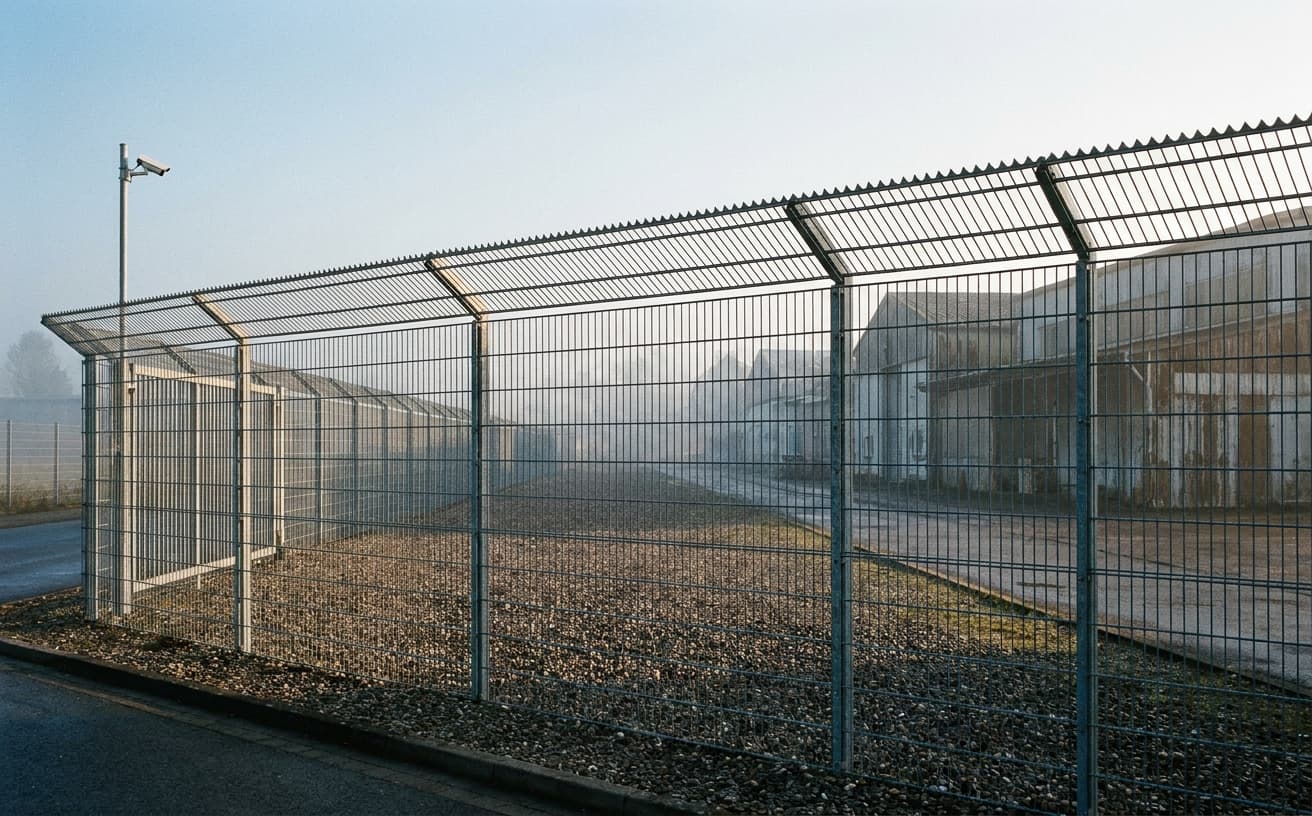
A physical-security estate is a platform or it is a collection of orphaned devices, and the difference shows up the day someone has to replace a module without rebuilding the whole stack.
Operators who run software at scale know what platform thinking buys them. Stable interfaces between components. Modules that can be added without disturbing the rest. Versioning that allows yesterday's installation to interoperate with tomorrow's release. Deprecation paths that are announced years in advance. The same logic applies to physical security, and the absence of it is the reason many security estates feel heavy, fragile, and expensive to evolve. The book BOSWAU + KNAUER. From Building to Security Technology describes this shift as the move from project-by-project integration to platform-based operation. The argument here extends that reading and applies it to the operator's view.
The misuse of the word platform
The word platform has been used so loosely in the security industry that its meaning has eroded. Vendors describe single products as platforms. Integrators describe collections of brands stitched together with custom code as platforms. Software-as-a-service offerings without published interfaces describe themselves as platforms. Almost none of these meet the technical definition.
A platform, in the sense that has made software durable for thirty years, has four properties. It exposes stable, documented interfaces. It separates the core from the modules so that modules can be developed independently of the core. It versions every interface so that compatibility can be reasoned about. And it publishes a deprecation policy so that operators know how long a given interface will be supported. The combination of these four properties is what allows a platform to outlive any individual module while continuing to deliver value.
Physical security has historically built systems in the opposite way. Access control, video, intrusion detection, perimeter sensing and command-and-control have been delivered as vertically integrated stacks, each from a different vendor, each with proprietary data structures, each requiring custom integration to talk to the others. The result is an estate that looks like a platform from a distance and behaves like a federation of islands up close. The cost of this architecture does not appear at procurement. It appears at every modernization cycle, when the operator discovers that replacing a single component requires touching half the estate.
The platform thinking that this article describes is not a marketing claim. It is an engineering discipline that operators can demand from their suppliers and that the better suppliers already practice. It draws on the same principles that IEC 62443 sets out for industrial automation systems, on the architectural guidance in NIST 800-53 for control families that span multiple subsystems, and on the segmentation logic in NIST CSF 2.0. Where it differs is in the directness of its application to the physical estate.
What a module is, and what it is not
A module is a unit of capability with a defined interface and a defined responsibility. It is not a product, not a vendor, not a project. The distinction matters because the language used in procurement often confuses these categories. An operator who buys a video product is not necessarily buying a video module. The product becomes a module only when its interfaces are documented in a way that allows other components to interact with it without bespoke integration.
In a well-constructed physical-security platform, the modules are organized along functional lines that map to operator workflows. Sensing modules cover the various ways the estate observes its environment, from cameras to thermal sensors to access readers to acoustic detection. Decision modules take the signals from sensing and apply rules, models or human judgment to produce events. Action modules translate events into outcomes, whether that means a door lock cycling, an audio challenge playing, a patrol being dispatched or a record being written to an evidence store. Identity, time and data modules provide the cross-cutting services that the functional modules depend on.
The discipline of separating these concerns is what allows the platform to evolve. A sensing module can be replaced without touching the decision logic, as long as the new module honors the interface. A decision module can be updated without recertifying every sensor, as long as the data contracts remain stable. The estate becomes an assembly of parts rather than a monolith, and parts can be replaced. This is the practical meaning of modularity. ASIS International publications on security program design have made similar arguments for years, framed in terms of program architecture rather than technical interfaces. The two views are compatible.
What modularity is not is a guarantee of best-of-breed performance in every category. A platform-minded operator accepts that the marginal sensor may not be the absolute market leader, in exchange for the assurance that any sensor in the catalog will interoperate without custom work. The trade is between local optimization and system durability, and over a ten-year horizon the platform side of the trade tends to win.
Interfaces, versions and the contract between modules
The interface is where the platform succeeds or fails. An interface is a contract that says what data will flow between two modules, in what format, under what conditions, and with what error semantics. When the contract is written, documented and respected, the modules on either side of it can be developed independently. When the contract is implicit, the modules become entangled and the platform property is lost.
The physical-security industry has historically been weak on interface discipline. Manufacturers have shipped devices that speak proprietary protocols, expose features only through their own management software, and treat their own product as the center of the operator's world. This was tolerable when an estate consisted of a handful of devices from one or two vendors. It is no longer tolerable in estates that span thousands of devices, multiple sites, multiple vendors and multiple generations of equipment. The cost of integration in such estates can exceed the cost of the equipment itself.
The corrective is to insist on published interfaces and on version management. Every interface the platform exposes should have a version number. Every change to that interface should be classified as additive, breaking or deprecating. Additive changes can be deployed without disrupting clients. Breaking changes require a parallel running of old and new for a stated period. Deprecating changes require advance notice, typically measured in years, before the old interface is withdrawn. These practices are routine in software platforms. They are achievable in physical-security platforms when the operator demands them in procurement and rejects offers that cannot provide them.
The benefit of interface discipline shows up across several dimensions. Integration costs drop because new modules can be onboarded against a documented contract rather than reverse-engineered from observed behavior. Upgrade cycles become predictable because the operator knows in advance which versions are compatible with which. Vendor concentration risk drops because the operator is no longer locked into a single supplier's roadmap. And the audit posture improves because data flows can be described, traced and verified against the contract. CISA guidance on operational technology security points in the same direction, emphasizing documented interfaces as a foundation for both security and resilience.
Deprecation, upgrades and the lifecycle the operator does not see
Every piece of equipment in a physical-security estate has a lifecycle, but most operators experience the lifecycle only at its endpoints. A device is purchased. Years later, it fails or becomes obsolete and is replaced. What happens between these two events, in terms of firmware updates, vulnerability patches, capability expansions and protocol changes, is often opaque. This opacity is one of the principal sources of risk in physical-security estates, because it is in this middle period that vulnerabilities accumulate and capabilities drift out of alignment with the operator's needs.
A platform-minded approach makes the lifecycle visible. Every module in the platform has a published support window during which the vendor commits to providing security updates and functional fixes. Every interface has a deprecation schedule that tells the operator when the current version will stop being supported and what the upgrade path looks like. Every firmware release is accompanied by release notes that distinguish security fixes from feature changes from breaking changes. This level of transparency is standard in serious software platforms and is achievable in physical-security platforms when the operator insists on it.
The upgrade discipline that follows from this transparency is what keeps the estate current without forcing periodic rip-and-replace projects. Modules are upgraded individually, on schedules that match their criticality and their support windows, against interfaces whose stability is guaranteed. The operator's planning horizon extends from the next budget cycle to the next decade, because the platform allows continuous evolution rather than punctuated obsolescence. ISO 27001 controls around asset management and change management map naturally onto this discipline. The German BSI guidance on lifecycle security for critical components reinforces the same approach.
The hidden benefit of disciplined deprecation is on the financial side. Capital expenditure becomes more predictable because the operator knows which modules are approaching end-of-support and can plan replacements in advance rather than reactively. Insurance discussions become easier because the estate can be described in terms of supported versus unsupported components, and the GDV statistics show that insurers respond favorably to estates that can demonstrate this kind of governance. Total cost of ownership drops because the alternative, which is letting the estate decay until a forced replacement, is always more expensive than continuous renewal.
The compatibility matrix and the work of documentation
A platform without documentation is a marketing claim. The work that turns the claim into reality is the compatibility matrix, a living document that records which modules work with which other modules at which versions, under which conditions, with which known limitations. This document is unglamorous, often invisible to the operator, and absolutely central to whether the platform delivers on its promise.
A compatibility matrix has several layers. The first records interface compatibility, which versions of each interface are supported by each module. The second records functional compatibility, which capabilities are available when given modules are combined, and which are not. The third records performance compatibility, the throughput and latency characteristics that hold when the combination is loaded to expected levels. The fourth records security compatibility, which configurations meet which control requirements under frameworks such as NIST CSF 2.0 or IEC 62443.
Maintaining a compatibility matrix is expensive. It requires testing, documentation, version control and a discipline of saying no to combinations that have not been validated. Vendors who skip this work shift the cost onto the operator, who discovers incompatibilities in production rather than at design time. The operator who values platform thinking will pay a premium for vendors who do this work and will discount offers from vendors who do not. Over the life of an estate, this premium is recovered many times over in avoided integration failures, avoided emergency replacements and avoided downtime.
The compatibility matrix is also what allows an operator to reason about change. Before introducing a new module, the operator can consult the matrix to see what else will be affected. Before upgrading an existing module, the operator can check which downstream modules will need attention. This kind of forward visibility is what distinguishes mature operations from reactive operations, and it is impossible without the documentation work that underlies it.
When the platform replaces the integration project
The clearest sign that a security estate has crossed from integration thinking to platform thinking is when changes that used to require projects become routine operations. Adding a new site no longer requires a six-month integration effort. Replacing a generation of cameras no longer requires retraining the operations team. Onboarding a new acquisition no longer requires a custom data-migration exercise. These activities become matters of configuration, performed against documented interfaces, with predictable outcomes.
This transition does not happen by itself. It requires the operator to make decisions that look conservative in the short term and that pay off over years. Choosing modules that conform to open interfaces over modules that perform marginally better in proprietary stacks. Insisting on documentation and compatibility matrices in procurement. Building internal capability to evaluate platform properties rather than just product features. Refusing to accept integration projects that produce one-off, undocumented connections between systems, because such connections become the technical debt of the next generation.
The economic case for this transition is strong but indirect. The operator who builds platform discipline does not see lower costs in year one. They see lower costs in years three, five and ten, when peers are caught in expensive replacement cycles and the platform-minded operator is performing routine upgrades. The NICB data on physical-asset crime shows that estates that can evolve continuously, that can deploy new countermeasures as threats shift, outperform estates that are locked into multi-year replacement cycles. The advantage compounds over time, and by the time it becomes visible, the gap is hard to close.
The platform approach is also what makes security defensible in front of boards and regulators. A platform can be described, audited and explained in terms of its modules, interfaces and lifecycle policies. An integrated estate of one-off connections cannot. As regulatory scrutiny of operational resilience increases, in the European NIS2 context and in equivalent frameworks elsewhere, the operators with platform discipline will find their compliance work straightforward, while the operators without it will find themselves rebuilding under pressure.
What holds
Platform thinking in physical security is not a technology choice. It is an organizational stance that values stable interfaces, documented modules, predictable lifecycles and continuous evolution over local optimization and project-driven integration. It costs more in the short term and pays off over a decade. It requires discipline from the operator and from the vendor, and it cannot be retrofitted onto an estate that was built without it. It can only be introduced through deliberate decisions, taken module by module, over years.
The operators who will look back on the next decade with satisfaction are the ones who started this work early, who treated their security estate as a platform from the moment the opportunity arose, and who insisted on the engineering discipline that makes platforms durable. The ones who treated their estate as a sequence of projects will find themselves perpetually behind, replacing what they should have evolved, paying for what they should have planned.
For operators who want to test where their estate stands on this spectrum, the three engagement paths set out in the book are available. Path I is a sixty-minute confidential conversation in which the platform question is examined against the specifics of the operator's estate. Path II is a three to five day audit that produces a written architectural assessment, including the compatibility and lifecycle posture of the existing estate. Path III is a ninety-day pilot in which a platform-shaped intervention is deployed at one site under defined success criteria. The audit is the natural starting point for operators who want to see their estate described in platform terms before deciding what to change.
Frequently asked questions
What does platform thinking mean in physical security?
Platform thinking treats the security estate as a set of modules connected by stable, documented interfaces, rather than as a collection of products integrated case by case. It requires four properties. Modules that can be developed and replaced independently. Interfaces that are versioned and documented. Lifecycles that are published with explicit support windows. Deprecation paths that are announced in advance. The result is an estate that can evolve continuously through small, predictable changes, rather than through periodic rip-and-replace projects. Frameworks such as IEC 62443 and NIST CSF 2.0 codify the same logic for adjacent domains.
How are modules added to a security platform?
Modules are added against the published interface contract, which specifies the data formats, error semantics and performance expectations that the module must honor. The operator validates the new module against the contract in a staging environment, confirms its behavior in combination with the existing modules via the compatibility matrix, and then deploys it into production according to a planned change procedure. The work is configuration rather than custom integration. When this process takes weeks instead of months, and produces predictable rather than surprising results, the platform is functioning as intended.
How is platform compatibility documented?
Compatibility is documented in a living matrix that records, for each pair of modules at each pair of versions, what works and what does not. The matrix covers interface compatibility, functional compatibility, performance compatibility and security compatibility. It is maintained by the platform owner, updated with every release, and made available to the operator as part of the platform documentation. Without this matrix, claims of compatibility are unverifiable. With it, the operator can reason about change before making it, which is the precondition for predictable operations and for compliance with standards such as ISO 27001.
When does a platform replace an integration project?
A platform replaces an integration project when the work of connecting a new component to the estate moves from custom engineering to documented configuration. The transition is visible operationally. New sites are onboarded in days rather than months. Module replacements happen without affecting downstream systems. Upgrades follow planned schedules rather than emergency responses. The transition is visible financially. Integration costs drop, capital planning becomes predictable, insurance discussions become easier. The transition does not happen at a moment in time. It happens module by module, over years of deliberate decisions, until the estate has crossed the threshold from project-driven to platform-driven.
Related topics
- Perimeter Security Systems: The Seven-Layer Model
- Layered Perimeter Security on an Industrial Site
- Mid-Market Industrial Security: The Cost of Waiting
- Industrial Fencing Standards: EN 1717, EN 1090 in Practice
- Can a Security Robot Replace a Guard? Five Honest Steps
- AI Video Models in the Gulf: Thobe vs. Suit
Take the next step: See prices & ROI · Explore the products · Send a no-obligation request. BOSWAU + KNAUER – direct from the factory in Filderstadt, reply within 5 working days.
About the author
Dr. Raphael Nagel (LL.M.) is founding partner of Tactical Management. He acquires and restructures industrial businesses in demanding market environments and writes on capital, geopolitics, and technological transformation. raphaelnagel.com
More reading
Since 1892.
The firm is reached at boswau-knauer.de or +49 177 2266267.