
Blog
Security Robots in Kuwait, Bahrain & Oman
KPSP Kuwait, NCSC Bahrain, NCSC Oman. The smaller GCC markets and where each is investing in physical security.

Dr. Raphael Nagel
July 26, 2025
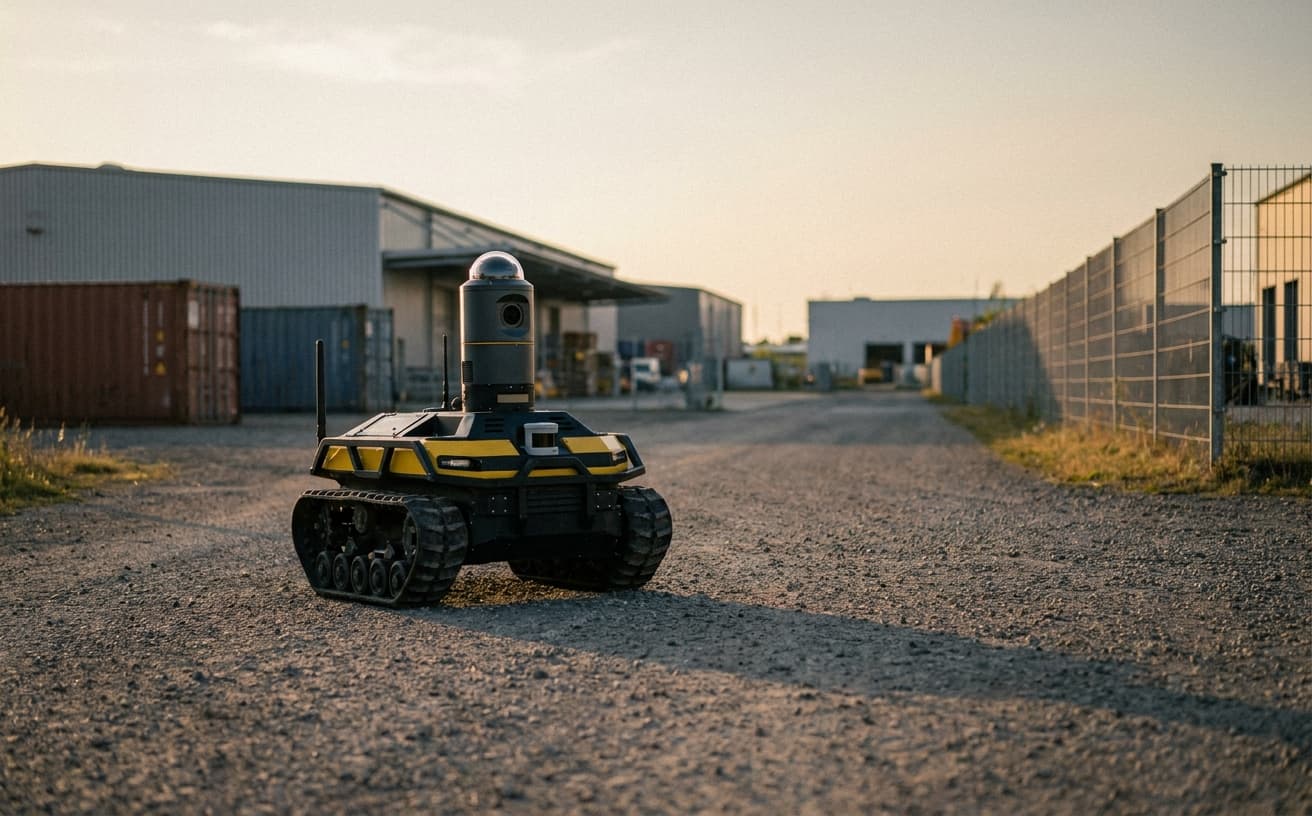
The smaller GCC markets are not a single market with three flags. They are three regulatory cultures, three procurement habits, and three different ideas of what a security robot is for.
The mistake European manufacturers make in this region is to read it through the lens of Saudi Arabia or the United Arab Emirates and assume that what works in Riyadh or Abu Dhabi will scale downward into Kuwait City, Manama and Muscat. It will not. The procurement logic is different, the regulator is different, the underwriting market is different, and the appetite for foreign hardware in security-relevant roles is different in each of the three. A manufacturer who treats Kuwait, Bahrain and Oman as a single weekend trip on the way to or from a larger Gulf engagement will lose all three. A manufacturer who treats them as three distinct projects, each with its own ministry chart and its own integrator shortlist, will find that the smaller markets are in some respects easier to enter than the larger ones, because the decision chain is shorter and the operator who matters is reachable.
Kuwait: the KPSP gatekeeper and the oil periphery
Kuwait runs its physical security policy through the Kuwait Police Security Permits department, known in the trade as KPSP, under the Ministry of Interior. Anyone who has tried to operate a CCTV system, an access control installation or an autonomous outdoor platform on Kuwaiti soil has met KPSP in some form, either directly or through an integrator who carries the licence. The agency is conservative in the operational sense, not the political one. It wants to see equipment lists, it wants to know who holds the data, it wants the storage retention period documented, and it wants the operator named. A security robot that records video, transmits it to a control room and stores it on a server is, in KPSP's reading, a CCTV installation with wheels. That framing matters because it determines which permits apply and which do not.
The other shaping force in Kuwait is the oil periphery. Kuwait Oil Company, Kuwait National Petroleum Company and the downstream entities of the Kuwait Petroleum Corporation are the most demanding physical security customers in the country, and they apply standards that draw on IEC 62443 for the operational technology side and on internal security manuals that resemble what one finds at Aramco or ADNOC. A security robot deployed on a KOC tank farm or on a KNPC refinery perimeter has to pass not only the KPSP permit logic but also the operator's own technical authority. The two reviews are not coordinated. They run in sequence, and a foreign manufacturer who clears one and assumes the other will follow is in for a surprise.
What makes Kuwait workable, despite this, is the presence of a small group of established integrators who carry both the KPSP relationship and the oil-sector references. The market is not crowded. Three or four integrators handle the majority of the high-value perimeter and surveillance work, and once a foreign manufacturer is on their shelf, the path to the end user is comparatively short. The barrier is getting onto that shelf, which requires either a demonstrated installation in another GCC state or a pilot that the integrator agrees to underwrite politically inside the ministry. Manufacturers without GCC track record should expect a longer entry curve in Kuwait than in Bahrain, but a more durable position once inside.
Bahrain: the NCSC, the financial centre, and the regulatory speed
Bahrain is the smallest of the three by population and the fastest of the three by regulatory turn. The National Cyber Security Centre, established in 2017 and operationally mature since around 2020, is the lead authority for cybersecurity, and it has built out a framework that touches physical security wherever physical security touches data. The NCSC has aligned much of its guidance with ISO 27001 and with elements of the NIST Cybersecurity Framework, and its recent updates show the influence of NIST CSF 2.0 thinking, particularly on the governance function. A security robot operating in Bahrain that processes video, runs inference on the edge, transmits telemetry to a cloud, and feeds an incident management workflow falls inside the NCSC's interest, even if no traditional information system is involved.
The Central Bank of Bahrain adds a second layer for any manufacturer selling into the financial sector, which is a more significant share of the addressable market in Bahrain than in either Kuwait or Oman. Bahrain hosts a deep cluster of regional and international banks, and the physical security of their premises, data centres and cash handling facilities is regulated through CBB rulebooks that read like a financial-services dialect of ISO 27001 with explicit physical controls layered on top. A robot patrolling a bank data centre car park in Manama needs to fit into a vendor risk regime that the bank's compliance office understands. ASIS International guidance on protective operations is recognised here, more so than in some neighbouring markets, and a manufacturer who can map product features to those reference frameworks moves faster.
The advantage of Bahrain is regulatory speed. The NCSC processes faster than its larger neighbours, the integrator market is small enough that a foreign manufacturer can meet the relevant players in a single visit, and the kingdom has historically been used by international vendors as a regional proving ground because pilot deployments can be set up and evaluated in months rather than quarters. The disadvantage is volume. Bahrain alone does not justify a country strategy. It justifies a regional hub posture in which Bahrain is the first deployment and the case study that opens conversations in Kuwait, Oman, Saudi Arabia and beyond. Manufacturers who understand this use Bahrain accordingly. Those who do not, treat it as a small market and underinvest, and lose the strategic value the kingdom actually offers.
Oman: the NCSC, the ports, and the cautious procurement
Oman runs its national cybersecurity policy through its own National Cyber Security Centre, distinct from Bahrain's despite the shared acronym, and embedded under the Ministry of Transport, Communications and Information Technology. The Omani NCSC has been building out its framework progressively since the late 2010s, drawing on ISO 27001, on selected NIST 800-53 controls, and on guidance that resembles the BSI Grundschutz approach in its appetite for documented baseline measures. The regulatory posture is methodical rather than fast. A manufacturer who arrives in Muscat expecting Bahrain's turnaround time will misread the room. A manufacturer who arrives expecting a long, careful conversation in which references and documentation matter more than demonstrations will find Oman one of the most rational counterparts in the region.
The physical security demand in Oman concentrates around three clusters. The first is the energy sector, where Petroleum Development Oman and the LNG operators run perimeter and asset protection programmes that increasingly include robotic and mobile video components. The second is the port and logistics cluster, with Sohar, Salalah and Duqm developing as gateways that connect Indian Ocean trade to the Gulf and onward to Europe. Duqm in particular, as a special economic zone with significant Chinese and Omani investment, has procurement dynamics that differ from the rest of the country. The third is the government and ministerial estate in Muscat, which is the most conservative buyer and the slowest to admit foreign autonomous platforms into sensitive perimeters.
Insurance and underwriting in Oman remain shaped by a small number of domestic carriers reinsuring with international names. The discount logic that a manufacturer can build into a commercial case is real but modest. References from Petroleum Development Oman or from one of the major port operators carry more weight in the conversation with a government buyer than any European certificate, because the Omani procurement culture trusts the judgement of operators it knows. A manufacturer who can secure one such reference and document it carefully has built the asset that opens the rest of the market. The book BOSWAU + KNAUER. From Building to Security Technology argues this point in the broader Gulf context, and Oman is the market where it is most visibly true.
Three regulators, three procurement cultures, one regional architecture
Comparing the three regulators side by side clarifies what a manufacturer must do differently in each. KPSP in Kuwait reads physical security through a policing lens. The questions it asks are about who operates the equipment, who holds the recordings, and what permits the integrator carries. NCSC Bahrain reads physical security through a cybersecurity and data-governance lens. The questions it asks are about data flows, retention, encryption, and alignment with international standards. NCSC Oman reads physical security through a baseline-controls lens with a procurement-discipline overlay. The questions it asks are about documentation, references, and whether the proposed system fits into a long-term operational logic the ministry can sustain.
These three lenses are not incompatible. A manufacturer who has built a product that satisfies ISO 27001, that maps cleanly to NIST CSF 2.0 functions, that has been engineered with IEC 62443 in mind for industrial deployments, and that ships with the kind of documentation a German Grundschutz audit would accept, has done most of the technical work for all three jurisdictions. What changes is the conversation, the order in which evidence is presented, and the integrator who carries the relationship. In Kuwait, the integrator is gatekeeper to KPSP. In Bahrain, the integrator is often a systems house that already speaks NCSC's language and can sponsor a foreign product through its review. In Oman, the integrator is frequently an extension of the end operator, particularly in the energy and ports sectors, and the conversation is therefore more direct between manufacturer and operator than in the other two.
The regional architecture that emerges from this is not three separate countries. It is one technical product specification, three regulatory presentations of it, and three integrator relationships that have to be built in parallel rather than in sequence. A manufacturer who tries to enter Kuwait first and then Bahrain and then Oman will discover that the markets do not wait for each other. The references travel, but the relationships do not transfer. Each country must be staffed, even if the staffing is light.
Free zones, customs, and the practical question of where the robot lives
A practical question that determines the cost of operating in these markets is where the equipment is physically held. Bahrain offers the Bahrain Logistics Zone and the Bahrain International Investment Park, both of which allow foreign-owned entities to hold and configure equipment with relatively light customs friction. Oman offers Duqm, Salalah Free Zone and Sohar Free Zone, each with its own incentive package and each better suited to particular operational profiles. Kuwait has historically been the most restrictive of the three on free-zone access for foreign-owned security equipment, though changes in the broader investment climate are slowly opening this.
For a European manufacturer, the practical implication is that a regional spare-parts depot and a configuration facility are most economically held in Bahrain or in one of the Omani free zones, with deployments shipped from there into Kuwait through the integrator's import channel. This avoids the worst of the Kuwaiti customs friction without sacrificing the Kuwaiti market. It also means that the regional engineer who supports all three markets can be based in Manama or in Muscat without losing reach into Kuwait, since the flight times are short and the regulatory documentation can travel ahead of the engineer.
The underwriting picture follows a similar logic. The major regional reinsurers, working through local carriers in each country, are more willing to write favourable terms on a physical security deployment when the equipment is supported from a regional depot than when it ships in from Europe for each call-out. The GDV-aligned discipline that a European manufacturer brings to its documentation translates well into the local underwriting conversation, but only if the manufacturer is operationally present in the region. Distance is the enemy of underwriting confidence. NICB-style asset tracking practices, while developed for a different market, find an audience here among insurers who want to see that the equipment itself is protected against theft and diversion, particularly in the higher-value robotic and mobile video tower categories.
What holds
Kuwait, Bahrain and Oman are not a single market and should not be addressed as one. KPSP in Kuwait, NCSC Bahrain, and NCSC Oman each ask different questions, each trust different references, and each move at a different speed. A manufacturer who builds one product to international standards and three regional presentations of it can enter all three. A manufacturer who builds one regional pitch and three sales calls will enter none of them durably.
The book that frames this argument, BOSWAU + KNAUER. From Building to Security Technology, sets out the proposition that physical security technology has to be built by manufacturers who have themselves been operators, and that the same discipline applies whether the deployment is in Hamburg, Muscat or Manama. The smaller GCC markets reward that discipline because their procurement cultures are old enough to recognise it and small enough that an operator who has it is visible quickly.
For manufacturers and operators considering an entry into these three markets, the appropriate starting point is the sixty-minute confidential conversation described as Path I in the book. It is the lowest-cost way to test whether the regional architecture sketched here applies to a specific product and a specific operator profile, before any audit or pilot is scoped.
Frequently asked questions
How do the three regulators differ?
KPSP in Kuwait reads physical security through a policing lens and concentrates on permits, operator identity, and data custody. NCSC Bahrain reads it through a cybersecurity and data-governance lens, aligned with ISO 27001 and NIST CSF 2.0 thinking, and is the fastest-moving of the three. NCSC Oman reads it through a baseline-controls and procurement-discipline lens, drawing on ISO 27001 and selected NIST 800-53 controls, and moves methodically. A single product specification can satisfy all three, but the presentation, documentation order, and integrator relationship must be tailored country by country.
Which market is friendliest to imports?
Bahrain is the most import-friendly of the three for security technology, with a regulatory turn that runs in months rather than quarters and an integrator market small enough to be navigated in a single visit. Oman is methodical but rational, with free-zone access at Duqm, Salalah and Sohar that supports regional equipment holding. Kuwait is the most procedurally demanding, with KPSP gating most deployments and a smaller set of integrators carrying the relationships. Most European manufacturers find Bahrain the appropriate first deployment and Kuwait the most rewarding once the integrator relationship is in place.
What free-zone access exists?
Bahrain offers the Bahrain Logistics Zone and the Bahrain International Investment Park. Oman offers Duqm Special Economic Zone, Salalah Free Zone, and Sohar Free Zone, each with distinct incentive packages and operational profiles. Kuwait has historically been more restrictive on free-zone holding of security equipment, though reforms are gradually opening this. For a European manufacturer operating across all three markets, holding regional spares and configuration capability in Bahrain or in one of the Omani zones, and supplying Kuwait through the integrator's import channel, is the most economical operational pattern.
Who underwrites in these markets?
Each country has its own carriers, with the larger regional names present across all three, and most policies are reinsured into international markets through London, continental Europe, or Singapore. The underwriting conversation in all three markets is influenced by GDV-aligned documentation standards and by ASIS International protective operations guidance. Insurers respond favourably when the manufacturer maintains a regional support presence and when robotic and mobile video assets are themselves tracked using practices comparable to NICB-aligned approaches. Distance from the asset is the enemy of underwriting confidence in this region, more so than in Europe.
Related topics
- Security Robots in the UAE: SIRA Licensing
- Security Robots in Smart Districts: Msheireb Doha
- Security Robots in the Aramco Supply Chain
- All-Weather Security Robots: What Outdoor Rated Means
- Knightscope's K5 Was a UX Miracle and an ROI Tragedy
Take the next step: See prices & ROI · Explore the products · Send a no-obligation request. BOSWAU + KNAUER – direct from the factory in Filderstadt, reply within 5 working days.
About the author
Dr. Raphael Nagel (LL.M.) is founding partner of Tactical Management. He acquires and restructures industrial businesses in demanding market environments and writes on capital, geopolitics, and technological transformation. raphaelnagel.com
More reading
Since 1892.
The firm is reached at boswau-knauer.de or +49 177 2266267.