
Blog
Spanish Ley PIC vs Portuguese RNSCC Compared
Ley PIC Spain, RNSCC Portugal and the ANSSI parallel. Two Iberian critical-infrastructure regimes compared side by side, from designation to reporting duties.

Dr. Raphael Nagel
November 30, 2025
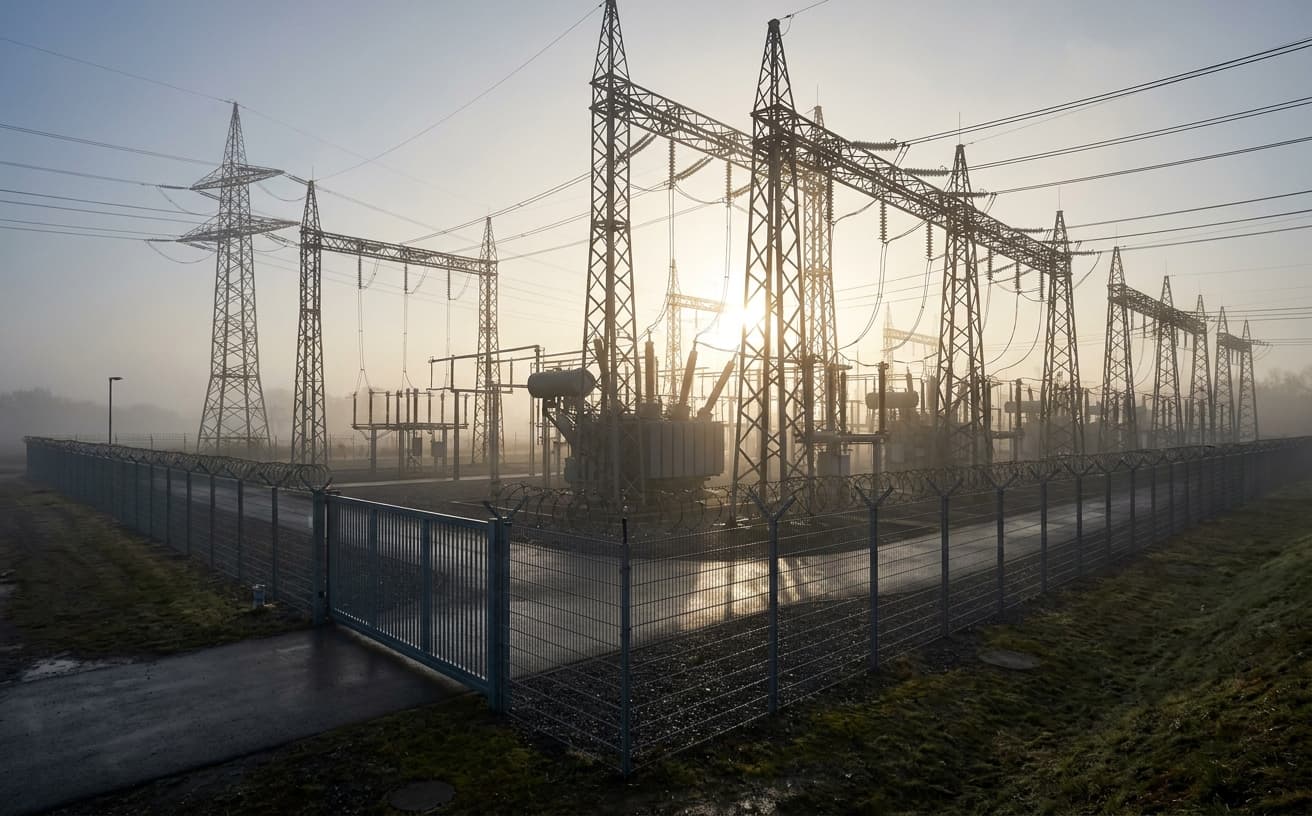
The Iberian peninsula operates two regimes for critical infrastructure that look related on paper and behave differently in practice. Spanish Ley 8/2011 (Ley PIC) and the Portuguese Regime Nacional de Segurança do Ciberespaço (RNSCC), together with the operator obligations transposed under the NIS framework, share European parentage. They do not share temperament.
Operators with assets in Madrid, Lisbon, Tarragona and Sines tend to discover this only when their first cross-border audit lands. The Spanish regime is formal, designation-driven, and built around an Operator Security Plan and a Specific Protection Plan that must be reviewed and approved by the Centro Nacional de Protección de Infraestructuras y Ciberseguridad (CNPIC). The Portuguese regime, anchored by the Centro Nacional de Cibersegurança (CNCS) and the Gabinete Nacional de Segurança, leans toward a lighter touch in documentation and a harder touch in incident reporting cycles. Both pull from the same European sources, ENISA guidance, the NIS2 transposition, and the European Critical Entities Resilience Directive, but the national interpretation diverges in ways that matter at the gate, in the control room, and in the boardroom.
The legal architecture, side by side
Ley 8/2011 of 28 April established the Spanish framework for the protection of critical infrastructures. Royal Decree 704/2011 added the implementing regulation. Together they create twelve strategic sectors, a National Catalogue of Strategic Infrastructures (a classified register held by CNPIC), and a designation procedure under which the Secretary of State for Security identifies Critical Operators and Critical European Operators. Designation is not a formality. It triggers obligations that cascade downward into asset-level Specific Protection Plans, named Security Liaison Officers, named Security Directors, and continuity obligations that must withstand inspection by CNPIC and the Civil Guard or National Police, depending on jurisdiction.
The Portuguese architecture rests on different load-bearing walls. Decree-Law 65/2021 transposed the NIS Directive and consolidated the role of CNCS as the national cybersecurity authority. The RNSCC structure separates the operator of essential services regime, the digital service providers regime, and the public administration network. The Portuguese state also operates the SIRP intelligence framework and the Autoridade Nacional de Emergência e Proteção Civil for physical resilience. There is no single Portuguese statute that mirrors Ley PIC in scope. There is, instead, a layered system in which cyber and physical obligations are handled by different bodies with explicit coordination protocols.
The practical consequence for an operator running both a Spanish refinery and a Portuguese port terminal is that the same incident may need to be reported, documented and remediated through two different chains of command, with different timelines and different evidentiary expectations. Spain expects the Operator Security Plan to anticipate the incident class. Portugal expects the incident to be reported within strict windows under CNCS rules, with less emphasis on the upstream planning artefact. Neither approach is wrong. They are simply not interchangeable.
Designation, scope and the question of who is in
In Spain, designation is the gate. An operator is not subject to Ley PIC obligations until CNPIC has formally designated it as a Critical Operator and has identified the specific infrastructure as critical. The catalogue is not public. Operators are notified bilaterally and are bound by classification rules from that point forward. The scope of designation is asset-specific: a single energy company may have three critical infrastructures and seven non-critical sites, and the obligations attach only to the three. The asset-level Specific Protection Plan must be lodged within four months of designation and reviewed every two years, or sooner if circumstances change materially.
In Portugal, the perimeter is drawn differently. Under the NIS transposition, operators of essential services are identified by sector and threshold, with criteria published in regulatory acts. Sectors covered include energy, transport, banking, financial market infrastructure, health, drinking water, and digital infrastructure. The Portuguese list is closer to a published taxonomy than to a classified catalogue. An operator that crosses a threshold becomes an obligated entity; there is no separate ceremonial designation. The administrative friction is lower at the front end. The compliance burden is comparable once inside.
The French ANSSI model offers a useful third reference point because it sits between the two. France operates the Opérateurs d'Importance Vitale (OIV) regime under the Code de la défense, which is designation-driven like Spain, and the Opérateurs de Services Essentiels (OSE) regime under the NIS transposition, which is threshold-driven like Portugal. French operators live with both layers simultaneously. Iberian operators with French exposure already understand the duality. Those who do not yet have French exposure will, when the Critical Entities Resilience Directive completes its national transpositions, find themselves operating under a similarly dual logic in Spain itself.
Physical security obligations and how they read on the ground
Ley PIC, by design, integrates physical and logical security under a single Operator Security Plan. The Plan must address governance, risk analysis, asset criticality, dependencies, protection measures (including perimeter, access control, video surveillance, intrusion detection, and incident response), and continuity. The Specific Protection Plan operationalises this at each designated asset. The Spanish regulator expects to see named roles, named procedures, and named technologies. References to ISO 27001 and IEC 62443 are accepted as supporting evidence but do not substitute for the Plan itself. CNPIC inspectors read the documents. They also walk the perimeter.
Portuguese practice places less weight on a single integrating document and more weight on demonstrable controls measured against the CNCS Quadro Nacional de Referência para a Cibersegurança, which maps closely to NIST CSF 2.0. For physical security at critical sites, the operator is expected to comply with sector-specific regulation (for example, ISPS Code at ports, ICAO Annex 17 at airports, ERSE rules in electricity) and with general norms on private security. ASIS International guidance and ISO 28000 for supply chain security are common reference frames. The Portuguese inspector is more likely to ask for evidence of operation, the last twelve months of incident logs, the last quarterly drill, the access control audit trail, than for the master plan that ties everything together.
Operators who manufacture their security posture rather than purchase it have an advantage in both jurisdictions. A Spanish refinery that runs an integrated perimeter, with autonomous patrol assets, layered video analytics, and an operator-controlled command structure, produces the documentary evidence Ley PIC asks for as a by-product of operation. A Portuguese port terminal with the same architecture produces the operational evidence CNCS asks for in the same way. The same technology stack, properly deployed, satisfies both regimes because it satisfies the underlying risk logic both regimes are trying to articulate.
Incident reporting, timelines and the cost of delay
This is where the two regimes diverge most sharply in operational consequence. Under the Spanish framework, incidents affecting critical infrastructure must be reported to CNPIC and, where cyber-related, to the national CSIRT. The Operator Security Plan defines the threshold and the channel. Reporting is structured and document-heavy. The expectation is that the operator already has a runbook, executes it, and reports through it.
The Portuguese framework under CNCS operates on tighter clock-based windows derived from the NIS transposition and now reinforced under NIS2. Initial notification of significant incidents is required within twenty-four hours of awareness. An intermediate report follows within seventy-two hours. A final report is due within one month. The clock is unforgiving and the reporting interface is operational, not ceremonial. Operators who treat the first notification as a drafting exercise miss the window.
For operators running both jurisdictions, the practical answer is to align internal incident classification with the stricter of the two timelines and to design reporting workflows that produce both the Spanish documentary artefact and the Portuguese clock-based notification from the same internal trigger. This is not a regulatory preference. It is an engineering choice about how the security operations centre is built. Manufacturers who supply only equipment, with no integration into the reporting workflow, leave the operator to bridge that gap manually, at the worst possible time.
Audit, inspection and the question of who knocks
CNPIC inspects in Spain. Inspections are scheduled, announced, and document-led. The inspector arrives with the Operator Security Plan in hand and works through it. Unannounced visits occur but are the exception. The Civil Guard and National Police support physical security verification under their respective territorial competences. Sanctions under Ley PIC are administrative and can reach significant amounts for serious infractions, with the additional consequence that designation status carries reputational weight in public procurement.
CNCS in Portugal operates inspections that are more frequently cyber-led and frequently triggered by incident reporting. The Autoridade Nacional de Segurança Rodoviária and sectoral regulators (ERSE for energy, ANAC for aviation, IMT for transport) conduct the physical-side inspections within their competences. The Portuguese sanctioning regime under the NIS transposition is structured around fines that scale with the severity of non-compliance and the size of the operator, in line with NIS2's harmonised approach.
Both jurisdictions share an underlying expectation that the operator can produce evidence on demand. The German BSI model and the French ANSSI model raise the bar further on documentation depth; the Iberian models sit slightly below those benchmarks but are converging upward as NIS2 and CER transposition continue. The book BOSWAU + KNAUER. From Building to Security Technology addresses, in its chapter on industry and logistics, the underlying point: an inspection is not an event to prepare for, it is a state to operate in. The operators who treat audit readiness as a continuous condition rather than a periodic project are the operators who pass without strain in both Madrid and Lisbon.
Cross-compliance and what holds in practice
Most Iberian industrial operators of any scale already operate ISO 27001 and IEC 62443 at the OT layer, with NIST CSF 2.0 as the common framework for board-level reporting. NIST 800-53 control families are referenced where US partnerships or insurance relationships require them. ASIS International guidance covers private security operations. The GDV loss-prevention norms from Germany surface in insurance discussions even outside Germany because of the way European industrial cover is syndicated. The NICB in the United States and equivalent industry data sources inform loss-trend benchmarking.
A cross-compliance architecture that holds in both Spain and Portugal rests on three observations. First, the underlying risk catalogue is the same. The threats to a chemical terminal in Algeciras and a chemical terminal in Sines do not differ because of the border. Second, the documentary outputs differ in form but converge in substance. A well-built Operator Security Plan satisfies most of what CNCS asks for if it is operationalised; a well-built CNCS-aligned operations record satisfies most of what CNPIC asks for if it is consolidated into a Plan structure. Third, the technology layer is portable. Autonomous perimeter patrol, layered video analytics with edge processing, redundant communications, and integrated incident workflows work the same in both jurisdictions because they answer the same physics.
What holds
The two Iberian regimes are not a problem to be solved. They are two articulations of a single European trajectory toward continuously demonstrable resilience. The operators who treat them as administrative obstacles will spend the next regulatory cycle re-papering. The operators who treat them as design constraints on their security operations will find that the same investment satisfies both, and the next one, and the one after that.
Ley PIC and the RNSCC will continue to evolve. NIS2 transposition is reshaping incident reporting timelines in both countries. The Critical Entities Resilience Directive will add a physical-resilience layer that Spain will absorb through Ley PIC's existing architecture and Portugal will absorb through a new instrument. The direction of travel is clear. The variance is in tempo and form, not in substance.
Operators with assets in both jurisdictions should treat the next twelve months as the window in which to consolidate. A three to five day audit (Path II in the working method described in BOSWAU + KNAUER. From Building to Security Technology) produces the documentary baseline and the gap analysis that lets the Spanish and Portuguese obligations be served from a single operational architecture. A ninety-day pilot at one designated site, run under both regimes' reporting logic, demonstrates the model. The alternative, parallel compliance projects run by separate teams in each country, has been tried. It is expensive, it produces inconsistent artefacts, and it leaves the operator exposed at the seams.
Frequently asked questions
How does Spanish PIC differ from Portuguese RNSCC?
Ley PIC is designation-driven, document-led and integrates physical and cyber under a single Operator Security Plan approved by CNPIC. The RNSCC framework, anchored by CNCS, is threshold-driven, more cyber-weighted in its central instrument, and relies on sectoral regulators for physical resilience. Spanish designation triggers asset-specific obligations through Specific Protection Plans; Portuguese coverage attaches automatically when sector thresholds are crossed. Incident reporting in Portugal operates on the NIS-derived twenty-four, seventy-two hour and one-month clock. Spanish reporting is structured through the Plan. Both regimes converge under NIS2 and the Critical Entities Resilience Directive.
Which is stricter?
Neither is uniformly stricter. Spanish Ley PIC is stricter at the planning layer: the Operator Security Plan and Specific Protection Plan are demanding documents, reviewed by CNPIC, with biennial revision cycles and explicit named-role requirements. Portuguese RNSCC is stricter at the incident reporting layer, with shorter clock-based windows that begin at awareness, not at confirmation. An operator that prefers documentary discipline finds Spain easier. An operator with a mature security operations centre and fast internal escalation finds Portugal easier. Operators running both should align internally to the stricter of each layer.
How do operators cross-comply?
Cross-compliance starts with a single risk register and a single control catalogue mapped against ISO 27001, IEC 62443, and NIST CSF 2.0. From that base, the Spanish Operator Security Plan and the Portuguese CNCS-aligned operational record are produced as derivative artefacts, not as parallel projects. Incident workflows are designed to the Portuguese twenty-four-hour clock; documentary outputs are structured to Ley PIC review cycles. Technology choices, perimeter, video analytics, autonomous patrol, integrated reporting, are portable across both jurisdictions. The audit (Path II) produces the consolidated baseline. A ninety-day pilot validates the model under live conditions.
Who audits each?
In Spain, CNPIC leads inspection of critical operators under Ley PIC, supported by the Civil Guard and National Police on physical-security verification within their territorial competences. Sectoral regulators (CNMC for energy, AESA for aviation) handle sector-specific audit. In Portugal, CNCS leads cybersecurity supervision under the NIS transposition; sectoral regulators (ERSE, ANAC, IMT) handle physical and operational audit within their competences. The Gabinete Nacional de Segurança coordinates classified-information aspects. Both jurisdictions cooperate with ENISA at the European level and align increasingly under NIS2's harmonised supervisory framework.
Related topics
- UAE Incident Reporting: The 72-Hour Reality for Operators
- NIST 800-53 Physical Controls: What Every CISO Mistranslates
- Critical Infrastructure in Italy: ACN & Real Mandates
- The EU CER Directive: Physical Resilience Is Now Law
- UK Energy CNI: ESO, National Grid & Substation Attacks
Take the next step: See prices & ROI · Explore the products · Send a no-obligation request. BOSWAU + KNAUER – direct from the factory in Filderstadt, reply within 5 working days.
About the author
Dr. Raphael Nagel (LL.M.) is founding partner of Tactical Management. He acquires and restructures industrial businesses in demanding market environments and writes on capital, geopolitics, and technological transformation. raphaelnagel.com
More reading

Since 1892.
The firm is reached at boswau-knauer.de or +49 177 2266267.