
Blog
Critical Infrastructure UAE: TDRA, NESA & the Regulator Map
TDRA, NESA replaced by CSC, federal vs emirate split. The actual map of who governs what in UAE physical security.

Dr. Raphael Nagel
May 4, 2025
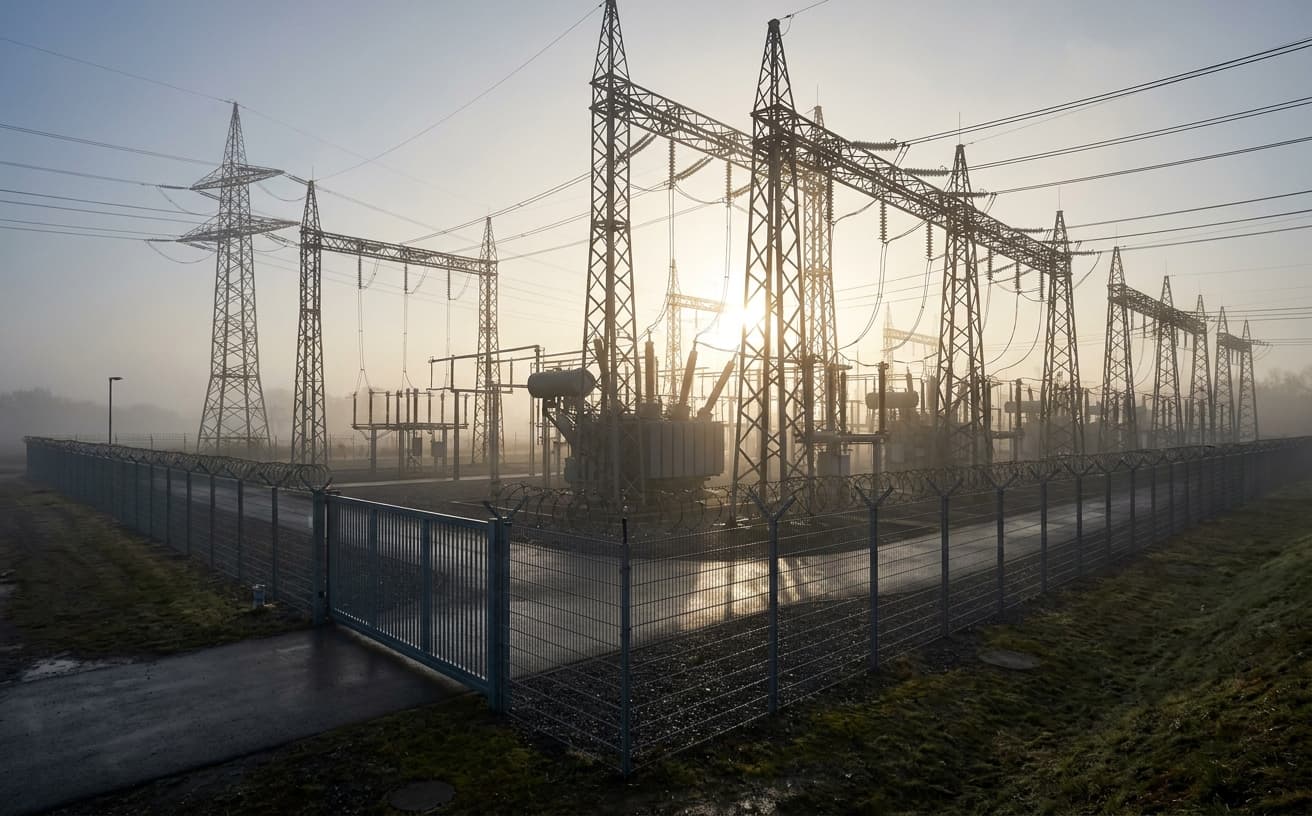
The United Arab Emirates does not have one critical infrastructure regulator, and the operators who plan as if it did discover the mistake during the first incident report, not before.
The federation runs seven emirates with overlapping authorities, a federal cybersecurity council that absorbed the older national authority, a telecommunications regulator that has grown into a digital governance body, and emirate-level entities in Abu Dhabi and Dubai that hold independent mandates over their own utilities, transport assets, and economic zones. The result is not chaos. It is a layered map, and the map is readable, but only for operators who take the time to read it. For everyone else, the cost shows up as duplicated audits, contradictory technical specifications, and contracts that name the wrong authority as the point of escalation.
TDRA: From Telecoms to Digital Governance
The Telecommunications and Digital Government Regulatory Authority, known as TDRA, began as the federal telecoms regulator and now sits at the centre of the UAE's digital infrastructure agenda. Its mandate covers spectrum, numbering, the federal network, the smart government programme, and a growing portfolio of standards that touch any operator running connected systems on UAE territory. For physical security operators this matters because almost every modern installation, whether a perimeter sensor grid, an IP camera estate, an access control system, or a robotics platform, terminates in a telecommunications dependency that TDRA either licenses, regulates, or specifies.
TDRA's role in critical infrastructure is indirect but pervasive. It does not declare a power station to be critical. It does declare the radio frequencies that the power station's SCADA telemetry runs on, the standards under which the operator's wireless intrusion detection must operate, and the licensing regime for any drone the operator wants to fly over its own fence line. Operators who treat TDRA as a telecoms matter, to be handled by the IT department or an outsourced integrator, miss the point. TDRA is increasingly the gatekeeper for the spectrum, the device certification, and the data residency requirements that determine whether a security installation is legal in the first place.
The Authority has also taken on a coordinating role across federal digital government, which means that any operator delivering services into a federal entity, including a federal critical infrastructure operator, will sooner or later face TDRA's standards on identity, on data exchange, and on the security baseline expected of connected systems. NIST CSF 2.0 and ISO 27001 are increasingly invoked as the reference frameworks against which the local standards are mapped, which gives international operators a translation layer. The translation is not automatic. Local interpretation matters, and the local interpretation is TDRA's to make.
For a security operator entering the UAE, the practical consequence is that TDRA appears in the compliance scope before any of the obvious critical infrastructure regulators do. Spectrum approval for a wireless sensor, type approval for a body-worn camera, data classification for a video archive, all of these are TDRA matters. The federal regulators with the louder names come later in the sequence. The telecoms layer comes first.
NESA, CSC, and the Reorganisation of Cyber Authority
The National Electronic Security Authority, NESA, was for years the reference point for any conversation about critical infrastructure cybersecurity in the UAE. Its information assurance standards shaped the way operators in energy, water, transport, and finance specified their security controls. In 2020 the federal structure changed. The UAE Cybersecurity Council, CSC, was established under the chairmanship of the Head of Cyber Security for the federal government, and the centre of gravity moved. NESA's functions have been absorbed and reorganised under the new federal cyber architecture, with the Cybersecurity Council setting national strategy and the operational mandate distributed across federal entities that report into the Council's framework.
The reorganisation matters because operators who still write NESA into their contracts, their internal policies, or their vendor scopes are referencing an authority whose role has been restructured. The standards NESA issued are not void. The information assurance baseline that NESA built is the foundation on which the current federal cyber posture rests, and the technical content remains the working reference for most operators. What has changed is the institutional address. Audit findings, incident reports, and strategic engagement now route through the Cybersecurity Council and the federal entities aligned with it. Contracts that name the wrong recipient slow down the response when speed matters.
The Cybersecurity Council has aligned the national posture more visibly with international frameworks. References to NIST 800-53 control families, to ISO 27001 management systems, and to IEC 62443 for industrial control environments are common in the working documents that operators receive from federal counterparts. This is not unique to the UAE. It is the same pattern that CISA, the BSI in Germany, and equivalent bodies follow internationally. The convergence on a common reference vocabulary reduces friction for operators with multinational footprints, provided they understand which local body holds the interpretive authority.
For physical security specifically, the cyber reorganisation has a direct consequence. Modern physical security is a cyber-physical discipline. A robot patrolling a substation is a networked asset. A video tower streaming to a control room is a networked asset. A perimeter sensor running on a wireless mesh is a networked asset. Each of these falls into the scope of the federal cyber baseline the moment it connects, and the operator who deploys them must be able to demonstrate that the connection meets the standard. The standard is now owned by the Council and its aligned entities, not by the authority whose name still appears in older specifications.
The Federal Split: Where the Federation Holds Authority and Where It Does Not
The UAE is a federation, and the constitutional division between federal competences and emirate competences is the single most important fact for any operator mapping its regulatory exposure. The federal level holds clear authority over telecommunications, federal cybersecurity strategy, currency, foreign affairs, and a defined set of sectors. Emirates hold authority over land, over local utilities in their territory, over local economic zones, and over the local police and civil defence forces that show up first when an incident is reported.
In practice, this means that a federal critical infrastructure operator, for example one running federal energy assets or operating under a federal mandate, deals primarily with federal regulators and with the Cybersecurity Council. A utility operating only within Abu Dhabi, by contrast, deals with the Abu Dhabi-level regulators, including the Abu Dhabi Department of Energy for electricity and water, the relevant Abu Dhabi security agencies for cyber and physical security oversight, and the local civil defence for fire and life safety. A logistics operator inside DP World's Jebel Ali Free Zone in Dubai deals with the free zone's own authority, with Dubai-level regulators, and with the federal layer for the cross-cutting matters.
The map is not chaotic, but it is dense. Operators who plan a UAE entry on the assumption of a single federal counterpart misread the geography. The correct question at the start of every project is not what does the UAE require, but what does this asset, in this emirate, on this site, under this ownership, require. The answer is rarely a single authority. It is usually three or four, layered, with overlapping technical scopes and non-overlapping legal mandates.
For physical security operators this has a specific implication. A standardised security architecture, deployed across multiple emirates, will face different approval pathways in each one. A camera type approved by TDRA at the federal level still needs to pass the local civil defence inspection in the emirate of installation. A robotics platform certified at the federal level for spectrum may still require a local operating permit from the emirate authority that controls the site. The work of obtaining these permits is not trivial, and it is not work that can be done from outside the country. It is work that requires a local partner with standing in each emirate where the asset is deployed.
This is the structural reason why a serious UAE security strategy cannot be built on a single point of contact. It is also the reason why operators who have invested in mapping the layered authority structure, and in building relationships at each layer, hold a durable advantage over competitors who treat the UAE as a single market.
ADNOC, DEWA, and the Operator-Level Sub-Regulators
Beneath the federal and emirate authorities sits a third layer that is often underestimated in regulatory maps: the major operators themselves. ADNOC in Abu Dhabi, DEWA in Dubai, the major airports, the major ports, and the major free zones each operate their own security and assurance regimes that function as de facto sub-regulators for the vendors and contractors who work with them. A vendor supplying physical security equipment to ADNOC works to ADNOC's specifications, which are aligned with but not identical to the federal baseline. The same vendor supplying DEWA works to DEWA's specifications, which are aligned with but not identical to Dubai's emirate-level baseline.
These operator-level regimes are not bureaucratic overhead. They reflect the reality that the largest operators in the UAE have security risk profiles that exceed any generic regulatory minimum. ADNOC operates upstream and downstream assets that sit at the intersection of national economic interest and international energy markets. DEWA runs a grid and a water network for an emirate whose population doubles by daytime through commuter flows. The major free zones host concentrations of logistics, manufacturing, and increasingly data infrastructure that have their own threat surface. Each of these operators has built an internal standards regime that goes beyond the regulatory floor, and any supplier working with them must work to those standards.
For physical security operators, this means that the audit map for a UAE-wide programme has at least three layers: the federal regulatory layer, the emirate regulatory layer, and the operator-specific layer. Each layer issues its own specifications, its own qualification requirements, and its own incident reporting obligations. The operator-specific layer is often the most demanding in technical terms, because it reflects what the asset owner actually wants, not what the law minimally requires. A vendor who can demonstrate compliance with the operator-specific layer is generally well-positioned for the regulatory layers above it. The reverse is not true.
This layered structure is one of the themes addressed at length in BOSWAU + KNAUER. From Building to Security Technology, where the practical question for operators is not which authority holds the most legal weight, but which authority will be in the room when something goes wrong. In the UAE that question almost always has a layered answer, and the operator who has rehearsed the answer in advance recovers faster than the operator who learns it during the first incident.
ISO, IEC, and the International Frameworks That Travel
International operators entering the UAE benefit from the fact that the local standards regime increasingly references international frameworks. ISO 27001 for information security management, ISO 22301 for business continuity, IEC 62443 for industrial automation and control systems, and the NIST family for cybersecurity controls all appear in UAE working documents, in tender specifications, and in operator-level requirements. ASIS International standards for physical security management are similarly recognised by professional security organisations in the region. This convergence reduces the cost of compliance for operators who already work to these standards in other jurisdictions, but it does not eliminate the local layer.
The local layer is where international frameworks become local requirements. An ISO 27001 certification issued by an internationally recognised body is accepted in the UAE as evidence of management system maturity. It is not, by itself, evidence of compliance with the federal cyber baseline as interpreted by the Cybersecurity Council. The interpretation work, the mapping from the international standard to the local requirement, must be done locally, and it must be done by someone with standing in the relevant authority. Operators who assume that an international certification substitutes for local compliance discover the gap during their first audit.
The same applies to physical security frameworks. ASIS guidance, NICB data on vehicle and equipment theft patterns, GDV loss statistics from the German insurance industry, all of these provide useful international benchmarks for risk and control. They do not substitute for the local risk assessment that the UAE authorities expect, because the threat profile and the operational environment are local. A perimeter security design that works in northern Europe may be inadequate in the Gulf, where dust loading, temperature extremes, and a different baseline of population movement around industrial sites change the calculation. The international frameworks set the floor. The local environment sets the ceiling.
For operators building a serious UAE programme, the practical implication is that compliance is not a document exercise. It is a continuous engagement with multiple authorities, with operator-level counterparts, and with a local interpretation layer that is unwritten and accessible only through experience. The book BOSWAU + KNAUER. From Building to Security Technology describes the manufacturer's view of this engagement, which is that the operator who controls the relationship with the regulator controls the timeline of the project. The operator who outsources the relationship surrenders the timeline.
Incident Reporting and the Sequence That Determines Recovery Time
Every regulatory framework in the UAE includes an incident reporting obligation, and the sequence in which an operator reports an incident determines the recovery time. The federal cybersecurity framework requires reporting of significant cyber incidents to the Cybersecurity Council through the designated channels. The emirate-level authorities require reporting of physical and operational incidents to the local civil defence and security agencies. The operator-level frameworks, for major operators like ADNOC and DEWA, require internal escalation that often runs in parallel with the external reporting. Insurance contracts add a fourth reporting obligation with its own timing and its own documentation requirements.
An operator who has rehearsed the reporting sequence handles the first hour of an incident with the channels open and the right people on the line. An operator who has not rehearsed spends the first hour identifying who to call, in what order, with what information, and on what authority. The difference between the two operators is not measured in regulatory penalties, although those exist. It is measured in the duration of the operational disruption, which for a critical infrastructure operator can run into the millions per day.
The federal split makes this sequence more complex than in a unitary state. An incident at a federal asset in Abu Dhabi triggers federal reporting and Abu Dhabi local reporting simultaneously. An incident at a Dubai utility triggers Dubai emirate reporting and, if it has cross-emirate implications, federal reporting in parallel. An incident at a free zone tenant triggers the free zone authority, the emirate authority, and potentially the federal layer, depending on the nature of the incident and the assets affected. The sequencing is not optional. Late notification to any of these layers is itself a reportable matter.
This is the operational reality that the regulatory map describes in static form. The map is the prerequisite. The rehearsal is what makes the map useful.
What Holds
The UAE critical infrastructure regulatory environment is not a single regime. It is a layered structure in which TDRA holds the telecoms and digital governance layer at the federal level, the Cybersecurity Council holds the federal cyber strategy and has absorbed the functions of the older NESA, the emirate authorities hold the operational layer in their respective territories, and the major operators hold a third layer of standards that often exceeds the regulatory minimum. International frameworks like ISO 27001, IEC 62443, and the NIST family provide a translation vocabulary, but the interpretation remains local.
For operators building a UAE programme, the implication is that compliance is not a one-time gate. It is a continuous engagement, mapped to specific authorities and rehearsed against specific incident scenarios. The operators who treat this engagement as part of the operating model recover faster from incidents, win more tenders, and avoid the duplicated audit cost that erodes margins in a multi-emirate footprint. The operators who treat it as overhead pay the cost in delays, in penalties, and in the slower recovery that follows every incident.
For decision-makers who want to test their current posture against this layered map, the appropriate first step is the sixty-minute confidential conversation described as Path I in the work of this house. It is not a sales call. It is a structured exchange in which the operator describes the current position and the manufacturer describes what would be visible from the outside. Where the conversation indicates a deeper exposure, Path II, the three to five day audit, produces the documented standortbestimmung that converts assumption into evidence. Path III, the ninety-day pilot, is reserved for operators who have already decided that the next quarter is the moment to test a specific intervention in operational conditions. The sequence is available. The order is the operator's choice.
Frequently asked questions
Who is TDRA?
TDRA is the Telecommunications and Digital Government Regulatory Authority, the federal UAE body that regulates telecommunications, spectrum, federal digital government services, and an expanding portfolio of digital standards. For critical infrastructure operators, TDRA matters because almost every physical security installation depends on telecommunications, spectrum approvals, or device certifications that fall under TDRA's mandate. Operators who treat TDRA as a peripheral telecoms regulator underestimate its role. It is increasingly the gatekeeper for the digital layer on which modern security systems run, and its standards reference international frameworks including NIST and ISO.
What happened to NESA?
The National Electronic Security Authority, NESA, was the original federal reference for critical infrastructure information assurance in the UAE. Following the 2020 establishment of the UAE Cybersecurity Council under the federal government, NESA's functions have been absorbed and reorganised under the new federal cyber architecture. The technical standards NESA developed remain the working baseline for most operators, but the institutional authority now sits with the Cybersecurity Council and aligned federal entities. Operators referencing NESA in current contracts should update the institutional names while retaining the substantive technical content, which remains valid.
How does federal split from emirate?
The UAE constitution divides authority between the federal level and the seven emirates. The federal level holds telecommunications, federal cybersecurity strategy, currency, foreign affairs, and defined federal sectors. The emirates hold local utilities, land, local economic zones, and local security and civil defence forces. A physical security project in Abu Dhabi typically engages Abu Dhabi authorities and operators like ADNOC. A project in Dubai engages Dubai authorities and operators like DEWA. Federal regulators overlay the emirate layer for cross-cutting matters. The map is layered, not hierarchical, and projects must address each relevant layer.
Who audits operators?
Critical infrastructure operators in the UAE face audits from multiple sources. The federal Cybersecurity Council and aligned entities audit against the federal cyber baseline. Emirate-level regulators audit local utility, transport, and infrastructure operators within their territory. Major operators like ADNOC and DEWA conduct their own audits of suppliers and contractors against operator-specific standards that often exceed the regulatory minimum. Insurance carriers conduct their own assessments tied to coverage terms. International certifications under ISO 27001 or IEC 62443 are accepted as evidence of management system maturity but do not substitute for local audit compliance.
Related topics
- UAE Incident Reporting: The 72-Hour Reality for Operators
- UK Energy CNI: ESO, National Grid & Substation Attacks
- Critical Infrastructure Switzerland: NCSC & Cantonal Maze
- Spanish Ley PIC vs Portuguese RNSCC Compared
- Saudi Critical Infrastructure: NCA, ECC & OTCC
Take the next step: See prices & ROI · Explore the products · Send a no-obligation request. BOSWAU + KNAUER – direct from the factory in Filderstadt, reply within 5 working days.
About the author
Dr. Raphael Nagel (LL.M.) is founding partner of Tactical Management. He acquires and restructures industrial businesses in demanding market environments and writes on capital, geopolitics, and technological transformation. raphaelnagel.com
More reading

Since 1892.
The firm is reached at boswau-knauer.de or +49 177 2266267.