
Blog
UK Industrial Property Insurance 2026: The Premium Cycle
Lloyd of London, Aviva, RSA and Allianz UK set the terms. Where the UK industrial property insurance market sits in the premium cycle in 2026.
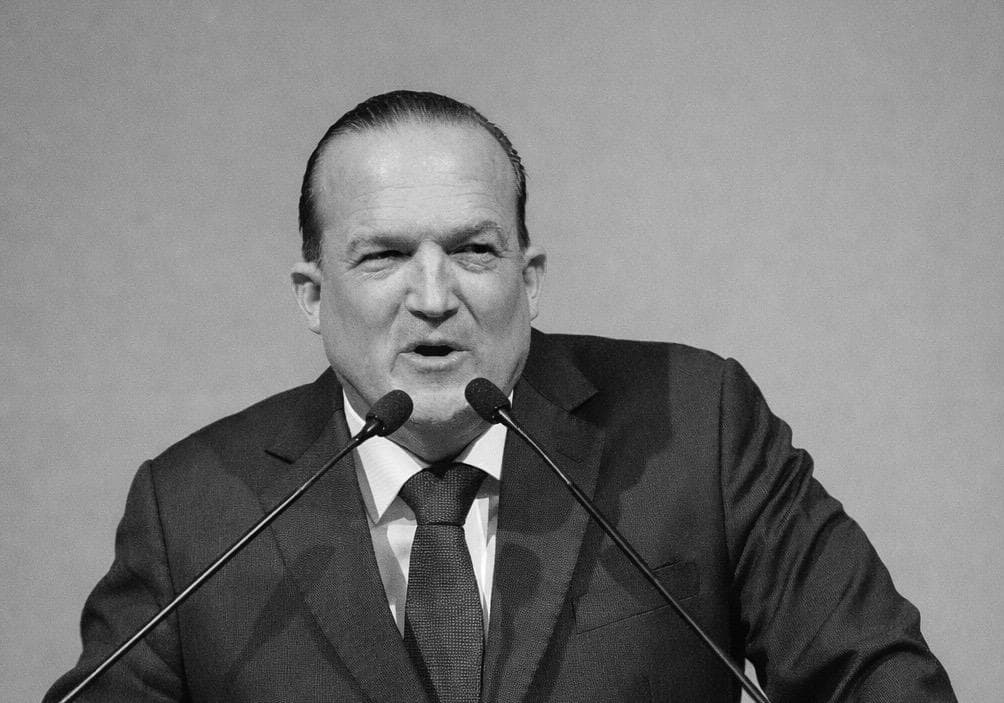
Dr. Raphael Nagel
October 26, 2025

A soft market in UK industrial property insurance is not the same as a cheap one, and operators who confuse the two will misread the next two renewal cycles.
The London market has been describing 2025 as a transition year. Capacity has returned, syndicate appetite has broadened, and the hardest edges of the post-2018 correction have dulled. What has not changed is the underlying loss data. Theft, arson, and escape-of-water claims on industrial and logistics risks remain elevated against the long-term average, and reinsurance treaties renewed at 1 January 2025 and 1 July 2025 continued to price catastrophe and large-loss exposures above the levels seen a decade ago. The result is a market that looks softer in the broker presentation than it feels in the wording. Sub-limits have narrowed. Warranties have multiplied. Survey requirements have moved from suggestion to condition precedent. Operators who read only the headline rate miss where the underwriter has actually moved the risk.
This article describes where the UK industrial property insurance market sits at the end of 2025 going into 2026, who underwrites it, how Lloyd participates, and which physical security measures continue to attract genuine premium credit rather than rhetorical acknowledgement. The framing draws on the manufacturer's perspective developed in BOSWAU + KNAUER. From Building to Security Technology, which treats security investment as a line item that has to be defended in front of a finance director, not a marketing surface.
The state of the cycle at the end of 2025
The UK industrial property insurance market entered a transition phase during the second half of 2024 and consolidated that direction through 2025. After roughly five years of compounding rate increases that began in late 2018 and accelerated through the pandemic period, the market started to release pressure on commercial property rates first in well-engineered, low-hazard occupancies, and then more selectively in industrial and logistics risks. By mid-2025, brokers reporting through the London Market Group and the major retail houses were describing rate movement on clean industrial property accounts as flat to down five percent, with outliers in either direction depending on loss history, location, and combustibility of stored goods.
The qualifier matters. The softening is real on accounts that present well. It is not present on accounts with recent fire losses, on accounts with high-piled storage of plastics or lithium-ion batteries, on accounts with EPS sandwich panel construction, or on accounts with documented theft history and no remediation. On those risks, underwriters are still pushing rate, narrowing coverage, or declining outright. Operators who run a mixed portfolio will see different signals on different sites in the same renewal, and a portfolio average is not a useful planning number.
The reinsurance backdrop sets the floor. The January 2025 reinsurance renewal stabilised after two years of structural hardening, but retentions stayed at the elevated levels established in 2023, and catastrophe pricing held its gains. UK insurers absorbed Storm Bert and Storm Darragh in late 2024, plus a continuing pattern of large fire losses in warehouse and recycling occupancies. The Association of British Insurers reported commercial property gross written premium rising again in 2024, with claims inflation, particularly on building reinstatement and business interruption, continuing to outpace headline CPI. None of that disappears because the cycle has turned. It means the market has room to discount rate while still demanding more in coverage architecture, and that is what is happening.
The practical signal for an operator planning a 2026 renewal is straightforward. Expect engagement, expect competition between markets on accounts that have invested in protection, and expect a fight on accounts that have not. The window for restructuring a programme is open, but not wide, and it closes the moment loss activity reverses the reinsurance trend.
Who underwrites UK industrial property
The UK industrial property market is served by three overlapping pools of capacity. The first is the domestic composite insurers, led by Aviva, RSA (operating within the Intact Financial group since 2021), Allianz UK, AXA Commercial, and Zurich. These carriers handle the bulk of mid-market industrial and logistics business through their regional underwriting offices and broker channels. They write on company paper, typically on standard or lightly manuscripted wordings, and they hold most accounts with sums insured below roughly fifty million pounds on a single location basis.
The second pool is the Lloyd market and the company market operating in London, which absorbs larger, more complex, or more distressed risk. This includes major property syndicates at Lloyd, alongside the London branches of international carriers such as Chubb, AIG, FM Global, HDI, and Liberty Specialty Markets. These underwriters write subscription business, often in shared-and-layered structures, and they handle the accounts where total insured values, business interruption exposure, or loss history exceed what a domestic composite will write net.
The third pool is the specialty and MGA layer, which has grown significantly since 2020. Managing general agents writing on behalf of Lloyd syndicates or international carriers now occupy a meaningful share of niche industrial classes, including recycling, waste management, cold storage, and certain high-hazard manufacturing. These vehicles offer faster turnaround and more bespoke wordings, but they are also more sensitive to capacity withdrawal when results deteriorate, and operators who concentrate their programmes in MGA capacity should understand the reinsurance arrangements that sit behind their policy.
The choice between these pools is not purely a function of size. An operator with a single distribution warehouse of forty million pounds total insured value and a clean record will be quoted by domestic composites on competitive terms. The same warehouse with a recent arson loss, a sprinkler impairment history, or EPS construction will find that the composite market either declines or quotes at terms that push the broker into the London subscription market. The transition is rarely smooth, and the cost difference between a clean and a distressed placement, on an otherwise identical asset, can be a factor of three or four on rate.
How Lloyd participates
Lloyd of London is not a single underwriter. It is a market of syndicates, each backed by capital from corporate members, individual names, and increasingly from third-party investment vehicles, operating under the Lloyd umbrella with shared infrastructure, rating, and central guarantee. For UK industrial property, Lloyd participates in three ways that matter to an operator.
The first is as primary capacity on complex single risks. A handful of property syndicates lead UK industrial business directly, writing the first layer of cover and setting terms that following markets accept. These lead underwriters tend to specialise by occupancy. A syndicate that leads on logistics and warehousing may decline manufacturing, and the reverse. Brokers placing into Lloyd will route to the leader who has demonstrated appetite for the specific exposure, and the leader's view of the risk, particularly on survey conditions and warranty structure, shapes the entire placement.
The second is as following capacity on subscription placements. Most large industrial accounts in the UK are placed across multiple insurers, with each taking a percentage line. Lloyd syndicates frequently follow on these placements, providing capacity at the terms set by the lead. This structure means that the same risk may have ten or fifteen syndicates participating, each with its own underwriting view but bound to the lead terms. For an operator, this means the survey, the risk improvement schedule, and the warranty compliance documentation are scrutinised by multiple underwriters in parallel, and a failure visible to one is visible to all.
The third is as facultative reinsurance behind domestic composite carriers. When Aviva or Allianz UK writes a large industrial account net, they often reinsure the upper layers facultatively into Lloyd or into the company market. This is invisible to the operator at the policy level, but it influences how the primary insurer approaches survey requirements and risk improvement, because the facultative reinsurer's appetite is also a factor in renewal continuity.
Lloyd performance through 2024 and into 2025 has been profitable on property classes overall, with combined ratios in the high eighties to low nineties for the better-performing syndicates. That profitability is what funds the softening. It is also what makes Lloyd selective. A syndicate showing a strong result has no incentive to chase volume on accounts that look marginal, and the market's stratification between preferred and non-preferred risk has widened, not narrowed, even as headline rates have moved down.
What security earns credit
The relationship between physical security investment and premium credit is real but narrower than vendors claim. Underwriters at Aviva, RSA, Allianz UK, and the Lloyd property syndicates evaluate security under risk engineering frameworks that distinguish between measures that change the loss expectancy and measures that simply add visibility. Both have value, but only the first earns rated credit, and the second earns credit only when it is documented and verifiable.
Perimeter and intrusion detection draw the most consistent recognition. A monitored intruder alarm certified to the relevant grade under the LPS 1175 or EN 50131 frameworks, connected to an Alarm Receiving Centre that holds NSI or SSAIB approval, with police response or keyholder response confirmed in the schedule, is a baseline that underwriters expect on industrial property above modest sums insured. The absence of it is a debit. The presence of it earns no credit, because it is the baseline. Credit begins above the baseline, where the operator has added measures that materially reduce loss frequency or severity.
CCTV with remote monitoring earns credit when it is integrated with the intrusion detection in a verified alarm response sequence. Cameras that record locally and are reviewed after the fact carry minimal weight. Cameras that trigger an operator to verify the alarm in real time, leading to faster police or response dispatch, reduce the window during which a loss can develop and are recognised in survey scoring. The IEC 62443 framework and the security elements of ISO 27001 are increasingly referenced in underwriter questionnaires, particularly where the operational technology of the site is networked, and CISA and NIST CSF 2.0 guidance on industrial control system security is starting to appear in larger placements where the property cover sits alongside cyber.
Fire protection remains the single largest lever in industrial property pricing. A fully sprinklered building to FM Global or LPCB standards, with documented maintenance and impairment management, can move rate by a factor that no other security measure approaches. The fire dimension dominates the conversation on warehousing, manufacturing, and logistics risks, and operators who have not engaged with the fire engineering of their sites will find the security engineering conversation truncated.
Theft prevention measures, including secure compound design, mobile patrol verification, and the kind of mobile video and robotic patrol systems described in the BOSWAU + KNAUER manufacturer literature, earn credit on accounts with documented theft exposure or high-value stock. The credit is specific and conditional. It requires evidence that the system is operational, that response protocols are in place, and that the equipment is maintained. ASIS International guidance on physical security programme management and the BSI and GDV technical standards used on the continent provide the reference points underwriters apply, even where the policy is written on a UK wording.
What does not earn credit is undocumented investment. An operator who has spent on cameras, fencing, and patrols without a written security policy, without maintenance records, and without verification protocols will find that the survey scores those measures at a fraction of their cost. The discipline is documentation. The investment without the record is largely wasted from the underwriter's perspective, even where it is operationally effective.
What 2026 renewals will look like
The shape of the 2026 renewal year is taking form. On clean industrial property accounts with strong protection, current loss records, and clear documentation, brokers will be able to drive competitive tension and secure flat to modest reductions on rate, with improved coverage at the margin. Sub-limits that hardened during the 2020 to 2023 cycle, particularly on theft, escape of water, and certain extensions, will start to relax, but not uniformly, and operators who want them moved will have to ask specifically.
On accounts that present unevenly, the picture is more difficult. A site with a recent fire, an unresolved survey requirement, or a documented theft pattern will renew on terms that look harder than the market average, because the market average reflects the accounts underwriters want to write, not the accounts they have to write. Capacity will be available, but at rates and with warranties that operators familiar with the softer feel of the broader market will find inconsistent with what they are reading in the trade press.
The volatility risk is reinsurance. The January 2026 reinsurance renewal will be shaped by 2025 catastrophe activity, by the trajectory of secondary perils, and by the broader macro environment for reinsurance capital. If the renewal hardens unexpectedly, the softening at the primary level will pause or reverse within one quarter. Operators planning multi-year capital decisions on the assumption of continued rate decline are exposed to a reversal they cannot control.
The structural response is to make the account underwriter-ready before the renewal opens. That means current valuations, current business interruption analysis, current survey responses, current security documentation, current loss data with cause analysis. The accounts that win in any market are the accounts that present completely. The accounts that lose in any market are the accounts that arrive at renewal with gaps the broker has to fill on the underwriter's call.
What holds
The UK industrial property insurance market in 2026 will reward operators who treat their security and risk management as a structured asset rather than as a defensive cost. The cycle has turned, but the discipline that produced the hard market remains in the underwriting room. Rate has loosened. Standards have not.
The operators who will see the largest improvement at their 2026 renewals are those who can present their risk in a form that a Lloyd lead, an Aviva regional office, or an Allianz UK property underwriter can evaluate without filling in the gaps themselves. That presentation is not assembled in the six weeks before renewal. It is built across the year, in the security investment decisions, the maintenance records, the loss responses, and the documentation that converts physical reality into underwriter-readable evidence.
For operators who want to test whether their account is in that position, the structure described in BOSWAU + KNAUER. From Building to Security Technology offers three paths. A sixty-minute confidential conversation will surface the gaps that will matter at the next renewal. A three to five day audit will produce the documentation an underwriter expects. A ninety-day pilot at a single site will generate the loss and response data that converts security investment into rated credit. Each path stands on its own. The decision about which to take is a function of how close the next renewal is, and how much of the account is already in defensible form.
Frequently asked questions
Where is the UK market in the cycle?
The UK industrial property insurance market is in the early phase of a soft cycle, after roughly five years of rate hardening from late 2018 through 2024. By mid-2025, rates on clean industrial accounts were flat to down five percent, with capacity returning and competition increasing at Lloyd and among the domestic composites. The softening is selective. Accounts with recent losses, problematic construction, or high-hazard occupancies continue to see rate pressure and tighter terms. Reinsurance pricing has stabilised but not reversed, which limits how far primary rates can fall before the cycle pauses.
Who underwrites?
UK industrial property is underwritten by three overlapping markets. Domestic composites, including Aviva, RSA, Allianz UK, AXA Commercial, and Zurich, handle most mid-market business through regional broker channels. The Lloyd market and the London company market, including major property syndicates alongside Chubb, AIG, FM Global, HDI, and Liberty Specialty Markets, write larger, more complex, or distressed risk on subscription terms. Managing general agents writing on behalf of Lloyd syndicates and international carriers occupy a growing share of specialty industrial classes including recycling, cold storage, and high-hazard manufacturing.
How does Lloyd participate?
Lloyd participates in three ways. First, as primary lead on complex single risks, where a property syndicate sets terms that following markets accept. Second, as following capacity on subscription placements, where multiple Lloyd syndicates each take a percentage line at lead terms. Third, as facultative reinsurance behind domestic composite carriers writing large accounts net. Lloyd property results through 2024 and 2025 have been profitable, which has funded the softening, but also made syndicates selective. The market's stratification between preferred and non-preferred risk has widened as rates have moved down.
What security earns credit?
Underwriters give rated credit for measures that change loss expectancy and are documented. Monitored intruder alarms certified to EN 50131 or LPS 1175, connected to NSI or SSAIB approved Alarm Receiving Centres, are baseline. Above baseline, credit accrues to CCTV integrated with verified alarm response, sprinkler protection to FM Global or LPCB standards, and theft prevention systems with documented response protocols. ASIS International, BSI, and GDV technical references guide the underwriter's view. Undocumented investment earns little credit. The discipline that converts security spend into premium credit is the maintenance of evidence, not the volume of equipment installed.
Related topics
- When Insurers Will Mandate AI Surveillance: A Real Calendar
- Insurance Premium Reduction Through AI Surveillance
- Cyber-Physical Insurance in the Gulf: 2026 Market Survey
- Art Insurance in the Gulf: Louvre Abu Dhabi and Lloyd
- EU Industrial Property Insurance Market 2026: Hardening
Take the next step: See prices & ROI · Explore the products · Send a no-obligation request. BOSWAU + KNAUER – direct from the factory in Filderstadt, reply within 5 working days.
About the author
Dr. Raphael Nagel (LL.M.) is founding partner of Tactical Management. He acquires and restructures industrial businesses in demanding market environments and writes on capital, geopolitics, and technological transformation. raphaelnagel.com
More reading

Since 1892.
The firm is reached at boswau-knauer.de or +49 177 2266267.