
Blog
Perimeter Security Systems: The Complete 2026 Buyer's Guide
Perimeter security systems compared: autonomous robots from €78,000, mobile towers from €8,900 vs guarding at €4,000–6,000/month. See the figures.

Dr. Raphael Nagel
August 5, 2026
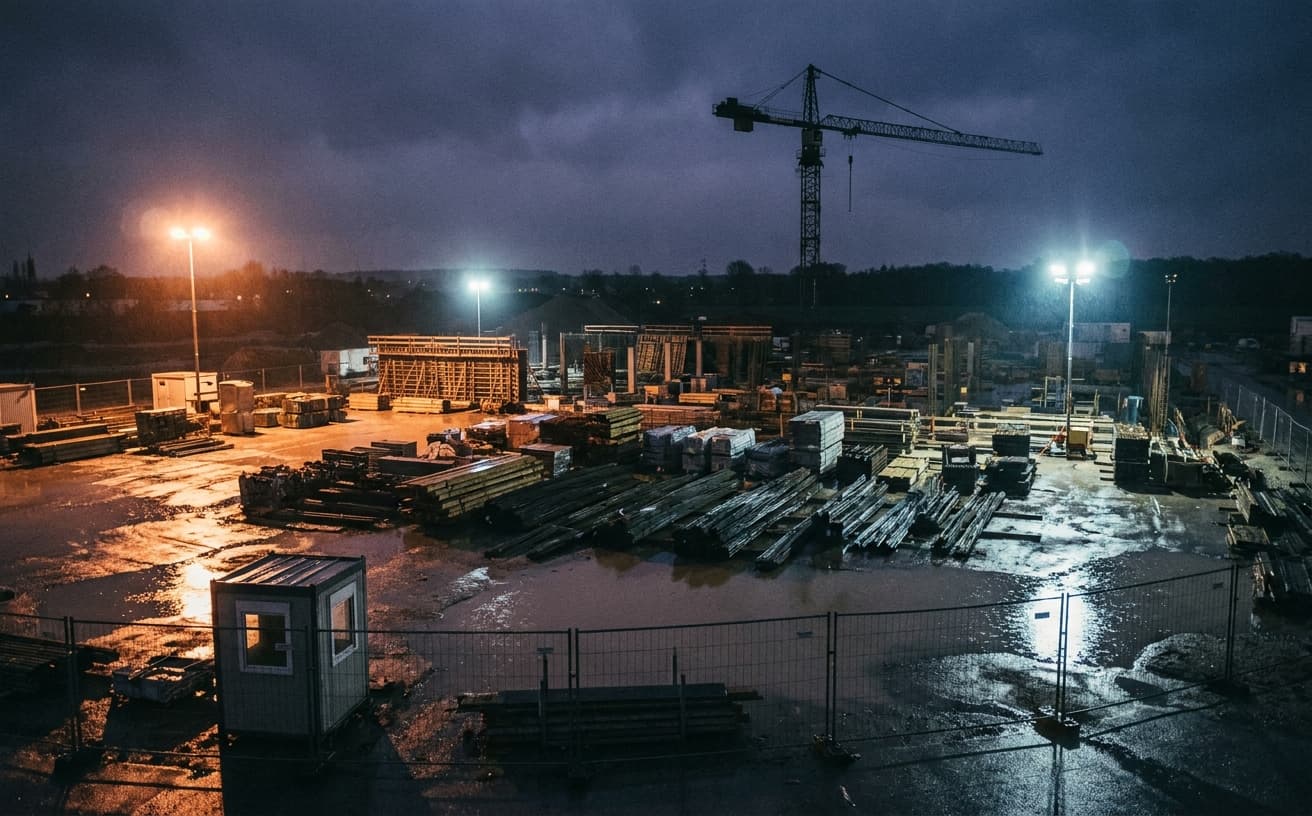
Perimeter security systems protect the outer boundary of a site — the fence line, gates, yards and open ground — before an intruder ever reaches a building. Modern perimeter security combines physical barriers with detection technology, video verification and a rapid response layer, and the fastest-growing category is autonomous: security robots and mobile surveillance towers that patrol and watch 24/7 without a human on site. For most industrial, logistics and KRITIS operators, this delivers wider coverage at a lower running cost than traditional guarding.
What is a perimeter security system?
A perimeter security system is the coordinated set of measures that secures the edge of a property rather than its interior. It typically works in three layers: deterrence (fencing, lighting, visible cameras and patrols), detection (motion sensors, thermal imaging, video analytics and access control) and response (alarm verification, alerting and dispatch). The goal is early detection at the boundary, so that a threat is identified and dealt with in the open — long before it becomes a break-in, a theft or a safety incident inside your operation.
Why is the perimeter the most important line of defence?
Because almost every intrusion begins there. Industry threat data consistently shows that the majority of unauthorised site entries occur across the perimeter — over an unmonitored fence, through a delivery gate or across open storage yards at night. Detecting an intruder at the fence line rather than at the server room or the warehouse door gives your response teams minutes instead of seconds. On large or remote sites — construction projects, solar farms, distribution hubs, utilities — the perimeter is also the longest, least-lit and least-watched boundary, which is exactly why it is the most frequently exploited.
What are the main types of perimeter security systems?
There is no single "best" system — the right architecture depends on site size, whether the perimeter is fixed or changing, and how quickly you need coverage.
- Physical barriers: fencing, gates, bollards and anti-climb measures. Essential, but passive — they slow an intruder without detecting one.
- Fixed CCTV and sensor lines: cameras, thermal detectors and buried or fence-mounted sensors. Effective on established sites, but expensive to trench, cable and commission — and immovable once installed.
- Manned guarding: flexible and visible, but costly, hard to staff around the clock and limited to wherever the guard physically stands.
- Mobile video surveillance towers: rapidly deployable, self-powered camera masts with analytics and live monitoring — ideal for temporary or changing perimeters such as building sites and events.
- Autonomous security robots: self-driving units that patrol defined routes, detect intrusions with thermal and optical sensors, and escalate verified alarms in real time — coverage that moves with the threat.
How do autonomous robots and towers change perimeter security?
Fixed systems watch one spot; a guard watches wherever they are standing. An autonomous security robot patrols the entire perimeter on a schedule or on demand, combining thermal imaging, video analytics and two-way audio to detect, verify and deter — then hand a confirmed alarm to a control room. A mobile surveillance tower gives you an elevated, self-powered vantage point that can be positioned in hours and relocated as the site evolves. Together they replace the two weakest points of classic guarding — fixed coverage and human fatigue — with continuous, 24/7 monitoring that scales across large and remote perimeters.
Perimeter security systems compared: cost and coverage
The commercial case for autonomous perimeter security is straightforward once running costs are set against coverage. The figures below use indicative UK/EU market pricing.
| Approach | Typical cost | Coverage | Availability | Best suited to | |---|---|---|---|---| | Manned guarding | ~€4,000–6,000 / month, per guard | One position or patrol route | Shift-limited; breaks, sickness, turnover | Short-term, staffed sites | | Fixed CCTV + sensors | High capital + cabling/trenching | Fixed field of view | 24/7, but blind to unmonitored zones | Established, unchanging sites | | Mobile surveillance tower | from €8,900 | Wide-area, elevated, relocatable | 24/7, self-powered | Construction sites, events, temporary perimeters | | Autonomous security robot | from €78,000 | Full patrol route, moving coverage | 24/7, no fatigue | Large, remote or high-value KRITIS sites |
A single guard at €4,000–6,000 per month covers one route on one shift and adds up to roughly €48,000–72,000 per year — recurring, and for a fraction of the perimeter. An autonomous robot from €78,000 is a one-time capital investment that patrols continuously, never tires and typically pays back within its first years of service against equivalent guarding cover. A mobile tower from €8,900 secures a wide, changing perimeter almost immediately.
When should you choose a robot, a tower — or both?
Choose an autonomous robot when the perimeter is large, permanent or high-value and you need moving, verified coverage without permanent staffing — logistics parks, utilities, industrial estates and KRITIS facilities. Choose a mobile tower when the perimeter is temporary or shifting and you need elevated surveillance fast — construction sites, car compounds, festivals. On complex sites the strongest posture combines both: towers anchor fixed high-risk points while a robot patrols the connecting boundary, closing the gaps that neither a single camera nor a single guard can cover.
Frequently Asked Questions
How much does a perimeter security system cost?
It depends on the technology and the length of perimeter. As a benchmark: manned guarding runs at roughly €4,000–6,000 per guard per month (recurring), a mobile surveillance tower starts at €8,900, and an autonomous security robot starts at €78,000 as a one-time investment. Because robots and towers require no permanent on-site staffing, their total cost of ownership over several years is frequently lower than continuous guarding of the same boundary.
Are autonomous security robots a replacement for manned guards?
For perimeter patrol and monitoring, yes — increasingly so. An autonomous robot delivers uninterrupted 24/7 coverage with thermal and optical detection, video verification and instant alerting, without breaks, sickness or turnover. Human expertise remains valuable for judgement-based response and de-escalation, so most operators use robots and towers to handle the continuous surveillance workload and reserve people for verified incidents.
Can perimeter security systems meet KRITIS and critical-infrastructure requirements?
Yes. KRITIS-capable systems are engineered for the availability, resilience and documentation that critical-infrastructure operators require, including continuous monitoring, verified alarm handling and audit-ready records. BOSWAU + KNAUER robots and towers are built to KRITIS-grade standards for utilities, energy, logistics and public-sector sites.
How quickly can a perimeter be secured?
A mobile surveillance tower is self-powered and can be positioned and commissioned within hours, making it ideal when a perimeter appears overnight — a new construction phase or a temporary compound. Autonomous robots are configured to your site's patrol routes and typically enter service after a short commissioning period.
Modern perimeter security, engineered in Germany since 1892
BOSWAU + KNAUER has manufactured security technology in Filderstadt since 1892. Today that means autonomous security robots from €78,000 and mobile video surveillance towers from €8,900 — KRITIS-capable, 24/7, and purpose-built to secure the perimeter more completely and more affordably than classic guarding. Configure your perimeter security system in minutes with our online configurator, or contact our team for a tailored assessment of your site.
Related topics
- Autonomous Security Robot: Patrols That Replace Guards
- Property Protection: Robots & Towers vs Guards 2026
- Industrial Site Security: The 2026 Protection Guide
- False Alarm Reduction: How AI Cuts Alerts by 95%
- Drone Surveillance Security: Law, Limits & Alternative
Take the next step: See prices & ROI · Explore the products · Send a no-obligation request. BOSWAU + KNAUER – direct from the factory in Filderstadt, reply within 5 working days.
About the author
Dr. Raphael Nagel (LL.M.) is founding partner of Tactical Management. He acquires and restructures industrial businesses in demanding market environments and writes on capital, geopolitics, and technological transformation. raphaelnagel.com
More reading
Since 1892.
The firm is reached at boswau-knauer.de or +49 177 2266267.